
Effective Employee Training in Hydraulic Lift Repair

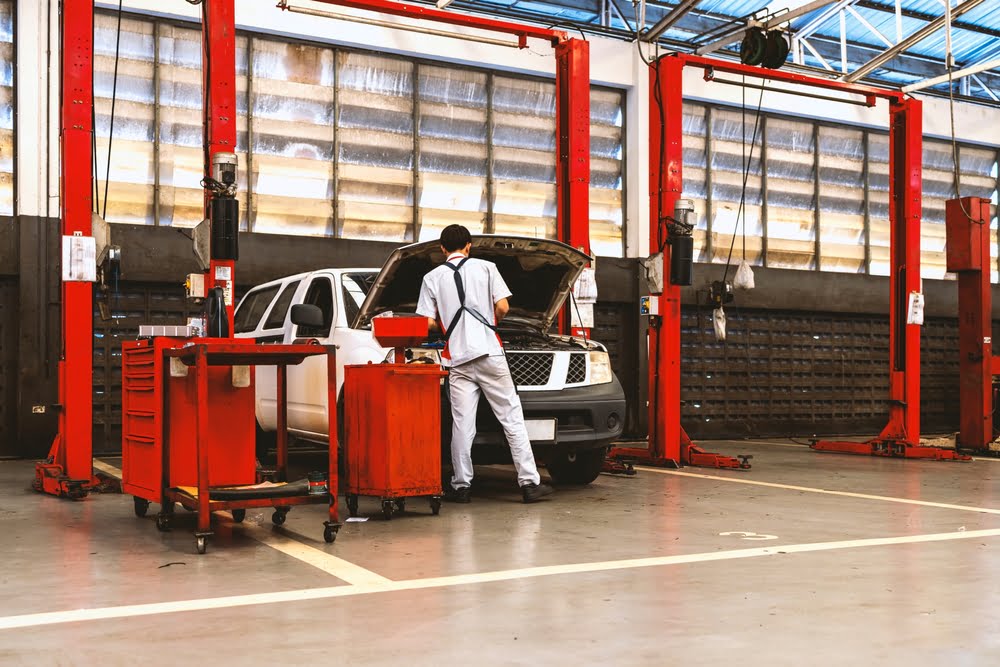
Mechanic preparing to use hydraulic lift for repair

Common Issues With Hydraulic Lifts

Are you finding it difficult to pay for the recurring expenditures of having professionals inspect the major machinery in your shop? If this describes the situation in your company, then it may be time to reconsider how and what you teach your employees.

Workers who have received hydraulic lift repair training will be able to spot potential problems with these critical pieces of equipment. They’ll be able to undertake routine maintenance, which will help you keep your workplace safer and extend the life of your lifts.

It’s a given that auto body shops benefit from hydraulic lifts in a number of different ways. However, there will occasionally be some issues with utilizing them, as is the case with every gadget. The most frequent problems are listed below.

Faulty Oil Sensor/Low Oil Levels

Due to its vital function in monitoring hydraulic oil levels and pressure, a faulty oil sensor is a common problem with hydraulic lifts. Incorrect lift operation, system damage, and safety issues can result if the sensor fails to detect low oil levels or pressure changes. Proper and safe operation of hydraulic lifts depends on timely maintenance checks and sensor replacements when needed.

Because of oil leaks, poor maintenance, or insufficient replenishment, low oil levels are another common issue with hydraulic lifts. Sufficient oil is necessary for hydraulic systems to work properly and support large weights. Reduced lifting capability, slowed operation, and potential damage to components are all possible when oil levels fall below the recommended minimum. In order to prevent poor functioning and preserve a lift’s safety, oil levels need to be checked often and topped up as needed.

Ballooning Tubes

Ballooning tubes are another common problem in hydraulic lifts, especially when they’re working at high pressure or when the system sees frequent pressure spikes. Tubes and hoses are used in hydraulic lifts to move hydraulic fluid across the system. If the pressure within the tube is higher than its maximum capacity, the tube may expand, or “balloon.” There are a few issues that can arise from this ballooning.

For starters, it can lead to a drop in hydraulic pressure; this can negatively impact the lift’s efficiency and effectiveness. Second, wear and even leaks can be caused by the inflating tubes rubbing against other components or surrounding surfaces. Over time, the additional strain on the tubes can weaken them, raising the prospect of failure and, by extension, the risk of accidents.

Tube inflation can be avoided if the lift’s pressure is maintained within safe parameters and pressure spikes are kept to a minimum. In order to discover and rapidly replace weaker or broken tubes, routine examination and maintenance are critical. Lift operators can keep their hydraulic lift operations safe and efficient by proactively addressing the above concerns.

Seal and Bearing Issues

Because of how they work, hydraulic lifts often have seal and bearing problems. Seals prevent hydraulic fluid leaks, while bearings keep moving parts stable in hydraulic lifts. Pressure, friction, and the elements can all contribute to the gradual deterioration of these seals and bearings.

Inadequate seals can cause hydraulic fluid to leak, reducing system performance and even posing safety risks. There’s also the potential for environmental damage due to leaks. In a similar vein, bearing wear and degradation can increase friction, which, in turn, reduces lift performance, increases heat, and hastens the wear of other parts.

Preventing these types of problems requires regular maintenance, such as checking for leaks and replacing worn seals and bearings. The durability of seals and bearings can be improved with lubrication and correct alignment. Seal and bearing issues should be identified and repaired as soon as possible to maintain the safe and dependable functioning of hydraulic lifts, extend their useful life, and reduce the need for maintenance.

Hydraulic Cylinder Problems

Because hydraulic cylinders play such a key role in the lifting process, problems with them are common in hydraulic lifts. The power required to raise massive, heavy objects is supplied by these cylinders. Cylinder failure can develop over time for a number of reasons.

Cylinder seal failure (see above) is a common issue that can cause hydraulic fluid to leak out and impair lifting capability. Hydraulic cylinders are sensitive mechanical devices, and internal damage caused by contaminated hydraulic fluid can limit performance and pose safety issues. Continual pressure and friction during operation can also cause corrosion and wear on the interior components of the cylinder.

hydraulic lift repair

In order to anticipate and prevent cylinder issues, it’s essential to perform routine maintenance, such as seal inspections and fluid checks. Significant problems can be avoided with regular fluid filtering and prompt repair of defective seals. Lift operators who have been trained to recognize the symptoms of cylinder trouble — like strange noises or sluggish performance — are better able to avoid costly breakdowns and maintain the reliability of hydraulic lifts.

Techniques for Training Your Employees on Hydraulic Lift Repair

In order to ensure the competence and safety of workers, training in hydraulic lift maintenance needs a holistic approach. Methods that have been shown to be useful in training include:

• Instructor-Led Workshops

Workshops organized by experts in the field can be held to show how repairs should be done and what precautions should be taken.

• Online Courses

E-learning systems can provide interactive modules and quizzes to teach students the theory and background they’ll need to repair hydraulic lifts.

• On-the-Job Training

Training in the workplace by observing and working with more experienced specialists is helpful.

• Simulators and Virtual Reality

Cutting-edge training technologies like simulators and virtual reality can guide workers through simulated repair scenarios, so you can see how well they handle problems in a safe, contained setting.

• Training Manuals and Documentation

It’s a good idea to develop comprehensive guides and reference materials outlining maintenance practices, security precautions, and troubleshooting advice.

Safety Training

In order to lessen the likelihood of accidents and injuries, it’s crucial to provide workers with safety training.

• Regular Assessments

It’s wise to maintain a steady regimen of reviews and tests to measure employee learning and pinpoint problem areas.

• Continuing Education

Motivate your employees to keep up with the newest repair methods and technology by sending them to workshops, seminars, and industry conferences.

Employers can ensure their workers have the expertise to repair hydraulic lifts in an efficient and safe manner by combining all of the above methods of instruction.

Regularly Needed Maintenance for Your Hydraulic Lift (Monthly vs Annually)

Hydraulic lifts need to be serviced regularly to guarantee safe and reliable functioning. Here are monthly versus yearly maintenance requirements for hydraulic lifts:

hydraulic lift repair

Monthly Maintenance

• Monthly inspections should include checking hydraulic fluid levels, checking seals and hoses for leaks, and making sure everything is aligned correctly.

• Bearings, pivot points, and cylinders can all benefit from being lubricated on a regular basis to cut down on friction and wear.

Monthly Maintenance Cont.

  • Limit switches and emergency stop buttons, among other safety features, should be tested monthly to ensure they’re working properly.
  • Getting rid of dust and filth from a lift’s surface and parts can help extend its life and keep it running smoothly.

Annual Maintenance

  • All lift parts, the hydraulic system, and your building’s structural integrity should be checked out thoroughly as part of an annual comprehensive inspection.
  • To avoid leaks and other problems, you should replace your seals and hoses on a yearly basis. To keep everything running well, you should change your lifts’ hydraulic fluid once a year.
  • In order to guarantee a lift’s capacity is up to code and to identify any performance concerns, load testing needs to be performed.
  • Hydraulic lifts can be kept in ideal shape, with little downtime and maximum user safety, by undertaking a combination of monthly and yearly maintenance.

Hazards of Hydraulic Lifts Parts

Hydraulic lifts include a number of moving elements that can cause injury if they’re not handled with care. Potential dangers of hydraulic lift components include:

• Hydraulic Fluid Leaks

Accidental spills of hydraulic fluid can lead to injuries from slips and falls for both workers and customers.

• Faulty Seals

Bad seals can lead to fluid leakage, decreased lifting capability, and even system failure.

• Malfunctioning Valves

Injuries can occur as a consequence of sudden, unanticipated movements caused by faulty valves, such as jolts or falls.

• Hydraulic Cylinder Issues

Problems with hydraulic cylinders can result in unexpected collapses, inappropriate lifting, or instability.

• Electrical Hazards

Inadequately maintained lifts with electrical components create risks of electrical shocks, short circuits, and fires.

• Pinch Points and Entrapment

Crush injuries can occur at pinch points caused by moving elements such as hinges and scissor mechanisms.

• Overloading

Both the cargo and the operator are at risk if a lift is overloaded and collapses or tips over.

To reduce these risks and guarantee the safe operation of hydraulic lifts, routine inspection, maintenance, and operator education are essential.

One company that can help with hydraulic lift maintenance is SVI Parts. SVI is the largest provider of repair parts and equipment for automotive, car, truck, and bus service lifts found in vehicle maintenance facilities throughout North America. SVI Parts can supply more than 40,000 lift-related parts for hydraulic lift repair. SVI Parts has 46 years of experience as well as professional expertise in handling hydraulic lift problems. To get the help you need for your hydraulic lifts, email or call SVI Parts today.

EV Cable Management

The Global EV Outlook, an annual publication identifying developments in electric mobility, identified a startling 40% year-on-year increase in electric car sales from 2018 to 2019 – and the trend shows a continual upward trajectory. The future is electric, and EV charging station and cable manufacturers are innovating to match the ever-increasing demand.

Charging cables are one of the most important facets of EV charging stations. Without them, charging stations would be ineffective. EV charging station and cable manufacturers must consider how to protect cables from the elements and the wear-and-tear of frequent use. Where should manufacturers begin with cable management?

Start here! The following content provides a helpful guide to proper EV cable management, including why it is so important and which tool is the best to start.

Why is EV Cable Management Important?

1. Cable Management is Cost-Effective

Electric vehicle charging cables are expensive. In fact, replacing a damaged cable can cost thousands of dollars. Proper cable management lengthens the lifespan of the charging cable, protecting your investment.

2. Cable Management Protects Functionality

Electric vehicle charging cables serve multiple purposes beyond charging the vehicle. EV cables are designed with communication wires, transmitting important information from the car to the station, including charging status, temperature, and battery level.

3. Cable Management Heightens User Experience

User experience (UX) is more than just a marketable buzzword. UX plays a significant role in product success across a multitude of industries. UX Planet, a holistic user experience resource, writes:

User experience is important because it tries to fulfill the user’s needs. It aims to provide positive experiences that keep a user loyal to the product or brand. Additionally, a meaningful user experience allows you to define customer journeys on your product that are most conducive to business success.

In the EV charging station market, cable management is key to an excellent user experience. Put yourself in the shoes of a charging station user. A neat, organized, and intuitive system will make for a positive experience, and a neatly wound charging cable plays a significant role.

If you are the EV charging station manufacturer with great UX, you will likely stand out. Electric vehicles are a relatively new commodity. According to the Global EV report cited above, the generous increase in EV popularity is only a few years old.  

Because electric vehicles are a brand new market, EV charging station and cable manufacturers are inherently the first of their kind. With excellent UX, including cable management, your organization can stand out among the rising competition.

4. Cable Management Promotes Safety

Cable management promotes safety for the user. Keeping charging cables off the ground between users helps prevent potential injury to the vehicle owner or other individuals walking around the charging system. In comparison, consider the danger associated with a gas pump left on the ground between fueling.

EV charging cable safety is just as important as gas pump safety, and the safety precautions associated with fueling station pumps can be applied to charging cables.

EV Cable Management 101: Cable Clamps

EV cable clamps are the most essential cable management tool. Cable clamps are designed to retract long charging cables away from the ground and to the top of the charging station after use. These clamps protect the cords from rain, snow, intense heat, or other adverse elements.

Are EV Cable Clamps for AC or DC Chargers?

Both AC and DC charging stations are popping up in a multitude of locations.

AC Charging Stations are primarily found at homes, grocery stores, hospitals, and hotels. AC stations are long-duration systems meant to charge a vehicle over a matter of hours.

DC Charging Stations quick charging systems, capable of fully charging most cars in 30 minutes or less.

What Does EV Cable Mismanagement Look Like?

When emphasizing the importance of EV cable management, we often reference a glaring example of mismanagement. Unfortunately, the EV cables could be easily damaged in the situation pictured below and provide a potentially dangerous scenario for who needs to charge their car.

This image is not the only example of cable mismanagement – unfortunately, cases like the one pictured above appear frequently. However, as the popularity of electric vehicles continues to increase, the demand for proper cable management will only intensify.

Finding a trusted cable clamp provider is important.

SVI International: EV Cable Clamps For AC & DC Systems

At SVI International, we are often the first call for EV cable management clamps. Because EV charger cables range in diameter size, our inventory includes a variety of available sizing options.

If you are a charging station manufacturer, our team of industry experts at SVI can meet your EV cable clamp requirements. To learn more about our capabilities, review EV cable management resources on our website or get in contact with our specialists. We can be contacted at (800) 321-8173 or via our online contact form.

Exhaust Modification: Pros & Cons

Exhaust modifications are one of the most common types of automotive modifications. They are relatively inexpensive and simple enough for some handy car gurus to do at home themselves. Exhaust modifications can have many benefits, including increased performance, a more muscular look, and a powerful sound. However, an exhaust modification can also have negative effects if done improperly. The potential negative effects of an include an overly loud exhaust note and a decrease in performance. Read on to learn more about the pros and cons of an exhaust modification.

Pros

Increased Performance

One of the biggest reasons that people make exhaust modifications is to increase the performance of their vehicle. The right modifications can increase the power and responsiveness of a vehicle significantly. Not only can a properly installed, high-quality aftermarket exhaust help a car gain horsepower, but it can also raise the vehicle’s torque rating. An exhaust modification can improve performance by increasing airflow to your engine. An exhaust made of a lighter metal such as titanium can also increase performance by decreasing weight.

A More Muscular Look

Few drivers get a performance exhaust solely because of how it looks, but a more muscular look is certainly an added benefit of an aftermarket exhaust. These exhausts may be made out of a distinctive metal like titanium. Also, many aftermarket exhausts offer a larger muffler that simply looks more powerful. Finally, it is common for an aftermarket exhaust to have an eye-catching chrome finish instead of the dull metal that many stock exhaust systems use.

A Powerful Sound

Another important benefit of an exhaust modification is a more powerful sound. This is actually the most notable benefit as most cars will not actually gain a massive amount of power from a new exhaust. However, the larger, less restricted, and more resonant aftermarket exhaust will have a deeper and louder sound than the average stock exhaust. In fact, the new sound that a vehicle with a performance exhaust makes may just be enough to blow the doors off those who share the road with you.

Cons

Too Much Noise

Speaking of powerful noises, one of the most common problems seen with an exhaust modification is an excessive amount of noise. Many drivers want to get a more powerful noise with their exhaust modification. However, many communities have noise limits for vehicles. If a vehicle exceeds these noise limits, the driver can get a ticket or even have their vehicle impounded. A vehicle with an exhaust modification is almost always significantly louder, so it is much more likely to breach noise limits. Drivers who are thinking about getting an aftermarket exhaust should keep in mind not only the noise regulations in their home city, but also the noise regulations in any city they will drive through.

A Failed Exhaust Modification Can Decrease Performance

It is also common for a failed exhaust modification to decrease performance. This is more commonly seen when a car owner attempts to make a modification themselves. Often, they do not install the aftermarket exhaust properly. This can lead to a decrease in performance and even fuel efficiency. Sometimes, a low-quality aftermarket exhaust can actually harm a vehicle’s performance, even if it is installed properly. The high-quality aftermarket exhausts are pricier, but they are also much more effective. Drivers that plan to make an exhaust modification should get a high-quality exhaust and have it installed by a professional.

Contact SVI International, Inc. Today to Learn More About Our Auto Lift Parts

If your shop needs auto lift parts so that you can perform exhaust modifications and other jobs, SVI International, Inc. is here for you. We offer auto lift parts for a wide selection of lifts from every major manufacturer. We even offer parts for lifts that are no longer on the market. Once we make a certain part, that part is in our inventory forever, even if the manufacturer discontinues the model. No matter what part you may need, we can get it to you quickly with our efficient shipping and distribution operation. We have three warehouses that offer same-day shipping on most of our orders to ensure that you get the parts you need as quickly as possible.

If you’d like to place an order or learn more about the parts we offer, you can contact us through our website. One of our knowledgeable associates will get back to you promptly with the information you need. We can also help you place an order. Contact us today.

Exhaust Removal for Automotive Shops

Open the garage door before starting the car. A familiar rule, perhaps given many times to a young driver taking her first vehicle out for a spin.

As cool weather approaches, and cars are tucked again into garages, the rule is valuable for every vehicle owner to remember. However, the danger of carbon monoxide buildup extends beyond the consumer. Automotive shops must take care as well.

In fact, clean air in a working environment is unbelievably important. In the content below, we explore just how important exhaust removal is for both technicians in the shop and car enthusiasts working from home. Then, exhaust removal systems are explored in depth. Ultimately, we will provide the necessary information required to select a system that bolsters and maintains quality of life in the working, automotive environment.

Why Is Exhaust Removal Important?

Exhaust removal is a crucial component to maintaining a safe working environment in automotive shops. As a rule of thumb, tailpipes should be no further than a few feet from a source of open air. Why? Because carbon monoxide (CO), not to be confused with carbon dioxide – naturally present in the air – is lethal. CO is a natural component of exhaust and must be kept below 200 parts per million before physical harm begins occurring.

Below, we included a chart, illustrating health concerns that can occur – from headaches to death – when an individual is exposed to unnatural CO levels in ambient air.

health concerns with carbon monoxide

How does this occur? In what situation could toxic levels of CO build up? Quite simply, when tailpipe exhaust cannot rise from a tailpipe to open air, away from human contact. A tailpipe adapter should be used to funnel the toxic fumes through a hose. Two important qualifications regarding the hose must be adhered to as well. First, do not utilize a hose that extends beyond eleven feet. Secondly, the hose should be kept straight. Only enough line pressure exists to move the exhaust down eleven feet of straight hose. If, for any reason, the exhaust must travel further than eleven feet, O.S.H.A. generally requires power assistance, such as room ventilators or a blower assisted system.

Room Ventilators: Exhaust Removal Systems

If enough fresh air is available to replace the air being removed, room ventilators are an excellent exhaust removal option. As mentioned previously, room ventilators can be used in conjunction with a tailpipe removal system, “point-of-source” removal, to provide the best carbon monoxide removal possible. However, choosing the best removal system can be a tedious process. Which is required for your application? How many should be used? Below, we discuss system design considerations and helpful factors to guide your process.

System Design Considerations

  1. How many stalls require exhaust removal? Which vehicles will be serviced here?
  2. How will you position the fan or blower? According to best practice, the blower should be mounted on a sturdy base, about 16’ high. To understand how rigid the base must be, keep in mind belt drive blowers weigh between 200 and 600 lbs.
  3. Will you choose an overhead or underfloor duct system? Ductwork layout should be graduated. Narrow ductwork must be placed furthest from the fan, widening as it nears the fan. O.S.H.A. inspectors will find this more acceptable as the layout promotes even flow throughout the entire system. For example, utilizing this ductwork layout, the stall farthest from the blower and closest to the blowers will have the same airflow.
  4. How many feet apart are the layout and distance from the fan to the farthest stall?
  5. Will the system be mounted overhead via ductwork? If so, how many hoses will need to be retracted?
  6. Will the system be mounted underfloor? If so, a drain should be included to flush the floor ducting. Water, oil, and other liquids can disrupt ductwork and must be removed. To ensure proper drainage, underfloor ductwork should be sloped at 1” per 40’.
  7. What amount of air flow will be required?
  8. What size duct and hose will be required?
  9. What blower size – based on CFM (cubic feet/minute) requirements – is required?

Helpful Factors

  1. Pay attention to the number of outlets connected to a single fan. The amount of suction is prone to large variations as the number of outlets increases. Because of this, multiple smaller fans often provide better performance than a single large fan.
  2. Fan housings are flexible. Sixteen discharge positions are available for the fan in 450 increments.
  3. SVI International provides in-line dampers and/or tailpipe dampers, used to close off outlets that are not in use.
  4. Exhaust blowers are available from SVI with a fan connected via a V-belt drive arrangements or directly connected to the motor shaft. Direct drive arrangements provide greater electrical efficiency, with less expensive upfront charges. However, V-belt drive arrangements are best for when horsepower or fan speed requirements are questionable. If an automotive shop chooses a direct drive blower to receive the aforementioned benefits, but CFM requirements change over time, SVI also provides manual dampers to adhere to changing requirements.
  5. SVI fan performance is developed using standard air: 70-degrees Fahrenheit, 29.92” barometric pressure, and .075 lbs. per cubic foot. However, varying conditions are required. Some shops may require nonstandard temperature or altitude. If this is the case, SVI is flexible and willing to make the necessary changes to provide precisely the correct equipment.

Blowers & Hoses: Exhaust Removal Systems

The proper blower, determined by both air movement requirement and amount of static pressure, is another popular exhaust removal system. Hoses are as well. SVI provides a wide selection of hoses to meet every automotive service application, built to withstand intense temperatures. Learn more about our exhaust blower selection and hose options to choose the proper exhaust removal system for your automotive shop.

SVI International, Inc

SVI International, Inc is dedicated to innovative solutions designed to better a multitude of industries. With an expansive collection of repair parts and quality shop equipment, along with the ability to complete custom requests, our products help a plethora of industries efficiently and accurately function.

The content above explores a fraction of the complexities surrounding exhaust removal, a crucial component of a healthy automotive shop. Please do not hesitate to reach out to our team of experts with any questions! We look forward to pointing you in the right direction.