
3 Benefits of Using a Hydraulic Motorcycle Lift

Motorcyclists share a unique connection. We have all seen it. The silent nod or quick wave as one motorcyclist zips past another.

According to one passionate rider, “those of us who love motorcycles have a common bond that transcends language, technological superiority, riding style or brand elitism.” Of course, such a rare bond is impossible without a properly functioning bike. Thus, motorcycle enthusiasts understand the importance of properly maintaining their hydraulic motorcycle lift – in personal garages or specialty shops – for routine maintenance, serious overhaul, or detailed cleaning.

In the following content, we explore the three most common types of motorcycle lifts, three benefits of utilizing a hydraulic motorcycle lift, and our primary small equipment lift recommendation.

Types of Hydraulic Motorcycle Lifts
3 Benefits of Using a Hydraulic Motorcycle Lift

Three varieties of motorcycle lifts are commonly found in garages and shops. Each type of lift discussed below is named from the power used.

Air Lifts

Air lifts are inexpensive and relatively popular. Compressed air operates these lifts, often requiring only 100 PSI. A simple foot valve initiates operation. Adding pressure to one side of the valve lifts or lowers the air cylinder. The majority of air lifts have a load capacity of about 1,000 pounds. Most also have a range of locking positions at various working heights.

Air Hydraulic Lifts

Air hydraulic lifts are also powered by air – however, these operate with a pump that surges hydraulic fluid into a lifting cylinder, initiating lift movement. Once more, a foot pedal is used to operate the air pump. Within the pump, an extra supply of hydraulic oil is stored.

How do air hydraulic lifts differ from air lifts? Primarily, in operation movement. Air hydraulic lifts move seamlessly, without hesitation or surging. Both these factors can be noticed on an air lift.

Electric Hydraulic Lifts

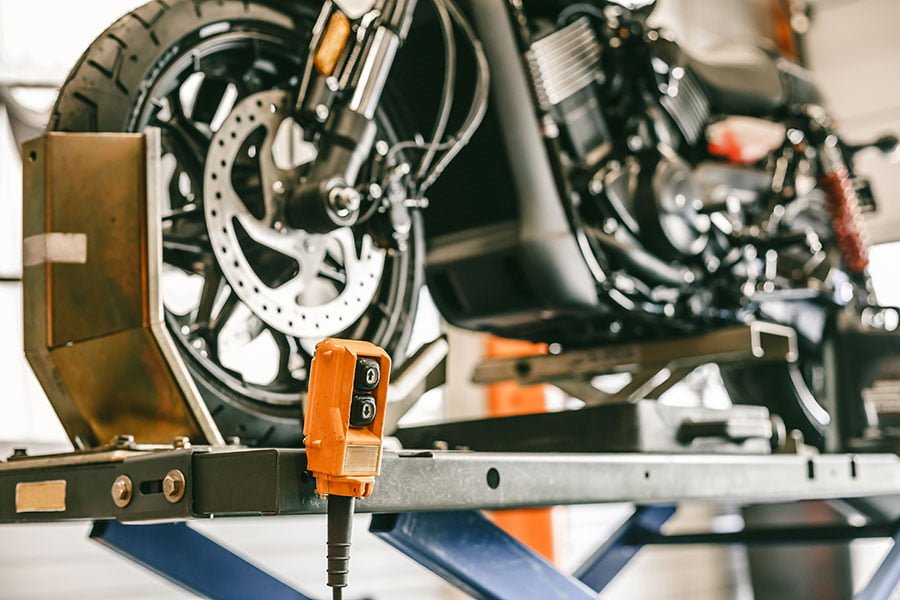
The third and final motorcycle lift variety is powered by an electric hydraulic pump. Due to the cost of electric hydraulic power, these lifts can be slightly more costly than air or air hydraulic lifts, but their benefits often outweigh a slightly greater upfront fee. Certain attractions are operating speed, operating consistency, and added convenience. For example, certain electric hydraulic lifts have hand-held remote operators, instead of a foot pump.

3 Benefits of Hydraulic Motorcycle Lifts

1. Storage

Similar to four-post automotive lifts, motorcycle lifts can provide convenient storage. For example, if you do not ride during the winter, your motorcycle can be stored on the lift itself. Lift storage prevents air pressure loss in the tires and any unwanted deconditioning while not in use. Storing your motorcycle on the lift ensures that your motorcycle will be in the same shape as when you put it away for the season. Storage is also beneficial for bikes on sale at motorcycle shops.

Furthermore, certain hydraulic lifts collapse into the floor entirely, allowing for parking directly on top. Limited obstruction is an essential feature for shops and home garages alike.

2. Comfortable Work Environment

Any motorcycle or vehicle enthusiast understands that performing maintenance or total overhaul while on your knees is inconvenient, impractical, and dangerous. Motorcycle lifts can be adjusted to the desirable height, perfect for performing repairs, maintenance, or cleaning at your height. The right motorcycle lift is ergonomic and safe on the body.

Hydraulic motorcycle lifts are unique in their ease of use. As mentioned, hydraulic lifts raise and lower seamlessly. Selecting the proper height for work is simple and convenient.

3. Load Capacity

Hydraulic motorcycle lifts can bear a load capacity of nearly 2,000 pounds. As best practice, one should select a lift that can hold about double the weight of the bike. Selecting a hydraulic lift with extraordinary lifting power ensures lift use across a variety of motorcycles and, occasionally, ATVs.

SESM Lifts: Small Equipment Shop Maintenance

SESM lifts are an ideal combination of the three primary benefits of using lifts, the perfect solution for anyone engaged in selling, servicing, or using motorcycles. SESM lifts are designed to be the coolest piece of equipment in your garage or professional shop, and the benefits associated with the lift are many. A list of benefits include:

  • Height adjustability, making for a comfortable work environment
  • Prevent tip overs during service via strategic tie down slots included in the platform
  • Full access for front and rear wheel service
  • Extraordinary ease-of-use with only one moving part
  • Self-contained unit
  • Operates off shop-air compressor
  • Load capacity extends from 1,000 to over 25,000 pounds, depending on the requirements of your specific application
  • Many stroke lengths and cylinder sizes are available
  • Compatible with all hydraulic fluids, including environmentally safe fluids
  • Designed to last a lifetime
  • Fiberglass encapsulated casings protect from corrosion over time
  • Improves productivity within the shop or garage
  • Lift is easy to install and relocate, ideal for rental properties or homes
  • The ability for 360-degree rotation allows for use between the work and the workbench
  • When lowered, no obstruction exists, ideal for parking directly over the lift
  • Superior operation and safety compared to above-ground scissor lifts
  • Built in the U.S.A. for guaranteed quality
  • Option for a beautiful platform, ideal for showroom displays

SVI International, Inc.

SVI International has an extensive engineering data bank, extending back to 1928. This wealth of knowledge informs every product – including SESM motorcycle and small equipment lifts. A depth of understanding and a “can-do,” innovative attitude has driven SVI into a multitude of markets as mainstay product supplier. Ultimately, SVI’s mission is to increase productivity via innovative solutions.

This mission, driven through years of innovation, excellent customer service, and the timely delivery of parts, has continuously increased growth. Along with the unique and appreciated production of “legacy” parts for auto lift lines that are no longer manufactured, SVI has become an industry leader. Today, SVI has 3 warehouses throughout the country, over 40,000 repair parts, 50 product lines, nearly 2,000 distributes, and a unique knack for solving industry problems. To get in touch with our team, please do not hesitate to reach out at (800) 321-8173 or via our online contact form.
Best Waste Oil Transfer Pump For Your Auto Shop

When the average consumer hears the word “oil,” destructive oil spills often leap to mind. Doesn’t oil have detrimental effects on the environment? The economy?

When industry leaders think about “oil,” the proper removal of contaminated oil, wasted or used, comes to mind, completed by utilizing the proper waste oil transfer pump. How can one choose the proper waste oil transfer pump? Below, we discuss the importance of transferring waste oil and share a guide to selecting the best pump for waste oil for your auto shop.

Choosing the Proper Waste Oil Transfer Pump is A Necessity

Choosing the proper waste oil pump is a necessity. Why? Because waste oil can be hazardous, requiring careful removal. Though not a consistent occurrence, waste oil can display characteristics of hazardous waste materials. If this happens, the oil must be managed according to specific requirements. If the oil is non-hazardous, applicable requirements are still necessary to follow.

The proper transfer pump is portable, powerful, and trustworthy, always apt to meet specific requirements and properly transfer waste oil.

A Quick Note Regarding “Used Oil” and “Waste Oil”

Individuals often confuse “waste oil” with “used oil.” Choosing an ideal transfer pump begins with a grasp of both terms.

“Waste oil,” either petroleum-based or synthetic, is a contaminated oil that has become unsuitable for its intended purpose and must be disposed of carefully. Simply put, “used oil” is either petroleum-based or synthetic oil that has been used. Contamination results from the physical or chemical properties infused into the oil during use, resulting in oil that must now be disposed. Oils that fall into this category often include hydraulic oil, transmission oil, gear box oil, synthetic oil, motor oil, brake fluids, etc.

Selecting the Proper Waste Oil Pump

Selecting the proper pump begins with defining terms. Understanding definitions simplifies the selection process. Initially, we have provided a simple differentiation between a high-volume pump, high torque pump, and diaphragm pump:

  • High volume pumps are utilized to transfer thin or warm oils.
  • High torque pumps are utilized to transfer thick or cool oils.
  • Diaphragm pumps are utilized for centrifuge systems. Diaphragm pumps are built for mineral oil, vegetable oil, or biodiesel oil transfer. Diaphragm pumps are primarily utilized for centrifuge systems.

As demonstrated, viscosity, type of oil, and environmental conditions play a role in selecting the ideal transfer pump. For example, thick oil requires a higher torque pump. Thin oils move quickly and require less sheer power to transfer. Below, we have compiled a list of considerations to keep in mind while choosing a pump:

  • Does the pump include a filtration system? Often, waste oil is contaminated with organic objects, from leaves to garbage. These quickly clog a transfer pump without proper filtration.
  • Evaluate the environments in which the transfer pump will be applied. Will the pump face extreme temperatures? If the pump functions well in extreme cold, will it function well in a desert-like environment? Consider that the pump will be transported and utilized in a variety of locations with different environment. These considerations will play into the chosen equipment.
  • How long should the pump last? Well, for a long, long time! Though the answer may seem obvious, ensuring the chosen pump is made with high-quality, sturdy materials is important. An equally important question, if a small but crucial component of the pump breaks, are specific repair parts readily available?

SVI International, Inc seeks to make the process of choosing the proper waste oil transfer pump simple. We provide two transfer pumps, built to address common issues regarding waste oil transfer.

PTP-1140-GRD

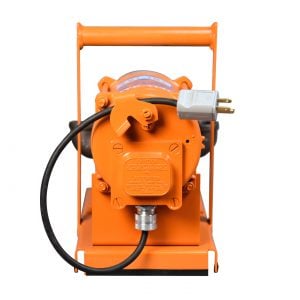
The PTP-1140-GRD Transfer Pump is built to last, with heavy-duty, industrial grade equipment. At 110V, the PTP-1140 pump is ideal for both extremely hot or cold environments, perfect for transfer and utilization in a wide variety of disparate environments. The PTP-1140 features a cast iron gear pump with hardened steel helical gears and an internal bypass pressure relief valve. To provide ease of transfer, the PTP-1140 includes a round carrying handle for comfort.

The PTP-1140 pump is built for strength and convenience. As mentioned, transferring the pump is seamless, and the places it can be used are nearly endless. A few possible applications include transferring waste oil at maintenance facilities across the Canadian oil sands, removing transformer oil by electrical power co-ops, and working at any industrial or automotive facility where waste oil accumulates and needs removal.

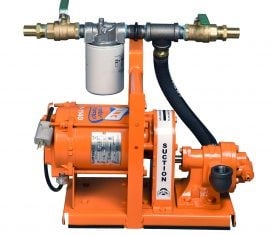
PTP-1140 pumps can be ordered with an optional 10-micron spin-on filter system, built to allow for the transfer of either filtered or unfiltered oil by switching valve positions. As mentioned, filtration is crucial to prevent clogging. Filtered waste oil is especially important when oil is transferred from oil burning furnace system reservoirs.Clogging prevention allows for proper and efficient combustion of oil within the furnace.

Furthermore, the pump is excellent for industrial environments, easily used for periodic oil changes on large machinery. For example, lathes working in high-volume turning operations require pumps to refresh and renew their oil. Simple to operate and maneuver, the PTP-1140 quickly pumps out old oil and fills the new.

Finally, the PTP-1140 is not made to be thrown out. The pump is long-last and robust, delivering real value to end customers who deserve respect. If a specific piece fails, SVI International is also the provider of each part – quick and reliable to get the pump back to work.

PTP-1140-GRD-SFO

waste oil transfer pump

The PTP-1140-GRD-SFO is extraordinarily similar to its counterpart, discussed above, with identical features, quality, and versatility. The only difference: this variety comes equipped with a spin-on filtration system (SFO). This system simplifies the process of changing and maintaining the filter, allowing for quick and efficient removal of contaminants from the waste oil being pumped. The spin-on design is known for its convenience and ease of use, enabling operators to swiftly replace the filter without requiring specialized tools or extensive downtime.

Why Purchase from SVI International?

SVI International, Inc. is the leader in repair parts for automotive and industrial equipment. We are devoted to providing innovative solutions to a variety of industries, offering high-quality products and parts – readily available at our three warehouses across the U.S.

We want to work with you, and we are always a phone call away. For questions, concerns, or help placing an order, call us at (800) 321-8173 or via our online contact form!

Exhaust Removal for Automotive Shops

Open the garage door before starting the car. A familiar rule, perhaps given many times to a young driver taking her first vehicle out for a spin.

As cool weather approaches, and cars are tucked again into garages, the rule is valuable for every vehicle owner to remember. However, the danger of carbon monoxide buildup extends beyond the consumer. Automotive shops must take care as well.

In fact, clean air in a working environment is unbelievably important. In the content below, we explore just how important exhaust removal is for both technicians in the shop and car enthusiasts working from home. Then, exhaust removal systems are explored in depth. Ultimately, we will provide the necessary information required to select a system that bolsters and maintains quality of life in the working, automotive environment.

Why Is Exhaust Removal Important?

Exhaust removal is a crucial component to maintaining a safe working environment in automotive shops. As a rule of thumb, tailpipes should be no further than a few feet from a source of open air. Why? Because carbon monoxide (CO), not to be confused with carbon dioxide – naturally present in the air – is lethal. CO is a natural component of exhaust and must be kept below 200 parts per million before physical harm begins occurring.

Below, we included a chart, illustrating health concerns that can occur – from headaches to death – when an individual is exposed to unnatural CO levels in ambient air.

health concerns with carbon monoxide

How does this occur? In what situation could toxic levels of CO build up? Quite simply, when tailpipe exhaust cannot rise from a tailpipe to open air, away from human contact. A tailpipe adapter should be used to funnel the toxic fumes through a hose. Two important qualifications regarding the hose must be adhered to as well. First, do not utilize a hose that extends beyond eleven feet. Secondly, the hose should be kept straight. Only enough line pressure exists to move the exhaust down eleven feet of straight hose. If, for any reason, the exhaust must travel further than eleven feet, O.S.H.A. generally requires power assistance, such as room ventilators or a blower assisted system.

Room Ventilators: Exhaust Removal Systems

If enough fresh air is available to replace the air being removed, room ventilators are an excellent exhaust removal option. As mentioned previously, room ventilators can be used in conjunction with a tailpipe removal system, “point-of-source” removal, to provide the best carbon monoxide removal possible. However, choosing the best removal system can be a tedious process. Which is required for your application? How many should be used? Below, we discuss system design considerations and helpful factors to guide your process.

System Design Considerations

  1. How many stalls require exhaust removal? Which vehicles will be serviced here?
  2. How will you position the fan or blower? According to best practice, the blower should be mounted on a sturdy base, about 16’ high. To understand how rigid the base must be, keep in mind belt drive blowers weigh between 200 and 600 lbs.
  3. Will you choose an overhead or underfloor duct system? Ductwork layout should be graduated. Narrow ductwork must be placed furthest from the fan, widening as it nears the fan. O.S.H.A. inspectors will find this more acceptable as the layout promotes even flow throughout the entire system. For example, utilizing this ductwork layout, the stall farthest from the blower and closest to the blowers will have the same airflow.
  4. How many feet apart are the layout and distance from the fan to the farthest stall?
  5. Will the system be mounted overhead via ductwork? If so, how many hoses will need to be retracted?
  6. Will the system be mounted underfloor? If so, a drain should be included to flush the floor ducting. Water, oil, and other liquids can disrupt ductwork and must be removed. To ensure proper drainage, underfloor ductwork should be sloped at 1” per 40’.
  7. What amount of air flow will be required?
  8. What size duct and hose will be required?
  9. What blower size – based on CFM (cubic feet/minute) requirements – is required?

Helpful Factors

  1. Pay attention to the number of outlets connected to a single fan. The amount of suction is prone to large variations as the number of outlets increases. Because of this, multiple smaller fans often provide better performance than a single large fan.
  2. Fan housings are flexible. Sixteen discharge positions are available for the fan in 450 increments.
  3. SVI International provides in-line dampers and/or tailpipe dampers, used to close off outlets that are not in use.
  4. Exhaust blowers are available from SVI with a fan connected via a V-belt drive arrangements or directly connected to the motor shaft. Direct drive arrangements provide greater electrical efficiency, with less expensive upfront charges. However, V-belt drive arrangements are best for when horsepower or fan speed requirements are questionable. If an automotive shop chooses a direct drive blower to receive the aforementioned benefits, but CFM requirements change over time, SVI also provides manual dampers to adhere to changing requirements.
  5. SVI fan performance is developed using standard air: 70-degrees Fahrenheit, 29.92” barometric pressure, and .075 lbs. per cubic foot. However, varying conditions are required. Some shops may require nonstandard temperature or altitude. If this is the case, SVI is flexible and willing to make the necessary changes to provide precisely the correct equipment.

Blowers & Hoses: Exhaust Removal Systems

The proper blower, determined by both air movement requirement and amount of static pressure, is another popular exhaust removal system. Hoses are as well. SVI provides a wide selection of hoses to meet every automotive service application, built to withstand intense temperatures. Learn more about our exhaust blower selection and hose options to choose the proper exhaust removal system for your automotive shop.

SVI International, Inc

SVI International, Inc is dedicated to innovative solutions designed to better a multitude of industries. With an expansive collection of repair parts and quality shop equipment, along with the ability to complete custom requests, our products help a plethora of industries efficiently and accurately function.

The content above explores a fraction of the complexities surrounding exhaust removal, a crucial component of a healthy automotive shop. Please do not hesitate to reach out to our team of experts with any questions! We look forward to pointing you in the right direction.