Frequently Asked Auto Lift Questions: Part 2 – Auto Service Equipment

As promised, part two of SVI International’s guide to frequently asked auto lift questions is here to answer all your most common questions regarding auto service equipment. Last time, we covered everything relating to auto lift set up and installation. This time, we will tackle the lifts themselves, including which types of lifts are best suited to which applications. As the largest provider of auto and industrial equipment parts, SVI International is uniquely qualified to help you find answers to all your auto lift questions. However, please note that while applicable for most cases and most lifts, the answers you find in this document may not be best for your specific application. When in doubt, always consult with your auto lift provider first.

Auto Lift Questions

1. How do I know which type of parking lift best fits my needs?

When we want to choose the best lift for our garage, the two most pressing factors on our mind are cost and functionality. Striking a balance between those two that fits your shop’s needs is really the best way to choose the best auto lift. While you may want to spend as little as possible, be sure to also consider the dimensions of your garage, the size and weight of the vehicles being parked, and how frequently you would like to replace your chosen lift. Below is a general overview of the benefits and potential drawbacks of many common types of auto lifts to help make this decision an easier one.

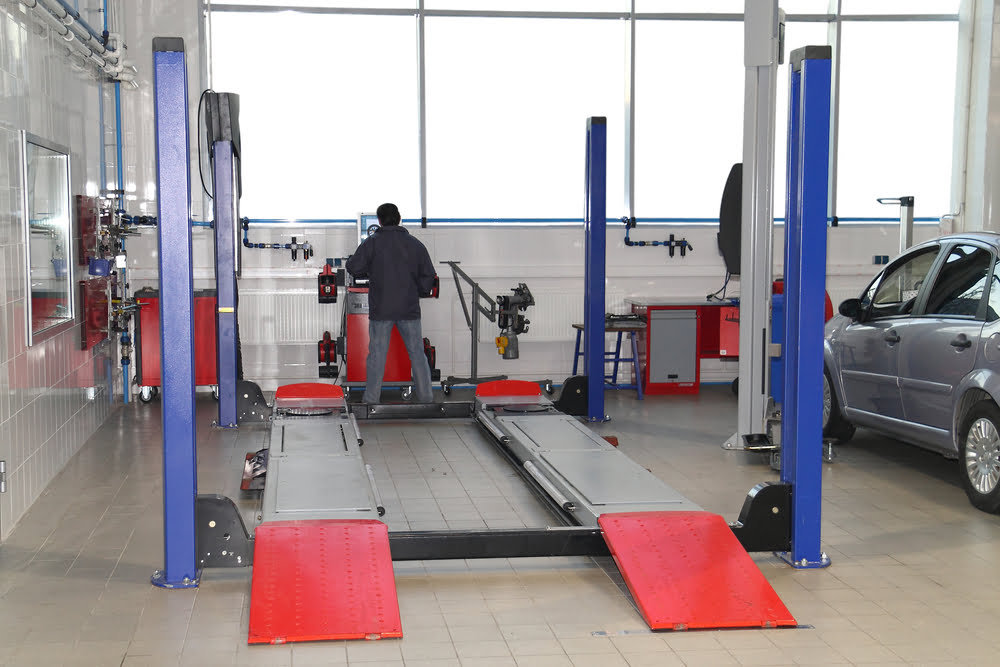
Four Post

As one of the least expensive options, four post parking lifts are generally very easy to operate and are relatively maintenance-free. They also provide a high level of stability for your lifting needs. One issue owners of smaller garages may experience is the amount of floor space these types of lifts require.

Two Post

The rugged, two post auto lifts were first designed primarily for commercial applications. Although they may cost more than typical four post lifts, they provide a great number of advantages, including a cantilever style and great performance in harsh weather conditions.  

Single Post

When very little garage space is available, a single post parking lift may be a great option with many available models to meet all your parking needs.

2. What are the differences between asymmetric, symmetric, and floor pan model two post automotive lifts?

While many auto lifts appear relatively similar at first glance, there are several important distinguishments to be made.

By allowing vehicles to be lifted out and away from posts, asymmetric designs allow you to open doors freely without hitting anything. While they work very well for cars, if you want to use an asymmetric lift for trucks with long wheelbases, you may find yourself disappointed.

The othered of two post lifts, symmetric designs, have a wider space between the posts, making it the ideal choice for vehicles with longer wheel bases. They can be used for virtually any standard truck or car.

Finally, the floor pan model of the two-post lift is typically best suited for smaller garages in which there is less than 12 feet of ceiling height clearance.

3. How safe are auto lifts?

Of course, the safety of your workers will all depend on the type of lift you purchase and how well you maintain said lift. However, today’s auto lifts are generally designed with greater safety features than ever before. If you want to make sure you are purchasing a lift you know you can trust, look for models that meet or exceed American National Standards Institute (ANSI) safety standards.

4. Will auto lifts still work during a power outage?

While almost every lift requires power to remain functional, there are available options that will ensure your lifts continue to work even in the event of a power failure. Many commercial garages install uninterruptible power supplies that allow you to keep your lift functioning properly until you have time to safely get vehicles down and shut off your equipment.

Alternatively, traditional generators can also work to provide power for the duration of an outage.

5. Will my lift require special hydraulic fluid to operate properly?

As mentioned in the part one blog, you can typically expect to need around 3 gallons of hydraulic fluid when first installing your auto lift. While many lifts are designed to operate using standard hydraulic oil found in nearly any automotive store, some lifts do require specialized fluid for optimal performance. Be sure to consult with your owner’s manual on the correct fluid to use. While it may seem unimportant, you will want to stick with what the manual says to get the best performance and longest life from you lift.

6. Is it ok to go over the listed weight capacity of my lift?

Contrary to the beliefs of some mechanics, the answer to this question is always a firm no. No matter how many times you may have gotten away with putting a few extra pounds of vehicle on your lift, it is never a good or safe idea to do so. Additionally, many manufacturers will advise moving up to models with higher capacities if you find yourself frequently exceeding 90 percent of the rated capacity.

You will also need to consider weight distribution. As an example, let’s say you own a two post lift, rated at 10,000 lbs. However, it is important to remember that each arm of the lift is only rated for a portion of that total. Be sure to always balance your loads safely and never overload one arm of your lift.

Find Your Best Auto Lift and Auto Lift Parts with SVI

No matter which auto lift you choose, it will inevitably require replacement parts. For over 40 years, SVI International has been serving the automotive service equipment industry with honesty, integrity, and the highest possible level of quality. We provide on-time delivery and same-day shipping on all our in-stock parts. We exist as your one-stop shop for equipment parts, lifting equipment, RELS brake-lathes, fluid delivery products, petroleum equipment parts, and much more.

Whether you have additional questions not answered here, concerns, or need help placing an order, we are always just a phone call away. Call us at (800) 321-8173 or fill out our online contact form today. We look forward to assisting you and, if you missed it, we invite you to peruse the first installment of our Guide to Frequently Asked Auto Lift Questions.

Guide to Automotive Lift Installation

Installing an automotive lift changes how a shop operates. It creates more working space, improves technician comfort, and gives better access to vehicle components. But before the first bolt hits the concrete, it helps to know what the process actually involves. Mistakes can lead to wasted time, extra costs, or worse.

Some shop owners dive into the project themselves, especially those with experience and the right tools on hand. Others prefer calling in professionals to handle the technical side. No matter which route makes more sense, a solid understanding of the installation process brings more control to the job.

Car wheel service in auto repair garage with lifted vehicle and tires.

Choose the Right Spot for Your Automotive Lift

Picking the right spot for your automotive lift can save hours of frustration down the road. Think beyond just fitting the lift into the space; think about how that space works during a busy day. You’ll want plenty of room around the lift so techs can move freely, access tools, and work safely under vehicles. A tight squeeze might look fine on paper but causes real issues during repairs.

Ceiling height matters, too. Most two-post and four-post lifts require at least 12 feet of clearance to raise vehicles fully. If you’re working in a low-clearance garage, mid-rise or scissor-style lifts might be a better fit. Also, consider the position of doors, columns, and support beams. These elements can interfere with vehicle entry and exit or make it harder to place the lift arms correctly.

Another often overlooked factor is lighting. Poor lighting near the lift can lead to mistakes or missed problems. Choose a well-lit area or plan to add overhead lights near the install spot. Finally, keep in mind how many lifts you want long-term. Leaving space for future installs avoids costly rework later on. Planning ahead now makes expansion easier when business picks up.

Prepare the Area for Installation

Before lifting a single tool, clear the space around the installation site. Regardless if you plan to install your lift indoors or outdoors, a clean, open area speeds up the process and makes everything safer. 

Next, inspect the concrete. Automotive lifts need a solid foundation, typically at least 4 inches thick and rated at 3,000 PSI or higher. Check for cracks or weak spots that might affect stability.

This is also a good time to organize your tools and parts. Having everything nearby means fewer interruptions once the install gets going.

Step-by-Step Automotive Lift Installation Process

Installing an automotive lift involves more than bolting down steel and flipping a switch. Each phase builds on the last, so it’s important to take your time and follow a clear order. These steps help create a stable, reliable setup that holds up to daily use. Missing even one detail during installation can throw the whole system out of balance, and, especially in a busy shop, that’s the last thing you need.

Synchronize the Cables

Start the automotive lift installation process by routing the equalizer cables through the lift towers and pulleys. These cables keep the lift level while it rises and lowers. Match cable lengths carefully and make any necessary adjustments before moving on. Uneven cables lead to tilting, which can damage vehicles and the lift itself.

Bleed the Hydraulic Cylinders

Once the hydraulic cylinders are mounted, they’ll need to be bled to remove air trapped inside the system. During automotive lift installation, this step is key to smooth, even lifting. Air pockets cause jerky movement and uneven pressure, which puts extra strain on the hydraulic components.

Electrical Hook-Up

Wiring comes next. For safe automotive lift installation, follow the lift’s wiring diagram and connect the power unit to the correct voltage. Improper wiring can damage the motor or cause safety shutdowns. Use a licensed electrician if your shop’s setup requires changes to breakers or wiring configurations.

Read All Instructions

This might seem obvious, but skipping the manual causes more problems than most people realize. Every automotive lift installation has specific steps tied to that exact model. Torque specs, spacing, adhesive cure times, it’s all in the manual and worth reading twice.

Assemble and Anchor the Lift

Install the towers, crossbeams, arms, and support components in the correct order. Anchor bolts must be drilled and tightened according to spec. A common issue during automotive lift installation is uneven anchor placement, so measure twice and drill once.

Final Test and Safety Adjustments

Before putting any vehicle on the lift, perform a complete function test. Raise and lower it multiple times, check for smooth movement, and inspect the safety locks. If anything feels off during this last part of the automotive lift installation, make adjustments before use.

DIY or Professional Installation: Which Is Better?

Taking on an automotive lift installation yourself can save money upfront, especially if you’ve handled shop equipment before. Many experienced technicians or shop owners already have the tools, know-how, and muscle needed to get the job done. It also gives you more control over the timeline and placement, which can be useful in a busy garage.

But lift installation isn’t a simple task. Mistakes in anchoring, wiring, or hydraulic setup can lead to downtime, safety risks, or costly repairs. If anything is off (even slightly), it may affect how the lift performs under pressure. That’s why some shop owners choose to bring in certified professionals. A pro will handle the technical parts, verify that everything is up to code, and help protect your investment in the long run.

The decision really comes down to your experience, the tools you have on hand, and how confident you feel managing the process. If you’re unsure about any part of the installation, calling in a qualified tech might save you time and money in the long haul. A well-installed lift lasts for years, so truly getting it right the first time is worth the effort, no matter who does the work.

Find Lift Installation Parts at SVI International

Getting your lift installed properly is one thing. Keeping it running smoothly day after day is another. That’s where SVI International comes in. Whether you’re tackling an installation on your own or working with a technician, having access to the right parts makes every step easier.

SVI carries thousands of products specifically for automotive lift installation and repair, including anchor bolts, power units, equalizer cables, hydraulic fittings, safety lock components, and more. If your lift needs it, chances are we have it in stock and ready to ship from one of our three nationwide warehouses.

Need help finding a hard-to-source part or working on an older model? No problem. Our team knows lifts inside and out, and we’re ready to help you get what you need without delay.

Skip the guesswork. Get reliable parts, quick turnaround, and real support from the lift experts at SVI International. Call us today or request a quote online to get started.

Guide to Effective Automotive Parts Inventory Management

Automotive parts inventory management plays a key role in the success of any auto repair shop. It enables mechanics to provide fast service to their customers. It helps a business save money, as parts are ordered when they’re at a good price and the business doesn’t order supplies it already has in stock.

Even so, managing the inventory for a bus auto repair shop isn’t easy. Multiple challenges can make it hard for shop owners to keep track of the shop’s inventory in real time. Thankfully, these problems have solutions that, when adopted, can significantly boost shop efficiency and profits.

Challenges in Automotive Parts Management

Overstocking and Understocking

Fixing overstocking and/or understocking issues can reduce inventory costs by up to 10%. However, it’s often easier said than done. If certain parts or machinery go on sale, it can be tempting to place a large order, without leaving money for other parts and/or machinery that will be needed in the near future. Alternatively, companies that wait too long to stock needed parts may be setting themselves up for problems that affect in-shop efficiency and customer satisfaction levels.

Inaccurate Balance Sheets

Keeping a balance sheet updated in real time is no easy task. Unfortunately, inaccurate balance sheets can cause headaches and additional expenses for shop owners. If you think you have more money than you actually do, you may wind up spending more on inventory than you should. Conversely, you may be tempted to hold onto cash until the last minute, leading to a lack of inventory for repair and maintenance tasks.

Miscommunication

A whopping 86% of employees and executives say that the inability to communicate and work well with others in the workplace is the main cause of workplace failures. Miscommunication in an auto repair shop can happen at multiple levels. A mechanic may tell the manager that the shop is running out of certain parts, but the manager forgets to act on this information. A manager may think mechanics need certain parts when those doing repair and maintenance work actually need different products. In any case, miscommunication can lead to overstocking or understocking your inventory, balance sheet issues, and other hassles.

How to Improve Your Automotive Parts Management

Categorize Inventory

Don’t bunch all your inventory items together. Categorization makes it easy to see what you have and what you need. If you can’t keep parts separate in a storage facility, you can at least separate them on paper.

Prioritize Parts

Take stock of your business practices, target audience, and business performance over the last year. Which parts do you use the most? You’ll want to make sure in-demand items are in stock at all times.

It’s also a good idea to do regular maintenance on your machinery. As you do, check the shop equipment for signs that you may need new parts for your equipment or even new equipment.

Quantify Your Inventory Metrics

Quantifying your inventory metrics simply means deciding when you’ll order new automotive parts. Will you wait until you have ten items left in inventory before you make a new order, or do you want to place a new order when you have twenty items left in stock? Each product you have in stock should have a quantified inventory metric.

Your inventory metrics will depend on multiple factors. These include the type of repair work you offer and your target audience. It’s also important to take shipping times into account. For instance, if it takes two weeks to get new truck parts from another country, you’ll want to place your order more than two weeks in advance to ensure you have the parts you need even before you need them.

Utilize Inventory Management Software

Inventory management software can save you a lot of time and money. There are multiple platforms to pick from, which can make it easy for you to find the program that’s the best fit for your shop.

Inventory management software can help you keep track of inventory in real time, even if you have more than one auto repair shop. You can program the software to automatically alert you if inventory for a particular product dips under the metrics you set for your shop. You can also use the program to see which machinery and repair parts you use the most, how much you’re paying for certain parts, etc.

Tailoring Car Parts Management For Your Business

Automotive parts inventory management isn’t something you can plan on a one-time basis. You’ll need to keep track of problems that arise and look for ways to remedy issues. Supply chain shortages, price increases, and sales should all be taken into account to ensure you’re getting the best parts at the best price.

Advances in technology and changes in your target audience can also affect your inventory metrics. As EVs become increasingly common, you’ll want to stock replacement parts for common EV models. If your neighborhood changes and some of your services become more or less popular, you’ll need to adjust inventory management to meet your customers’ new needs.

Keep Your Inventory Updated with OEM Auto Parts

SVI Inc. has many years of experience helping auto repair shops keep inventory updated but not overstocked. We sell more than 40,000 products, including shop equipment, replacement parts for shop equipment, tools, and replacement parts for multiple vehicles. What’s more, our team of degreed, experienced mechanical engineers can recreate discontinued parts or even design custom parts to meet your needs.All parts in stock are shipped within 24 hours to ensure you get your orders without undue delay. Our two ready-ship warehouses on opposite sides of the country make it easy for us to serve customers from all parts of the United States. Additionally, our customer service team is familiar with the needs of auto shop owners and can help you find what you need in a jiffy. Contact us to learn more about what we offer or to get price quotes.

Guide to How to Install a Car Lift

mechanic standing next to a newly added car lift

Installing a car lift on your own is no small matter. If you aren’t entirely confident that you know how to install a car lift safely, you may want to call a professional service to do the job for you. On the other hand, if you have a lot of experience in the auto repair industry, you may find that installing a lift without professional assistance can save you a significant amount of money.

Start by making sure you have the right tools, clothing, and protective gear for the job. You’ll also need at least one other person to help you lift heavy parts. Next, follow the guidelines outlined below to ensure your new lift is properly installed and ready to use.

Choose the Proper Location to Install a Car Lift

The first step in how to install a car lift is to choose a convenient location, so mechanics can walk and work under vehicles with ease. The usual minimum clearance height is 12 feet from the floor to the ceiling. Lifts with asymmetric arms should be at least nine feet from a wall. If you intend to install more than one lift, make sure there is ample space between each lift for mechanics to move around safely and conveniently.

What to Plan for Before You Install a Car Lift

It’s wise to check local building codes before you buy a lift as your geographic location, size, and height of your shop, and other factors may determine which type (or types) of lift you can install and where you can install it. You’ll also want to have all the tools and equipment you need for the job on hand to prevent accidents and speed up the installation process.

The Different Lift Options

Two-Post Lift

Two-post lifts are small yet durable. They’re also more affordable than four-post lifts. Two-post lifts typically have a 220-volt motor and can be used to repair a range of vehicle makes and models. These lifts must be fastened securely to the ground and cannot be moved.

Four- Post Lift

Four-post lifts have a 110-volt motor and are more expensive than two-post lifts. However, unlike two-post lifts, four-post lifts do not necessarily have to be fastened permanently to the ground. This enables auto shop owners to move the lift as the need arises. The only downside of the four-post lift is that it can only be used in a shop with a high ceiling.

Midrise/Scissor Lift

There are also multiple scissor lifts to pick from. Options include the electric lift, rough terrain lift, and the hybrid lift. Some lifts are low-rise, others are mid-rise, and still others are full-rise. No one scissor lift type is inherently better than the others; rather, you will need to consider product specs such as load, lift size, and platform size to pick the lift that best suits your needs. Bear in mind, however, that these lifts have a lower weight limit and shorter life span than two-post and four-post lifts.

Prepare the Concrete Floor

A car lift should only be installed on a solid concrete surface. The surface should be at least four inches deep, but six to twelve inches is ideal. The concrete should be mixed mechanically rather than by hand, and it will need a minimum PSI of 3,0000.

Anchor the Lift to the Floor

Read the installation instructions carefully before starting, so you know the area of the lift and how far apart the lift towers are supposed to be. Mark the concrete to show where to drill each hole. However, you should only drill the holes for a single tower at a time. Once you’ve put in the anchors for the first tower, proceed to put in the anchors for the second tower, making sure that it’s directly opposite the first set of anchors you installed. Continue this process until all anchors are securely installed in the concrete.

Assemble the Lift Components

Generally speaking, you’ll start by installing the first tower and then allow time for the adhesive to cure. Next, you’ll assemble and install the overhead bar. This includes attaching wiring to the bar and securing the limit switch arm. You’ll need two people to carry the overhead bar up two ladders and secure it in place. Once you’re done, you’ll install the other towers. Once all the towers are set up and the adhesive has cured, two people should install the power unit.

Install Cables, Lines, & Hoses

Now it’s time to install the hydraulic lines, hydraulic fittings, and the wire for the safety shut-off switch. If there is extra hydraulic line material, tie it up at the top of the lift to ensure it doesn’t bunch up inside the towers and interfere with lift operations. When you’re done, run the wire from the safety switch to the power unit. Finally, install the equilibrium cables, using two nuts on each end of both cables to lock them in place.

Install the Lift Arms

Hang the lift arms onto the carriage, then drop the lifting feet into the arms. Install arm restraints to prevent the arms from swinging too far to the left or right. Be sure the spring, washer, and cotter pin are also properly installed. When you’re done, connect the hydraulic line and fill the power unit reservoir with the fluid recommended in your car lift manual.

Test the Lift with a Load Test

Clear the area to ensure no one is hurt if the lift malfunctions. Then test the lift with a load test.

Obtain a Professional Technician to Help

Have a professional technician check the lift immediately after installation and at the end of each workday. This ensures the lift is in good working order and helps to prevent serious damage and accidents.

Conduct Regular Maintenance & Repairs

Keeping your lift in good working order is a breeze when you partner with SVI. We offer over 15,000 auto lift and vehicle shop repair parts to make it easy for you to find any part you need. We have new auto lifts in stock if your old lift needs to be replaced, or you need to add one or more new lifts to your shop. Our two ready-ship warehouses offer same-day shipping on in-stock items to ensure you get the parts you need without delay. Contact us for more information or to get a custom quote on your order.