Avoid Costly Mistakes: The Importance of Ensuring Proper Usage of Your Vehicle Lifts

Automotive lifts are an essential piece of equipment for both car enthusiasts working from their garage and commercial shops. Safety and proper usage are also imperative in both cases.

Improper usage can result in damage to vehicles or – far worse – serious injury to technicians. The Automotive Lift Institute insightfully wrote, “The prospect of a falling vehicle is much too heavy to take lightly. Lack of training, operator error, being in a hurry, and neglected maintenance will cause lift-related accidents. Lift accidents result in serious consequences.”

In the content below, we discuss the first step to proper lift usage: choosing the correct lift for your desired applications. Then, we’ll list a few important safety tips to keep in mind when operating lifts. Our goal is to provide a helpful guide to avoid lift injury that could have been prevented.

Choose the Proper Lift

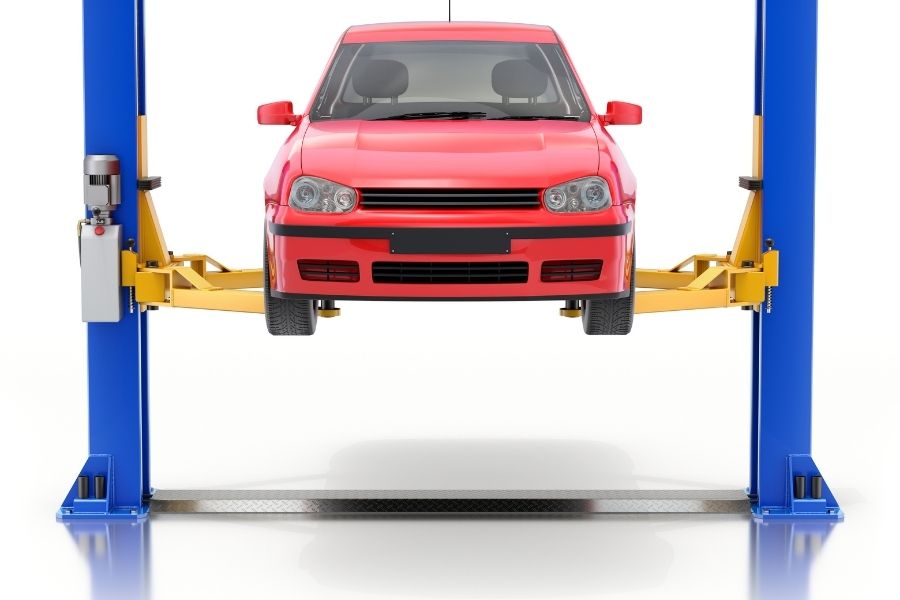
Safety begins with choosing the proper lift for your desired applications. Which vehicles will you work on? Are you maintaining motorcycles or semis? Choosing the ideal car hoist for your needs is an essential aspect to ensuring proper usage. Though not a comprehensive list, below are a few of the many different variations of available vehicle lifts:

  • Two-Post Lifts
  • Four-Post Lifts (for cars or trucks)
  • In-Ground Lifts
  • Car Parking Lifts
  • Portable Lifts
  • Air Powered Lifts

Two-Post Lifts:

Certain two-post lifts are powered by hydraulic cylinders, eliminating the need for chains and cables. Hydraulic-powered cylinders can be cost-effective, saving on repairs and heightening safety. Two-post lifts hoist up to around 18,000 lbs., excellent for cars and light trucks. Symmetrical two-post lift models center vehicles, ideal for asymmetrical cars and trucks.

Four-Post Lifts:

Four-post lifts are extremely heavy-duty. These lifts are capable of hoisting cars and lighter trucks; however, they are perfect for lifting large, heavy trucks.

Scissor lifts, unintended for long-term storage, offer a great deal of space around the vehicle under maintenance, regardless of the make or model.

Alignment lifts fall under four-post and scissor lifts. Alignment lifts are perfect for performing wheel alignments, due to radius turn-plates along the front of the lift and floating slip plates along the back.

In-Ground Lifts:

In-ground lifts are commonly seen in quick stop shops. These lifts are un-invasive, low profile, with powerful lifting capabilities of around 8,000 on up to 100,000 plus lbs. In-ground lifts are usually affordable and possess great quality. Perfect for quick jobs in a fast-paced environment, in-ground lifts are a great option for a variety of applications.

Parking Lifts:

Parking lifts are, of course, for vehicle storage. Parking lifts must be durable, secure, high-quality, and trustworthy – able to withstand the weight of a full-sized vehicle for an extended period of time.

Specialty Lifts:

Specialty lifts are important for a wide variety of applications; however, they don’t seamlessly fit into any of the categories listed above.

Heavy-Duty Truck lifts possess extraordinary quality and durability, with secure locking systems. Many heavy-duty truck lifts can hoist trucks over 70,000 lbs.

Utility Vehicle lifts are self-explanatory. These smaller lifts are ideal for ATV repair, turf equipment maintenance, and other small-vehicle applications.

Motorcycle Lifts are small, portable, convenient, and ideal for motorcycles of all sizes.

Safety During Vehicle Hoist Operation

Once your ideal vehicle hoist has been selected, take measures to ensure proper, safe usage. The Automotive Lift Institute (ALI) suggests 11 vehicle hoist safety precautions:

  1. Daily, inspect the entire lift, making any necessary repairs with original equipment parts. Never operate a broken or damaged lift.
  2. Don’t block open or override lift controls. Controls are meant to close when released.
  3. Don’t load the lift beyond the manufacturer’s officially stated capacity. Double-check the rated capacity on the plate attached to the lift.
  4. Only trained, authorized personnel should position and operate the lift.
  5. Never lift a vehicle with individuals inside; all bystanders should leave the lift area.
  6. Keep vehicle hoist area clean and free of debris, grease, oil, and trash.
  7. Don’t run over lift arms, adapters, or axle supports with a vehicle. This can damage the vehicle, the lift, or both.
  8. Load vehicle carefully. Position lift supports to contact at the vehicle manufacturer’s recommended lifting points. Lift vehicle to desired height after checking that supports are secure.
  9. Removing or installing components in some vehicles results in a shift in the center of gravity. This will result in instability in the raised vehicle. Always be familiar with the vehicle manufacturer’s service manual for ideal component-removal procedure.
  10. Remove tool trays, stands, etc. from underneath the vehicle before lowering the lift. Also release locking devices before lowering.
  11. Provide an unobstructed exit before removing vehicle from lift. Once again, if the vehicle comes in contact with the lift arms, adapters, or axle supports, the vehicle or lift could suffer damage.

The ALI offers further insight into lift safety, stating that owners and technicians are equally responsible for lift safety. “Owners,” ALI wrote, “must provide technicians with proper training before authorizing them to operate lifting equipment. If the owner does not feel comfortable delivering the training the lift manufacturer or lift service company may be employed. If a facility uses more than one type of lift, separate training must be delivered for each type. Technicians must know the maximum weight capacities, how the controls operate, proper vehicle spotting methods, lift safety features, rules for safe lifting, and good housekeeping procedures.”

On the other hand, technicians must be constantly aware of hazards present during lift operations. As mentioned in the introduction, many accidents can be prevented with careful, safety measures. Being hypervigilant, wearing protective equipment, taking necessary precautions when vehicle is hoisted, and being aware of other technicians are all important steps vehicle-lift operators must consider during operation.

SVI International, Inc

Maintaining the integrity of existing lifts is a crucial component to proper usage. SVI International, Inc is the leader in repair parts for automotive equipment, with over 40,000 repair parts for numerous lifts.

Never operate a damaged lift. If you are in need of repair parts or complete new lifts, explore our extensive inventory – or talk to us for insight into the correct option to choose. We’re always a phone call away. Please call us at (800) 321-8173 or complete our online contact form.
BendPak Lift Troubleshooting & Common Repairs

A Bendpak Lift is a popular sight in almost any mechanic shop. However, if your Bendpak lift malfunctions, serious problems can arise. Not only will a malfunctioning Bendpak lift cause your wallet to suffer due to the decrease in productivity, but also the risk of injury to you and your employees is a serious possibility.

The functioning of your Bendpak lift is critical. If you notice your Bendpak lift is not performing as it used to, stop and consider if one of the following common problems is the culprit behind your Bendpak lift’s malfunctioning. 

If you are experiencing one of these problems with your Bendpak lift, consider the accompanying solutions on how to fix the issue. Also, if any of your Bendpak lift parts need replacing, contact SVI International here so we can help you get your Bendpak lift back in top shape! 

Common Problems (and Solutions) with your Bendpak Lift 

One of the first common problems with your Bendpak lift is that it lowers more slowly than before. If you notice your Bendpak lift is lowering slower than usual, consider these common problems and their accompanying solutions: 

  1. Release valve is clogged: Your Bendpak may be lowering slower because the release valve is clogged. If this is the case, check the cleanliness and hydraulic fluid level. If you notice the hydraulic fluid is contaminated, and you are also using transmission fluid therein, you are going to need to clean and ultimately replace the entire system. 

First, clean the release valve in solvent. Next, utilize compressed air to blow out the valve thereafter. Finally, replace it with a new part to get your lift back into top shape.

2. Cylinders are binding: If you notice the cylinders on your Bendpak lift are binding, contact customer support immediately to get the issue addressed. 

3. Pressure fitting is too long: If the pressure fitting is too long, this can also cause your Bendpak lift to lower more slowly. To remedy this issue, replace the current fitting on your Bendpak lift with a shorter thread lead. 

The second common problem you may have with your Bendpak lift is that your lift will not rise up. If this occurs with your lift, check out these common problems that can cause the lift not to raise, and their accompanied solutions: 

  1. Relief valve is leaking: If the relief valve is leaking, you are going to need to replace the old valve with a new valve to stop the leakage.

2. Air inside the oil: Having air inside the oil can cause your Bendpak lift to not rise. To see if there is air inside the oil, first check for the proper oil level. Next, bleed the sealers and check to see if the oil seal is damaged or cocked. 

If the oil seal is damaged, you will need to replace the seal. If the oil seal is not damaged, next check the inlet screen. A dirty inlet screen can also result in air getting inside the oil. Thus, if the inlet screen is clogged, you will need to clean or replace it.

3. Pump is damaged: If the pump on your Bendpak lift is damaged, the lift will not rise effectively, or at all. If this is the case, you need to replace the pump with a new one.

4, Leaks in the lowering valves: To solve a leaking lowering valve, first you need to remove all possible contamination from the valve. Next, follow the owner’s manual which accompanied your pump to replace the dirty oil. 

If the handle is not able to move smoothly after you complete these steps, you will need to purchase a new bracket or handle assembly to replace the old one.

5. Pump will not prime: If your pump will not prime, first check the oil level. If the oil level is normal, you will need to flush the release valve and remove any and all possible contamination. Next, check to see if the oil seal is damaged or cocked. If the oil seal was damaged, you will need to replace it with a new part. 

If the oil seal was not damaged, ensure the pump mounting bolts are correct by referring to your owner’s manual. If the mounting bolts are correct, next check the inlet screen, If the inlet screen is clogged, you will need to clean or replace it. Finally, if the inlet screen was not clogged, you will need to purchase a new pump. 

If after you have followed all the proper operating procedures, and all mechanical locks have been released, but the vehicle still becomes stranded in the air, stop your work immediately. This can be a sign of a serious safety situation and you should not continue to use, or try to fix the lift, without having a clear direction. First, make sure the locking positions are secure, and then contact your Bendpak lift’s factory for directions on how to proceed. 

If your Bendpak lift stops working correctly, you need to know how to solve the common problems that can be the source of the malfunction.  A malfunctioning lift will not only slow down productivity and cost you money, but also can result in bodily injury if not remedied quickly. 

For all your Bendpak lift needs, we at SVI are here to help. With our massive inventory consisting of three different warehouses and fifty different product lines, we can supply you with the part you need to fix your lift quickly and efficiently. Not only do we carry the parts you need for your Bendpak lift, but we also can create custom parts for your lift! 

Call us today at 1 (800) 321-8173 or stop by our office to pick up your Bendpak lift part today!

Bendpak Lifts: How Do They Compare to Competitors?

Generally accepted as some of the best auto lifts in the industry, Bendpak lifts are used nationwide to lift and store vehicles of all makes and models. But is this brand of auto lift really all it is cracked up to be? Here, we’ll explore some reasons why you should definitely consider a Bendpak lift, as well as some reasons that may have you choose a different option. One thing is for sure: by the time you’re done reading this blog, you will have all the information you need to make the wisest decision for your auto lift needs. 

Why Bendpak? 

There are many reasons why everyone from car enthusiasts to full-blown mechanic shops might want to make a Bendpak lift a staple in their garage. Here are just a few of the most important ones. 

A Wide Selection of Products & Lifts 

Bendpak has been in business for nearly 50 years, and during that time they have created many types of lifts – all of which were built to be the best. Two-post Bendpak lifts have been found in machine shops and garages across the country for many years, as they are an ideal solution for a wide range of lifting capacities, vehicle types, and specifications. They also come in both symmetric and asymmetric options. While the one you choose will come down to personal preference, it is nice to know that both options are available. 

Bendpak also offers four-post lifts, large parking lifts, alignment lifts, low-rise scissor lifts, mid-rise scissor lifts, full-rise scissor lifts, mobile column lifts, portable car lifts, 4-post bridge jacks, and a wide array of accessories and power units. Regardless of your specific needs, there is almost certainly a Bendpak auto lift which will get the job done. 

Fast Rising Auto Lifts 

One of the major benefits of Bendpak lifts, one which is discussed on many forums, is just how quickly these lifts rise. For example, the Bendpak XPR-10AS is one of the fastest rising lifts on the market, taking just 45 seconds to reach full height. That speed means you will not be sitting around all day waiting to work on your vehicle. Combine that speed with the sheer quality and precision of these lifts, and it becomes difficult to find a match. 

High Capacity for any Size Vehicle 

With all the options available, as well as the high-quality products these lifts are made from, Bendpak lifts are notoriously strong. Capable of handling just about any vehicle you want to put on them, Bendpak lifts are some of the strongest lifts for their size on the market. In fact, Bendpak claims that their wire ropes, sheaves, and axles are aircraft-quality, over-engineered to withstand some 600-800% more than the lift’s rated weight capacity. Whether you want to put that claim to the test with your own lift is up to you, but one thing is for sure: when you need to lift a wide assortment of vehicles, that extra strength can come in handy. 

Why Not Bendpak? 

Higher Quality Sometimes Means Higher Costs 

Because of their quality, durability, and brand, Bendpak lifts can often be more costly than other alternatives. Bendpak claims that their lifts have thicker columns, wider base plates, longer runways, and better-gripping rise platforms than other lift options, which may explain why they tend to be more expensive. These lifts can also come with standard built-in safety features as well as accessories and adapter kits which can help your machine have a longer operating life. 

While they are not the most expensive options available, the cost of Bendpak lifts can be enough to push some auto enthusiasts or garages in a different direction. Depending on your needs, our team at SVI International can help you find a Bendpak lift that will work for you. If the Bendpak brand doesn’t end up suiting you, we can also point you in a different direction that will be equally as effective.

Alternatives to Bendpak Lifts

There are many brands and options of auto lifts available. In fact, there are so many that it can often seem hopeless trying to select the best one for your garage. Here, we will walk through a few of the most common and popular lift alternatives to help get you started. 

Triumph 

Triumph auto lifts are known for their versatility and affordability. However, they do not always perform well when they begin to age. That initial low price may come back to haunt you later on as replacement parts, or an entirely new lift begin to be necessary. 

Atlas 

Atlas lifts are another great American brand that delivers decent quality and affordability. They compare nicely with Bendpak and will provide an excellent alternative. 

Challenger 

Challenger lifts also work nicely for most needs and garages. However, those who can afford the steeper pricing often choose Bendpak over Challenger models for various reasons. 

There are many other brands of auto lifts out there, including Mohawk, Nussbaum, Gemini, and more. SVI has parts for all of these brands. 

SVI: Your Automotive Industry Solution 

If you have any questions about which type of auto lift may be best for you, do not hesitate to contact our team immediately. We can help you sort out the winners and ensure you choose the perfect lift. If you are still not ready to give up on your favorite old lift, we can also help you find or manufacture the replacement parts you need to get “old reliable” back to peak performance. 

SVI International is known as the problem solver of the industry. If we cannot find your part amongst our three warehouses, 50 product lines, and over 40 thousand parts, we will work with you to manufacture the part you need with precision and high quality. When you have an automotive question, SVI is the answer. Contact our team today to get started. 

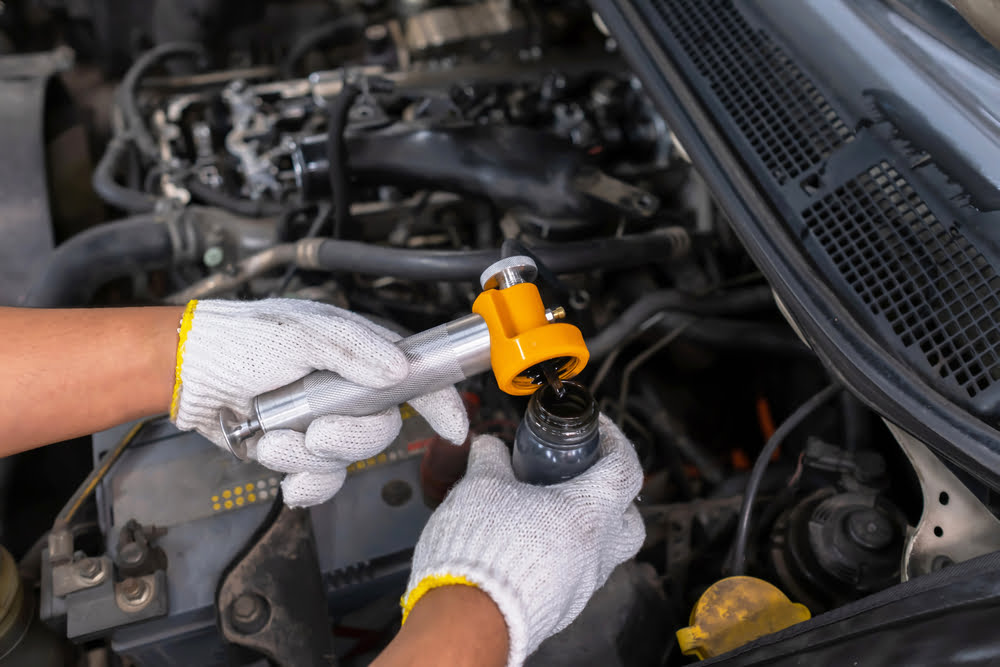
Benefits of Preventive Maintenance on Your Lubrication Systems  

Lubrication Systems 

Direct contact between two metallic surfaces causes friction, producing heat. These moving parts sustain increased wear and tear as a result. When a small layer of lubricant separates them, the moving parts do not make contact with each other, reducing the amount of wear and tear. While lubricants can be solids, liquids, or gasses, liquid lubricants are used for engine lubrication systems.

While most mechanics know the importance of proper lubrication, many do not have a preventative maintenance plan to protect against mechanical failures or equipment damage.

Why Lubricating Systems Preventive Maintenance is Important

If you don’t have a proper preventative maintenance plan for your lubricating systems, chances are you’ll deal with equipment failures, roller bearing damage, bearing failures, or mechanical failures. A regular oil analysis program keeps your equipment in tip-top shape and avoids potential component failures.

For example, a consistent oil analysis program can diagnose numerous issues, such as coolant or fuel leaks, and determine additive levels. In addition, the data that you uncover from oil analysis helps you eliminate future lubrication issues.

Lubricating System Maintenance: What To Check For

Now that you know the importance of performing preventative maintenance on your lubricating system, you must understand what things to check. First, it’s crucial to store lubricants in a properly sealed container to prevent potential clogs in the system. Also, only recommended lubricants should be used, so avoid those with additives, as they can clog your system.

A solid preventative maintenance program includes the following items:

  • Ensure you clean the lubrication reservoir occasionally but avoid using cotton rags.
  • Confirm that the suction filter is replaced annually while the screens are cleaned annually.
  • Empty and clean the strainer often.
  • Replace the pressure filter annually.
  • Scan all of your flexible hoses for holes, cracks, or breakdowns.
  • Inspect any tubing or pipes for breaks or flattening.
  • Review all the connection points for leaks and tighten connections if applicable.
  • Monitor the system for unusual increases or drops in pressure.

Even after performing all of the above items, conducting an oil analysis on your equipment is a good idea. The condition of the oil is a reflection of how well the machine is working and functioning. And without that analysis, you may think that your equipment is efficient when there’s something significantly wrong.

Benefits of Oil Analysis on Your Lubrication System

Oil analysis

Having a preventative maintenance schedule for your lubrication system and performing oil analysis gives you the necessary insights into the operation of your machines. Without this analysis, you may assume your equipment is efficient and running smoothly. The benefits of oil analysis on your lubrication system are included below:

A Detailed Explanation of Your System’s Performance

Instead of leaving your equipment to chance, oil analysis can provide a comprehensive breakdown of your system’s performance. This breakdown can detect specific contaminants and show what problems may occur from those impurities.

Unfortunately, some contaminants can cause severe issues, and without oil analysis, you wouldn’t know about the problems until it’s too late. For example, iron and aluminum can show cylinder or piston damage. And an antifreeze or water leak can strain the whole machine trying to push the thickened oil. If there’s water in the analysis, you are likely to have broken seals, or the equipment’s temperature is less than optimal.

Discover Problems Before They Happen

Oil analysis can save you time and money in the long run because it discovers problems before they happen. This comprehensive report of the lubricant in your equipment can indicate minor issues before they become significant.

For example, you can learn about specific types of wear and tear through oil analysis and any problems with the filtration system. If you have improper filtration, it can lead to costly repairs in the future.

Less Downtime and Fewer Extensive Repairs

Any minor issues will likely go unnoticed if you don’t perform preventative maintenance on your machines. But unfortunately, those minor issues often become massive over time, requiring extensive repairs. Not only do those repairs cost money, but they also cause downtime for your business.

Regular oil analysis can detect internal parts breaking down with high metal levels. In addition, the analysis can find potential cross-contamination with additive levels, particle counts, or even viscosity.

This regularly scheduled testing provides critical insights into the efficacy of your machines. These insights allow you to fix minor issues before they become extensive issues.

You can identify problems sooner and promptly and effectively address problem areas by routinely analyzing the lubricants in your machines. This ability will save the need for expensive repairs and unanticipated downtime.

The Extended Life of Your Equipment

Just like with anything, routine and proper maintenance increase your equipment’s chance of a long, useful life. Not only can oil analysis prevent extensive repairs, repair bills, and downtime, but it can keep your equipment running smoothly for an extended period.

And, when you have more efficient and better-running machinery, it’s less likely to need significant repairs over its lifetime. In addition, you likely won’t need to replace components quite as often as with less efficient machines.

Save Money

If oil analysis can help you avoid significant machine issues and long periods of downtime while extending the equipment’s life, you will inevitably save money.

This type of analysis is the easiest way to monitor the efficiency of your equipment. In addition, a consistent analysis program can reduce risk, uncertainty, and reactive work. Finally, because this program is used for predictive maintenance, it saves you money by preventing significant damage, reducing downtime, and decreasing the need for unplanned repairs. An oil analysis program increases production, efficiency, uptime, and equipment reliability.

Every mechanic needs an automotive repair parts partner, whether you’re a quick lube shop, brake shop, or muffler repair center. So let SVI be your partner! With over forty years as the premier supplier of repair parts, we are experts in what we do!