What are the 3 Main Alignment Lift Types?

automotive lifts

An alignment lift can be a big decision.  The right lift can take your home garage to a different level, or allow an automotive shop to work on different types of vehicles, allowing them to expand their business. That’s why it is crucial that you get the right alignment lift for the types of vehicles that you are going to be operating on. Different alignment lifts have different advantages that make them more suitable for certain situations. There are three main automotive lifts to choose from, and each has circumstances that make them beneficial. But first, it’s important to understand how an alignment lift functions.

Understanding Automotive Lifts

It’s common for auto shops or home garages to have difficulty when trying to perform complex wheel alignments on a standard vehicle lift. This is where the alignment lift comes in. Alignment lifts allow a mechanic or car enthusiast better access to suspension components to align your vehicle’s axles, tires and to make sure the steering wheel is straight. What makes alignment lifts an attractive choice for anyone operating on vehicles, are the features. They typically have non-resistant, free-floating front turn plates, rear slip plates, and are built to maintain and assist inaccuracy, for the best alignment possible. But what are the main types of alignment lifts and which do you choose?

The Three Main Automotive Lifts

Once you have decided that you are going to purchase an alignment lift, it’s time to decide which type of lift you’ll need. Each type of lift has certain strengths that can make it more suitable for certain types of vehicles. The three main lifts that you have to choose from are:

  • Two-Post Lifts- A two-post lift is a very common and versatile lift. This type of lift can be used on most vehicles and allows for easy access for most mechanical work.
  • Four-Post Car and Truck Lifts- A four-post car lift is great for a high-traffic environment.  They are generally considered safer than a two-post lift.
  • Alignment Scissor Lift- When space is a concern, the scissor lift is your best bet. Some scissor lifts are even portable. Different scissor models come with varying heights to help you select based on the average height of the vehicles you work on and the ceiling heights in your shop.

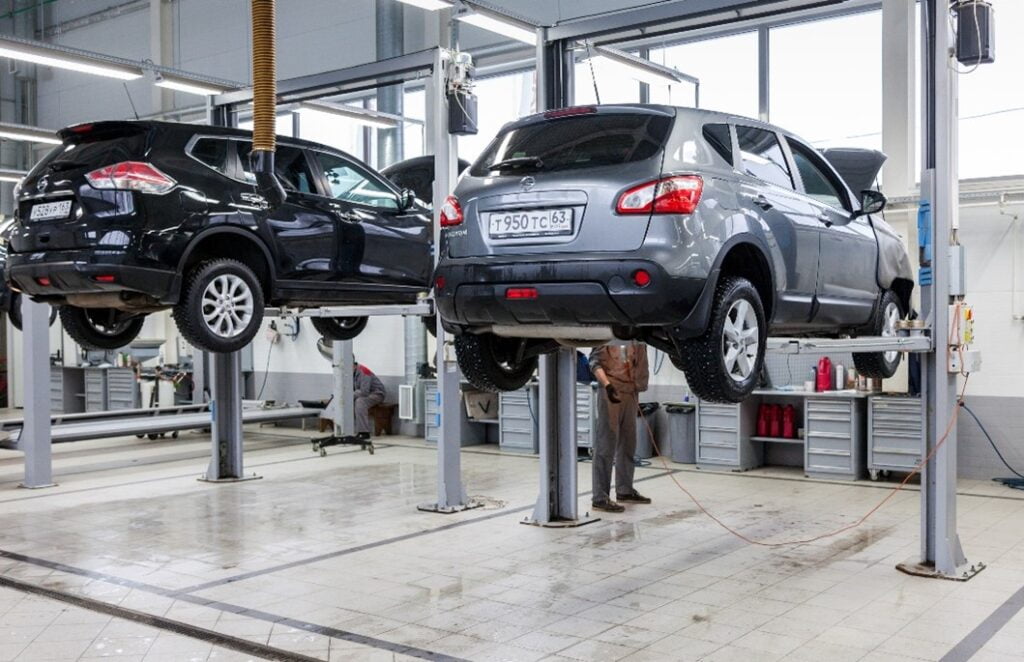
This is a basic layout of the three main alignment lifts.  Let’s take a closer look at the differences and help you decide which lift is best for you.

Two-Post Lifts

The two-post alignment lift has two upright columns, with four adjustable arms. Typically, this type of alignment lift is fueled by an electric/hydraulic power. It was created for automotive shops that did not have the ability to install an in-ground lift. This type of lift is the most used style of two posts above-ground lift found in the United States. European models can differ in how they are configured. The two-post lift can be the best purchase for someone wanting to replace an in-ground lift that is currently not working, allowing you to avoid a dragged-out process removal and installation of another in-ground lift. These lifts can help you operate on cars, light trucks, and other types of passenger vehicles.  The weight capacity can vary from 7,000 lbs. to 10,000 lbs.

Four-Post Lifts

The four-post lift is configured as a four-post surface-mounted lift, this is the typical type of lift used by many automotive shops. Outside of wheel alignment, it allows them to work on things such as a muffler, or to do an oil change. The four-post alignment lift allows vehicles to be driven onto two runways and lifted by its tires, exposing the underside of the vehicle. Being able to see the underside of the vehicle makes the four-post lift a popular option for many automotive shops. Due to the fact you can drive onto the lift, they are often called drive-on lifts due to this feature.  The four-post lift is the biggest of the bunch and takes up the most amount of room. However, it is a lot easier to load vehicles on a four-post lift, and the safest lift to operate out of the bunch.

Alignment Scissor Lifts

It can be extremely beneficial to purchase a scissor lift, especially for auto shops or garages with low ceilings. With a scissor lift, you can control the exact lift height desired. This type of lift only takes up the necessary space to effectively service a car, without the use of installed external posts. Once returned to its original position, you will no longer have to worry about ceiling height or additional space as the scissor lift will shrink close to the level to the ground. With the understanding of what that alignment scissor lift can provide, it’s time to look at the different types of scissor lifts, and things that should factor into your decision.

These three lifts are the most common types of alignment lifts and with good reason. They each have certain advantages that can make them a good choice depending on your objective and the space you have to work with.  Whatever type of lift you choose; you want to make sure you get your alignment lift from a supplier you can trust.

Find the Right Lift for Your Operation with SVI International

Whether you decide on an automotive scissor lift, a four-post lift, or any other lift model, it’s imperative that you purchase your lift and lift replacement parts from a highly reputable company. At SVI International, we are the industry’s leading supplier of auto lifts and lift repair parts for all types of automotive lifts.

With over 40,000 products, our diverse product line serves as a one-stop-shop for equipment parts, lifting equipment, fluid delivery products, RELS brake lathes, and so much more.

We know that downtime can be costly, so our 3 ready-ship warehouses provide on-time delivery and same-day shipping for in-stock parts.

An SVI specialist would love to get in touch about serving your needs, including any questions or concerns you may have. To get in touch, give us a call at (800) 321-8173 or complete our online contact form. We always respond quickly!
What Are The Parts Of A Tire? A Complete Guide.

Tires are a very integral part of every vehicle. Without them, there’s definitely no way you’re going to get anywhere. That’s why it is so important to understand the varying parts and the role each one plays. From the tread to the bead liner, here’s what you need to know about the seven parts of a tire.

What Are the Seven Parts of a Tire?

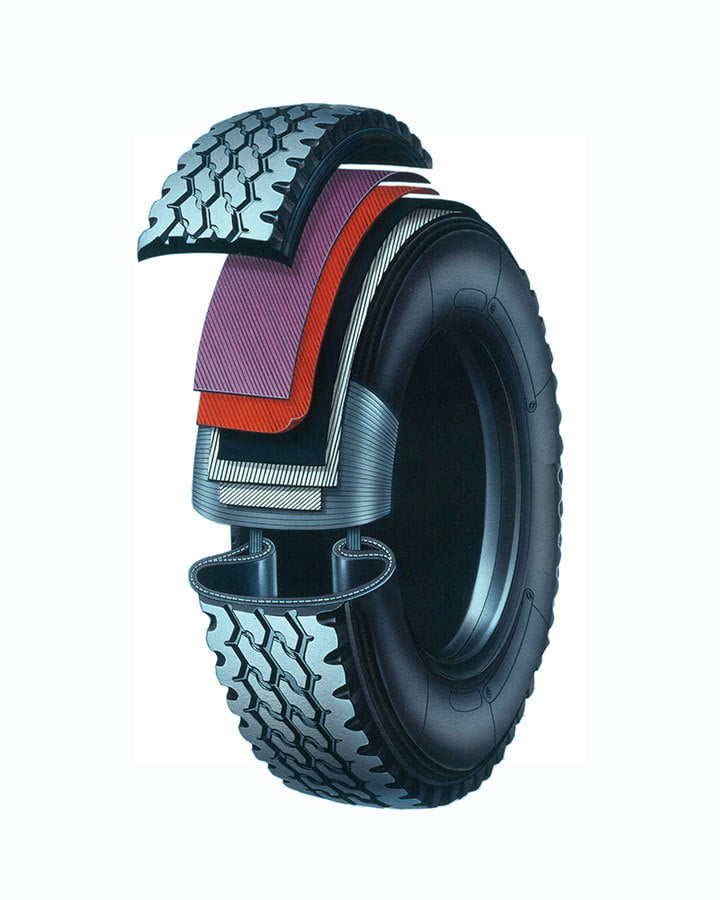
Each part of the tire has a specific purpose that helps ensure the integrity of the tire and your overall safety on the road. There are seven common parts you need to know to fully understand how a tire works.

Tread

This is the part of a tire that comes in contact with the road. Likewise, tread sipes are the smaller treads within the tread that help improve traction on slick surfaces such as sand or snow.

Sidewall

The sidewall is the side of the tire from the bead to the tread. The main purpose is to provide protection to the cord body. Most pertinent information about the tire is printed on the sidewall.

Belt Plies

These are the strong layers of cord located just under the tread. They provide stability and durability to the tire tread. In most cases, there can be anywhere from two to fourteen belt plies in a single tire.

Radial Cord Body

The radial cord body is made from rubber coated nylon cords called body plies. Usually made from polyester, the cord body gives the tire additional strength to hold up to wear and unexpected road conditions.

Inner Liner

Composed of solid rubber, the inner liner is the part of the tire that holds air. This is a crucial section of the innermost part of the radial cord body. While it is similar to an inner tube, modern passenger vehicle tires do not actually use inner tubes anymore.

Beads

This is the portion of the tire that holds the tire to the rim. Designed to keep the tire from moving out of place when the wheel rolls, they’re often made from high-tensile wire woven into rubber.

Bead Filler

This is a solid rubber compound inside the beads of the tire designed for added stability within the sidewall and bead area.

How to Read a Tire Sidewall

how to read a tire sidewall

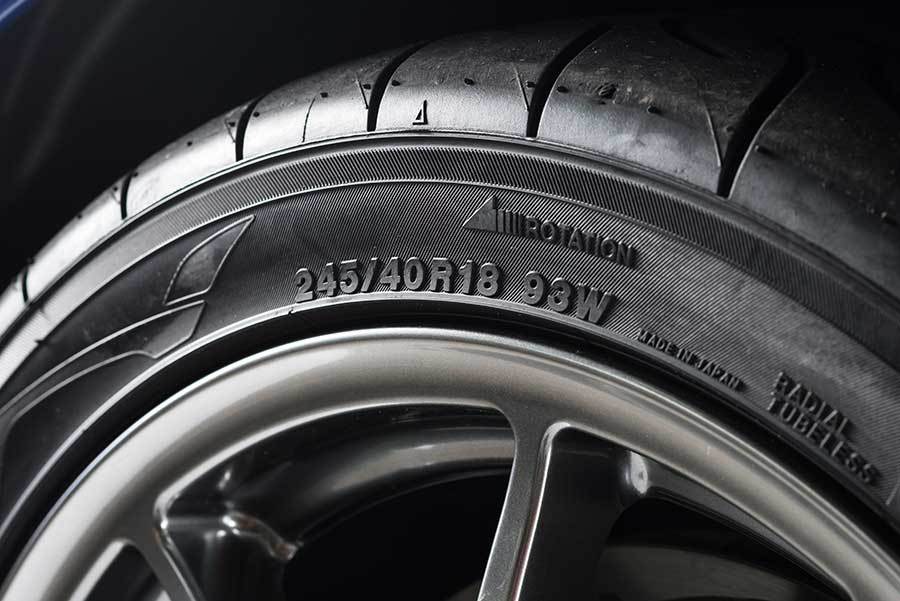
One of the most important skills that everyone needs to learn at some point in their adult life is how to read a tire sidewall. This important piece of the tire features all pertinent information that you need to know about the type, size, and diameter of a particular tire.

The six different parts of information on the tire sidewall are type, width, ratio, radial, wheel, and index. For example, the sidewall of a tire might have this written on the side:

P225/60/R17

In reading this, you would see that the type is P for passenger vehicle. The width of the tire is 225-millimeters. The aspect ratio is 60% as tall as it is wide. The R is for radial and 17 is the size of the wheel. Using this same formula, you can dissect any tire size written on the sidewall to determine whether a particular tire will fit your vehicle or not.

Comparing Different Types of Tires

When purchasing tires, it is important to know more than just the size. You want to ensure you’re buying the right type of tire for your particular vehicle and the conditions you’ll be driving in. For example, ice and snow conditions need a different type of type than dry roads or heavy mud. Here’s what you need to know.

Commercial Trucking Tires

These are the type of tires you see on large semi-trucks, fire trucks, and other forms of heavy equipment. They have a stiffer sidewall and heavier tread to accommodate their use in difficult weather conditions and even construction situations. These tires feature a heavier load rating to accommodate the size of the vehicle they are on.

Winter Tires

You can tell a winter tire by the coding “M+S” located on the sidewall. They have twice or more the number of tread sipes and feature a softer rubber compound that grips better in ice and snow conditions. Those who live in climates with rough winter conditions should consider using this type of tire during the cold season.

All-Season Tires

Also called an “AS” tire, all-season tires can be driven in any weather condition. This is one of the most popular types of tire for ordinary passenger vehicles. These are tires with a non-aggressive tread pattern that are generally original equipment on cars and trucks straight from the factory. The vast majority of tires available at local repair shops are classified as all-season tires.

Off-Roading or 4×4 Truck Tires

These tires can be classified as those for passenger vehicles or light trucks. They are specifically for situations where the vehicle is driven off paved roads in the sand or dirt. With an extremely aggressive tread pattern, they are specifically designed to keep from getting stuck in the mud.

SVI – Your Resident Auto Lift and Tire Changer Experts

Despite what most people might believe, there is far more to modern tires than just air inside of rubber. Whether you’re looking to buy new winter tires for your sedan or are looking for commercial ones with a meaty tread designed for a fire truck, it is important to know the various options available. By knowing this information, you can ensure you’re getting the right size and style for your needs every time.

Ready to learn more about how SVI International Inc. can help with all your commercial lift needs? Please contact us today.

What Is an EV Charger Type 1?

Understanding How to Charge Your Electric Vehicle

ev charging cable type 1

Electric vehicles, also known as EVs, are becoming a very popular choice for anyone in the car market right now. For people searching for a new car or looking to upgrade to a more economical friendly car, it’s an alternative option to the traditional vehicle. While most understand that electric vehicles use little or no gas, there is still confusion on how to charge them and where you can get the electric power to keep you on the road. With a simple understanding of how electric vehicles work, and what it takes to power them, you’ll be on the road in no time!

What is an Electric Vehicle?

An electric vehicle can be described as any vehicle that uses an electric motor to move. There are currently four main types of electric vehicles.  They are hybrid electric vehicles (HEV), plug-in hybrid electric vehicles (PHEV), A battery electric vehicles (BEV), and lastly fuel cell electric vehicles (FCEV). These different types of electric vehicles differ in how they get here power, or what it takes to make them run.

Hybrid Electric Vehicles were the first kind of electric vehicle to become popular in the marketplace.  They run on a combination of internal combustion engines and electric motors. Their batteries generally replenish themselves through the use of the internal combustion engine.

Plug-in Electric Vehicles, unlike hybrid electric vehicles, can be plugged in to recharge the battery.  They run on both gasoline and electricity. However, oftentimes they will be able to choose to run on just battery power alone, or a combination of electricity and gasoline.

Battery Electric Vehicles depend on only electricity for power.  Some may be concerned about the number of miles they can go on a charge; if that’s the case there are now BEVs that have an optional gasoline generator for longer travel.

Fuel Cell Electric Vehicles are powered by hydrogen fuels cells. What separates FEVs is how quickly they charge.  Unlike other electric vehicles, FEV’s can charge in a few minutes. However, finding a charging station can be difficult.

Understanding how electric vehicles differ is the first step in understanding how to charge them.

How to Charge Electric Vehicles

If you’re charging at home or while you’re out at a public charging station, you’ll need to make sure you have the proper charging cord for your car. The charging cord will attach from your vehicle to the charging station, allowing your car to get the electricity it needs to receive power. There are four different kinds of plugs, and they are categorized by the electric current they use. Two of the four plugs are alternating current (AC), while the other two are direct current (dc). It’s important to know the difference between these types of charges and the plugs they use.

Alternating Current Chargers

Alternative current has two different types of plugs— type 1 and type 2.

  • Type 1 charger is the most common for American vehicles. It allows the electrical current from the outlet to flow to the vehicle through the connector. The design features 5-pins. Type 1 plugs are single-phase and will put out a power output level of 3.7kW-7.4kW alternative current electricity and a range per hour of approximately 12.5-25 miles.
  • Type 2 charger is more common in the European market. It can carry power three-phase power allowing it to output more power and charge faster than the type 1 charger. It has 7 pins. At home, they can commonly get up to 22kW, and at public charging stations they can get up to a charging power of 43 kW, depending on your vehicle.

Direct Current Chargers

Direct current, like alternating current, has two different types of plugs. They are a CHAdeMO plug and a CCS plug.

  • CHAdeMO chargers are the standard for direct current charging.  It allows for seamless communication between the car and the charger. It can put out anywhere between 6Kw to 150Kw, of power at the moment. As electric vehicle batteries become more advanced and can be charged at higher powers, this type of charger will be able to put out even more power.
  • Combines charging system, known as CCS, is another plug-in direct current charger. It consists of 9 pins. CCS charging is only for DC rapid charging of 50kW or more. The two larger, lower pins on the plug enable the Direct Current connection that forces more electricity into your batteries in less time. 

When to Use Which Kind of Charge

Ultimately it depends on your vehicle and how far you plan to travel. As EVs have become more advanced, many allow for both AC and DC charging. But when should you use which? Typically, a type 1 or type 2 is slower than a DC connection. But they also are better on your battery. A DC charger is creating high currents in order to charge a battery rapidly. An Ac charge using a type 1 or 2 charger, is best when you are home or at someplace, you’ll be a while.  However, there might be times where you’re making a longer trip and need to charge quickly.  This is where a DC charge using a CHAdeMO, or CCS cable can come in handy.  The faster charging time will get you back on the road and allow you to continue on your trip.  As you can see, both have their place as long as your vehicle can support both.

SVI International: Connecting You with High-Quality Automotive Equipment

If ever in doubt about what parts you need to get your electrical vehicle charged or up and running, SVI International is always here to help. As a leader in repair parts for automotive lifts, you can always expect a prompt delivery from one of our three warehouses across the United States. Reach out to us at (800) 321-8173 or complete our online contact form. Ask us about specialty hydraulic cylinders if customized needs are required for your job.

What Kind of Hydraulic Fluid Does a Car Lift Use

If you have an automotive shop, or just enjoy working in your garage, then a car lift is likely the focal point of your workspace.  A car lift allows you to quickly work on the vehicles and keep a constitute stream of happy customers, or to enjoy working on your fun automotive projects in your garage.

Just like how you enjoy taking care of vehicles, it is also important to take care of your car lift. A car lift, just like any other piece of machinery, needs proper maintenance to run smoothly and efficiently. In fact, a majority of the car lift’s ability to operate comes from its cables and hydraulic fluid level. In order to make sure your car lift stays in top shape, it is important to make sure your car lift is properly lubricated at all times. When wondering what kind of hydraulic fluid does a car lift use, we have these answers and more to keep your equipment working safely and properly. At SVI International, we have all the automotive parts you may need to make sure your car lift stays in top shape.

How to Choose the Best Hydraulic Oil

You may be shocked to know many areas of your car lift needs to be lubricated.  For example, many two-posts car lifts need lubrication of their inside corners and latch shafts in order to continue to run smoothly. Lubricating your car lift and maintaining the proper hydraulic fluid level ensures your car lift will not malfunction, causing long waiting lines or, even worst, injured vehicles or persons.  As such, choosing the right lubricant is essential to upkeeping your car lift.

To start, lubricant and grease are not the same things. “Lubricant” implies a liquid, while “grease” implies a solid. As a general rule, always select the car lift lubricant suggested by your car lift’s manufacturer. This information can be found in your car lift manual, or you may be able to locate the information by calling the manufacturer’s number or through a simple google search by typing in your car lift’s information online. If you speak with a manufacturer, most will recommend a few different types of hydraulic oils which can be used on their lifts. Below are two of the recommended types of hydraulic oil to help you choose the best car lift to lubricate for your two-post car lift, four-post car lift, four-post roller jacks, pro-jacks, or a mid or low-rise car lift:

  1. The first brand is called “AW”. AW is short for anti-wear. This is a great type of hydraulic oil for your car lift. First, it protects your car lift from any rust and, or oxidation. Second, it contains anti-foam additives. Specifically, there are two versions of AW available for your use: AW32 and AW46. AW32 is a 10-weight oil after the additives are added. AW46, on the other hand, is a 15-weight oil after the additive is added. Both AW 32 and AW46 are blended with very refined naphthenic/paraffinic base oils. What is great about AW is that you receive all the advantages of a premium hydraulic oil, but at a much lower price point than a hydraulic oil of similar standards. AW32 or AW46 can be used anytime a premium AW product is not specifically called for.
  2. The second brand is referred to as “R & O.” R & O is short for rust and oxidation. Similar to the AW products above, R & O contains anti-foaming additives. As such, the weight of R & O is 10 weight oil after the additives are added. R & O is appropriate when premium R & O is not otherwise specifically called for.

You can purchase any of these above types of hydraulic oil from your local automotive store.

Per the usual course of maintaining your car lift, you will also need to lubricate your car lift’s chains. As you use your car lift, sand, dirt, dust, and other debris can get stuck inside your car lift’s chains – thus greatly reducing the life and integrity of the chains. For cleaning your car lift’s chain, a spray lubricant is best in this situation. To clean your car lift’s chains, first lower the car lift. You do not want any pressure on the chains when cleaning. Next, simply spray the chain and wipe it down.

How Often Should You Replenish Hydraulic Fluid Levels

First and foremost, you should perform a monthly check of your entire car lift to make sure it is functioning correctly and does not pose a danger to any person or vehicle. Concerning the hydraulic fluid level, also check this about once a month, and fill it in accordance with your car lift manual. Regarding your car lift’s chains, the frequency which you should check these depends on the environment in which you live. Although these will be checked during your monthly check, a lift that is in a dusty, dry environment will need to be lubricated more often than a car lift that is not in such an environment.

SVI is Here to Help

Just like you enjoy taking care of cars, you need to take care of your car lift. By making sure your hydraulic oil is at the correct level, and properly lubricating the car lift’s chains, you can take care of your car lift so, in turn, you can take care of your customers. At SVI, International, we have the automotive parts your car lift needs to stay in top shape. Contact us today to get the parts you need to keep your car lift functioning smoothly.

Questions About Hydraulic Oil for Lifts

Does hydraulic fluid come with lifts?

In short, no. Current restrictions in place essentially require that the required hydraulic fluid can only be supplied by the end-user.

What is the difference between AW32 and AW46 hydraulic oils?

AW32 and AW46 differ in their weights. AW32 is 10, at times called ISO32, and AW46 is 15, at times called ISO46.

What is the most recommended hydraulic oil by lift manufacturers?

Most manufacturers will recommend AW32 and AW46 due to their anti-wear, protection against rust and oxidation, and anti-foaming properties.