Types of Car Lifts: The Complete Guide to Car Lift Types

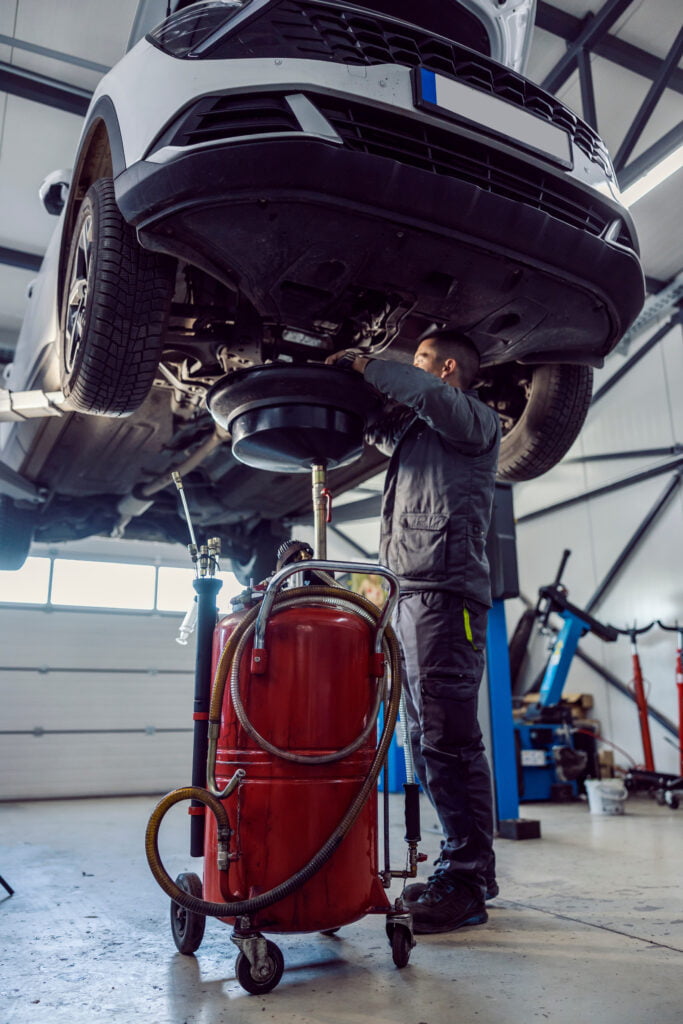
car lifts in an automotive garage

Numerous types of car lifts coexist with a common purpose: hoisting cars. While floor jacks raise a portion of a vehicle for small repairs, car lifts raise the entire vehicle into the air for a plethora of repairs, from simple fixes to challenging projects.

Despite a singular purpose, individual lifts feature unique lifting mechanisms, bringing strength to various applications. In the content below, we explore the ins-and-outs of a wide variety of car lift types, guiding automotive shops and car enthusiasts into an informed purchasing decision for their specific function.

Things to Consider when Choosing a Car Lift

While examining different types of auto lifts, load capacity, lift height, and lift speed must be kept in consideration.

  • Load capacity is the maximum weight a lift is capable of withstanding. Of course, load capacity differs depending on the strength of the lift, including size and number of columns or cylinders.
  • Lift height is the maximum height a lift can hoist a vehicle. Height is important to consider if undercar repair will be completed. For example, a lift with a maximum height of four feet should be utilized for wheel or body work, not underbody maintenance.
  • Lift speed is the amount of time needed to completely raise or lower the lift. Slower lift times are acceptable for a home garage when maintenance, repair, or body work are a hobby. Quick lift speed is exceptionally important for high volume repair shops, but lift speed and descent is also regulated for safety in high volume shops.

It is crucial to take into account these factors when evaluating various auto lifts to ensure optimal performance and safety in automotive maintenance and repair settings.

The Three Main Car Lift Types

There are three main car lift types. Two-post lifts allow easy access and can be used for most auto maintenance and repair jobs. Four-post car and truck lifts are ideal if your shop works on large vehicles and/or needs extra parking space. Scissor lifts are designed for small shops and lightweight vehicles. Some of these lifts are even portable to make it easy for you to move the lift to any part of your work area.

Types of Car Lifts

In the car repair industry, choosing the right car lift is a big deal for getting the job done efficiently and safely. Let’s explore the different types of car lifts examining the different types and their unique features.

Two-Post Surface Mounted Lifts

Two-post surface-mounted lifts, commonly used in “drive-through” maintenance shops, are prized for their versatility and robust weight capacity ranging from 7,000 lbs. to 10,000 lbs. These lifts, featuring two columns, provide full access to a vehicle’s underside, making them ideal for diverse repair tasks, from routine inspections to complex exhaust or fuel system repairs. While the lifts require secure floor bolting for stability, their adaptability across various vehicle types and efficient design makes them a vital asset in mechanic shops, streamlining maintenance operations.

Symmetrical vs Asymmetrical

Symmetrical and asymmetrical lifts are both two-post lifts, but there are important differences between the two. Symmetrical lifts have four arms of equal lengths. They provide a stable base for large vehicles such as pick-up trucks and vans. Asymmetrical lifts, on the other hand, have shorter front arms and longer back arms. Most of the vehicle’s weight sits on the back arms rather than in the middle. These lifts are ideal for cars, as a mechanic can not only fix underneath the vehicle but also access the inside of the vehicle as needed.

Four-Post Lifts

The four-post lift is commonly considered the most popular and versatile car lifts that a shop can utilize.

Due to extra support, four-posts lifts are extremely sturdy, with greater load capacity than their two-post counterparts. Four-post runway lifts are wheel-engaging, allowing vehicles to drive directly onto the lift. The lift can adjust to the work being done. For example, the car’s wheels rest on the lift for undercarriage work but with the use of rolling jacks can be removed for wheel and brake work.

With a four-post lift, you can reach heights of up to 14 feet to work on a vehicle. Their load capacity makes four-post lifts a common solution in the automotive repair industry. Certain four-post lifts don’t require anchorage to the floor, allowing them to be moved with ease when needed. Though common in a professional setting, four-post lifts can also be found in the hands of homeowners and automotive enthusiasts – largely due to their mobility and use as a way to store more cars in small space one right over the other.

Four-post lifts can double as storage, allowing for two cars stacked in the same location.

Four-Post Alignment Lift

The four-post lift, commonly configured as a surface-mounted lift, is a standard choice for many automotive shops. Apart from facilitating wheel alignment, it allows mechanics to work on various components such as mufflers or perform oil changes. This type of alignment lift enables vehicles to be easily driven onto two runways and lifted by their tires, providing access to the vehicle’s underside. The visibility of the underside makes the four-post lift a popular option in automotive shops, often referred to as “drive-on lifts” due to this convenient feature. While the four-post lift requires more space, it stands out for its ease of vehicle loading and is considered the safest among lifts.

Drive-On Parallelogram Lifts

The parallelogram lift resembles both the four-post lift and scissor lift. In functionality, the parallelogram lift is drive-on, like the four-post. Aesthetically, it resembles a scissor lift with accordion-like hoisting mechanisms beneath runways. The parallelogram differentiates itself in mobility; it moves slightly forward or backward while in motion.

FRAME ENGAGING LIFTS

Excellent for use in home garages, low-rise frame engaging lifts – often scissor or parallelogram style – are the most basic model available. These lifts often have a load capacity of under 3 tons.

Electric-hydraulic or compressed air often drive frame engaging lift movement. It is important to note that frame engaging lifts do not provide access to the entire underside of the vehicle. Therefore, low-rise frame engaging lifts are most often employed for wheel work or body projects.

SCISSOR LIFTS

Looking in to a scissor lift can be particularly advantageous for auto shops or garages with low ceilings. Scissor lifts offer precise control over lift height, making them ideal for spaces with height constraints. This type of lift optimizes space utilization, requiring only the necessary area to efficiently service a car without the need for external posts. Upon returning to its original position, the scissor lift minimizes concerns about ceiling height or additional space by shrinking close to ground level. Beyond these benefits, scissor lifts come in various types, each catering to specific needs. Factors such as versatility and weight capacity should be considered when making a decision about which scissor lift is most suitable for your requirements.

Parallelogram Lift

A parallelogram lift is similar to a four-post lift. However, it doesn’t lift a vehicle straight into the air. Rather, the vehicle is lifted at a slight angle to be either a bit ahead of or behind a vehicle on the ground.

In-Ground Lifts

In-ground lifts have been a widespread component of automotive shops for years, an industry standard. Their key characteristic is in the name; these lifts descend into the floor when not in use. In-ground lifts are also popular for flexibility of design. They can either be frame or wheel engaging.

In-ground auto lifts are often equal in cost to other lifts and do require more installation steps and time. However, their unique functionality, low cost of ownership and durability have proved extraordinary in automotive repair shops and home garages for decades.

Power Post in-ground lifting systems have proven more reliable and economical than any other. Power Post lifts are durable; many shops utilize lifts installed over 50 years prior, operating just as excellently as the day they were installed.

Power Post lifts are low-pressure hydraulic lifting systems from SVI International, Inc. These lifts are not illegal, banned, or even under consideration for regulation. The EPA has permanently exempted in-ground low-pressure lifts from regulation.

In-ground lifts generally fit into three categories: front and rear lifts, side by side lift, and single post lifts. Below, we explore a small sample of each kind with significant differences.

In-Ground Front and Rear Car Lifts:

Each front and rear car lift listed below has similar stats, excluding lifting capacity. Our goal is to provide a starting place for identifying the best lift for your situation.

  • 2P-102:
    • Lifting capacity: 11,000 lbs., evenly distributed on front and rear columns
    • Single moveable front and single stationary rear
    • Axle engaging
    • Adjustable front cylinder
    • Air/hydraulic oil operated
    • Post diameters: 7 ½ inches front and rear
    • Lift height: 69 inches front and 73 inches rear, based on standard adapters
    • Multiple lip seal design for increased performance
  • 2P-103:
    • Lifting capacity: 16,000 lbs., evenly distributed on front and rear columns
  • 2P-202:
    • Lifting capacity: 11,000 lbs., evenly distributed on both columns
  • 2P-203:
    • Lifting capacity: 16,000 lbs., evenly distributed on both columns

In-Ground Side by Side Car Lifts:

  • FSDT-28BS
    • Lifting capacity: 12,000 lbs., evenly distributed on front and rear columns
    • Operation: Full-hydraulic
    • Lift height: 72 inches from the floor to the top of the adapter pad without extension
    • Plunger centers: 57 ½ inches; mechanical, heavy-duty racks equalize plunger movement
    • Cylinders: 8 ½ inches in diameter
    • Solid steel bolster-style and low-profile swing arms
    • 360-degree adapters nesting style, swivel adjustable on sliding sleeves
    • Automatic locking: a spring-loaded latch automatically engage into notches as the lift is raised. Release lock while lowering; the lock will automatically reset for the next job.

In-Ground Single Post Car Lifts:

  • FS-10AS
    • Environmentally friendly
    • Safe to operate
    • Handles most domestic and imported models
    • 4-position adapters provide undercar accessibility
    • 4-inch road clearance
    • Ideal for any shop or home garage
    • Excellent for front-end and suspension work
    • Lift capacity: 8,000 lbs.
    • Operation: Semi hydraulic or full hydraulic
    • Lift height: 72 inches
  • SC-363
    • Perfect for lifting sports cars, specifically Porsche 911 models
    • Associated with wealthy enthusiasts, racing and high-performance markets
    • Unequivocally safer than any old-fashioned lift
    • Lifts at specifically intended pick-up points
    • Optional 360-degree rotation keeps mechanics between the work and workbench
    • Low maintenance
    • Simple design

Low-Rise Lifts

Low-rise lifts are ideal for any auto repair shop with a low ceiling. These two-post lifts can typically hold up to 20,000 lbs. in weight and are perfect for fast auto repair and maintenance jobs.

Mid-Rise Lifts

Mid-rise lifts are ideal if your shop does a lot of brake and suspension work. They can also be used to do repairs under a vehicle, but it may be hard to access certain areas, especially the vehicle’s center.

Small Equipment / Motorcycle Lifts

Small equipment lifts can be used to repair golf carts, landscape equipment, lawnmowers, personal watercraft, snowmobiles, and more. Motorcycle lifts can be used to repair or even store a motorbike. If you work with small vehicles, investing in one or both lift types may be a good idea, as they increase safety while helping you get maintenance/repair jobs done faster than would otherwise be possible.

Specialty Lifts

Specialty lifts such as single-acting hydraulic cylinders are ideal for specialized auto repair and maintenance jobs. They can be used by industrial and small auto shops alike.

SVI has durable, dependable car and truck lift models and lift replacement parts that you can count on for years to come. We offer access to multiple brands, fast shipping, and customer service tailored to meet your exact needs. Get in touch with us today to find out more about our different types of car lifts or to get a price quote on the model of your choice.

Explore Different Types of Lifts with SVI International, Inc.

SVI International, Inc is the industry leader in automotive lifts and lift repair parts, providing over 40,000 repair parts for a plethora of lifts and brand-new auto lifts of extraordinary quality. SVI is dedicated to providing innovative solutions to solve industry challenges. If a required part has been previously discontinued by its original maker, our team of fully degreed mechanical engineers design an alternative solution that others won’t be bothered to help with.


Our three “Ready-Ship” warehouses ensure that our solutions are delivered quickly, without affecting a business’ bottom line. To inquire about our products or request a quote, contact our team today at (800) 321-8173 or via our online contact form.

Understanding Automotive Lift Safety Standards & Procedures

An automotive lift is an integral part of any auto repair shop and thus needs proper maintenance to ensure it’s in good working order at all times. Keeping your lift clean, lubricating rollers and pivot points, tightening bolts and screws, and replacing lift components as needed can prevent breakdowns and extend the lifespan of your lift.

It’s also important to take safety measures to make sure your lift doesn’t pose a danger to mechanics or customers. Some maintenance tasks also double as safety precautions, such as tightening bolts and replacing damaged components. Other safety measures aren’t found on a typical maintenance checklist but are important nonetheless.

The Importance of Car Lift Safety

The average weight of a small car ranges from 2,600 lbs. to 4,400 lbs. SUVs can weigh as much as 6,600 lbs. Commercial vans weight about 12,000 lbs., while commercial buses weigh between 30,000 lbs. and 40,000 lbs. If a vehicle isn’t completely secure on a lift, it could lean too far to one side or fall off completely, causing devastating vehicular damage and seriously injuring anyone in range of the fall.

Furthermore, a damaged lift can cause safety problems even if it’s not being used. Leaking hydraulic fluid from a lift can damage the respiratory system, cause skin burns, and/or start a fire. Failure to properly ground the lift can cause electric shocks.

Proper Automotive Lift Procedures

Get Lift Certified

Call an ALI-certified lift inspector to inspect the lift after it’s been installed. A good inspector will make sure the lift is properly installed and working well. You’ll also want to schedule annual inspections to ensure the lift is safe and in good working order at all times. As an added benefit, lift certification builds trust in your auto shop, as customers know that you put a priority on safety.

Know the Lift You’re Using

All car lift operators should be properly trained to use the lift in question. As lift specifications vary greatly depending on the brand and model of lift, regular training will likely be in order even for experienced lift operators. Knowing the lift you’re using will help you follow best practices when operating the lift. It will also enable you to notice problems that could pose safety risks to other mechanics. If your lift operator is inexperienced or still undergoing training, proper supervision from an experienced operator is in order to prevent lift damage or mishaps.

Never attempt to use a lift for a vehicle that weighs more than the lift’s weight limit. Furthermore, bear in mind that you can’t safely use a traditional car lift for an electric vehicle. EVs have a different weight distribution than gas-powered vehicles; what’s more, an EV’s weight changes significantly when you remove components such as a battery pack. If you plan on working on EVs, invest in an EV vehicle lift designed to safely handle the type of EVs you’re maintaining and repairing.

Position the Vehicle Correctly

Every lift has instructions on vehicle positioning. Follow these closely and never settle for “almost” or “close enough”. Each lift component plays an important role in keeping a vehicle steady. What’s more, the lift’s safety locks are unlikely to work properly if the vehicle isn’t in the right position.

Follow All Work Safety Guidelines

Even a secure lift won’t guarantee lift safety for your mechanics. Each person in your shop should follow basic safety guidelines to prevent injury.

Personal protective equipment and proper clothing are a must. Mechanics should wear proper work clothing, tight-fitting gloves, and sturdy work shoes when working in the shop. The area around a lift should be free from tools, devices, parts, and other items that could cause accidents. Clean oil spills right away to prevent slips and falls.

All mechanics should have the right tools for any repair job. Using improper tools and machinery while working on a vehicle raised by a lift can cause damage and/or injury.

The recommended temperature range for operating a lift is 41° – 104° F. If the temperature of your shop is outside this range, adjust the thermostat and wait until the temperature is right before turning on the lift.

Regularly Inspect the Automotive Lift

An auto shop manager or qualified mechanic should visually inspect each lift in the shop every single morning before the workday starts. Check the cables and sheaves for signs of wear and tear. Wipe down cables if needed, check the anchor bolts, and lubricate parts in accordance with the manufacturer’s instructions. Check the adapter for signs of damage and make sure the hydraulic fluid is at the right level.

It’s also important to inspect the area around a lift for potential hazards. Corrosive fluids should always be stored away from the lift. Move nearby machinery and tools away from the lift to prevent accidents. Make sure the warning and safety labels on the outside of the lift are clearly visible.

Elevate Your Shop with Our OEM Lift Parts

Every auto shop owner needs a reliable auto shop equipment and parts supplier to ensure all machinery is in good working order at all times. That’s why auto shop owners throughout the United States turn to SVI International for products and services.

At SVI, we specialize in providing auto shop owners with a huge selection of parts from leading brands. Our stock also includes discontinued parts and our team of mechanical engineers can even create custom parts on request to help you save money. What’s more, all parts in stock at one of our ready-ship warehouses are sent out the same day to ensure you get your order as quickly as possible. Contact us at your convenience to find out more about our products or to get a price quote. Our team of experts will work with you to help you find what you need and the best possible deals.

Used vs New Car Lifts: Which Should You Purchase?

A mechanic is using a car lift to work on a vehicle he knows the benefits and differences between used vs new car lift

Buying a lift is one of the most important decisions you’ll make as a shop owner. As one of the primary pieces of equipment in your shop, you want to purchase one that works for your needs and your budget. However, there are endless options for car lifts, including in-ground, two-post, surface-mounted, motorcycle, and scissor lifts, both new and used. The seemingly never-ending choices can be overwhelming for anyone, even if you think you know what you need.

Which Car Lift Do You Need?

There are a lot of considerations when deciding which lift to purchase. While cost may be your biggest concern, you must ensure it meets your shop’s needs, including floor space, vehicle weight, and more.

For example, some shops may find a four-post lift best, primarily if they work on larger vehicles. This is because a four-post lift has a post in each corner, allowing your shop to lift heavy vehicles. More often than not, however, a two-post lift will work just fine.

Two-post lifts also provide a stable environment for servicing or modifying vehicles, with two posts either across from each other or at opposing corners. In addition, a two-post lift allows mechanics to work underneath the car with relative ease.

Scissor lifts are more affordable and great for shops without much floor space and limited ceiling height. However, they have some limitations, such as the lack of access underneath the vehicle. 

Once you’ve decided what type of auto lift is best for your needs, you’ll want to consider the differences between purchasing a used vs. new car lift.

A mechanic is using a car lift to work on a vehicle he knows the benefits and differences between used vs new car lift

What to Consider When Purchasing Used or New

Once you’ve considered your shop’s space, ceiling height, types of vehicles you work on, and overall needs, you’ve likely decided on the kind of auto lift to purchase. However, should you buy a new auto lift or a used one? Various factors come into play when deciding between a used vs. new car lift.

Price

While the price may be your most significant consideration, the lowest price doesn’t always equal the best value. If you’re looking for a budget-friendly auto lift, ensure you have a list of specifications that are deal-breakers. This way, you can get everything you want for good value. Whether you’re looking to buy a used or new auto lift, a list of your required specifications is essential.

However, if you’re looking to purchase a used auto lift, you need to ensure that the cost of maintaining it isn’t worth more than a new auto lift. Buying a new auto lift is often more affordable than maintaining and refurbishing an old one.

If you want to purchase a used auto lift, going to a reputable supplier/distributor is critical to ensure that the lift has been adequately maintained and is in good working order.

Maintenance

If you’re purchasing a used auto lift, ensure that regular maintenance has been done. It’s crucial to ask for the maintenance and repair history to confirm that the lift is in good shape.

A new car lift manufacturer usually offers warranties on moving parts and the frame, with some warranties more comprehensive than others. Many manufacturers, usually the most reputable ones, provide extended warranties that cover the entire life of the lift.

Purchasing a used car lift from a known distributor will give you peace of mind, knowing that

Safety

Safety should be of the utmost importance when comparing a used vs new car lift. You must ensure that any used lift you may be considering is safe, including inspecting the seals and cylinders. In addition, check the safety locking system, as well as the chains and cables for wear and tear, including corrosion.

Purchasing a used auto lift from a trustworthy distributor rather than another local mechanic’s shop would be very beneficial, so you have a guarantee on your purchase.

Distributor

Unfortunately, some small dishonest distributors can make purchasing an auto lift stressful. Because of this, it’s imperative to research the brands the distributors are selling, as sometimes these manufacturers are located overseas without regard to ALI certification or safety. So, if you find a reasonably priced auto lift from a small distributor, ensure the manufacturer is reliable and certified.

However, a trustworthy distributor or supplier should give you peace of mind whether you purchase a new or used auto lift.

Research

Doing research is the most critical factor when deciding between a used vs. new auto lift. You should research the manufacturer, the supplier/distributor, and the specifications and warranty of the auto lift.

Research is even more critical if you’re purchasing a used auto lift. For example, you’ll need to ensure you’re paying only what the lift is worth, especially if some parts are missing, worn, or damaged.

Should You Buy a Used vs. New Car Lift

A mechanic is using a car lift to work on a vehicle he knows the benefits and differences between used vs new car lift

One important thing to note is that a well-maintained auto lift can last for 20-40 years. So, a well-priced used four-post or two-post auto lift may be the perfect investment if you know it’s been maintained regularly. In addition, a used auto lift will almost always offer a cost-savings benefit over a new lift. 

While there are a lot of unknowns with a used auto lift, purchasing from a reputable distributor/supplier can assure you that the lift is in good working order, is ALI-certified, and is ready for heavy lifting.

However, new auto lifts usually come with an extended warranty, so consider purchasing a new lift if the price is not a factor.

SVI International – For All of Your Auto Lift Needs

Not only does SVI offer a comprehensive inventory of new and used auto lifts, but we’re also here to help you every step of the way. In addition, SVI has replacement parts for all types of auto lifts, so you can rest assured that your shop remains fully functional with little to no downtime.

We can help you find the proper auto lift for your needs, whether you’re a car enthusiast with a home garage or a large quick service franchise. We look forward to being your auto lift supplier, so contact us today!

Usual Car Lift Problems: 4 Post & 2 Post Lift Troubleshooting

car on a two post car lift

Even a high-quality car lift will have problems from time to time. Understanding how your lift works and how to address these problems can save you time and money by enabling you to fix small problems relatively quickly. What’s more, it can also prevent issues from re-occurring as you’ll know which maintenance jobs need to be done regularly to prevent serious issues.

Common Car Lift Problems

Lift movement problems are among the most common issues auto repair shops face. Sometimes a lift may lower more slowly than it should; in other instances, it may not rise or come down at all. Other common problems include air getting into the oil or blowing out the compressor valve, sinking or sagging lift arms, safety cable malfunctions, and leaks in the relief valve and/or lowering valves.

Understanding 2 Post Car Lift Problems

To understand why your 2 post car lift isn’t working properly, it helps to know a bit about how these lifts operate. The exact design varies depending on the model and brand name you pick, but all 2 post car lifts have two upright columns and lift a vehicle using lift points on the vehicle’s undercarriage. A 2 post car lift also has four adjustable arms and two hydraulic cylinders. The power unit may be hydraulic or electric and most units have a 220-volt motor.

Typical 2 Post Lift Issues

The root causes of most 2 post lift issues are heat degradation, air contamination, and electric and mechanical faults. In some cases, the problem may have two root causes. Heat degradation, for instance, can wear away at the lubrication in your lift. This can lead to mechanical problems.

Diagnosing 2 Post Lift Problems

If the lift is making crackling noises or shooting out sparks, your problem is almost certainly an electric one. Cranking noises are typically caused by mechanical faults, while cracking and knocking noises are a sign of air contamination. A stalled lift, on the other hand, could be caused by heat degradation, mechanical problems, electrical issues or a combination of two or three problems.

2 Post Lift Troubleshooting: How to Fix Common Issues

If you suspect air contamination, open the heat valve to see if there is air inside. If there is, release the air until liquid starts coming out. If the hydraulic cylinder is leaking, you can remove it and clean it yourself if you have the right tools. If you think the electrical wiring is frayed or faulty, cut power to the lift and examine the wiring and switches to see if there are visible signs of damage. If the lift still doesn’t move or work properly, examine it carefully to see if a small mechanical issue such as a loose bolt is to blame. Bear in mind that you should never walk under the lift or fix complex problems without professional help.

Understanding 4 Post Lift Problems

A 4 post car lift has four posts and two synchronized lifting crossrails. These lift models also have a hydraulic cylinder and an assortment of steel cables and/or hydraulic circuits. The motor requires a 30-amp circuit and could be either 110 or 220 volts.

Common Issues with 4 Post Lifts

Common issues with four post lifts include locking mechanism problems, latch problems, hydraulic leaks, failure to move up or down, uneven lifting, and insufficient air pressure.

Diagnosing 4 Post Lift Problems

If the problem is a one-off issue, you can most likely fix it on your own by inspecting the lift, looking for signs of damage or disrepair, and dealing with the issue. However, persistent problems can be an indication of mechanical failure or indicate a need to replace one or more mechanical components. Check the owner’s manual to make an accurate diagnosis or call in a professional maintenance and repair team to address serious issues quickly.

4 Post Lift Troubleshooting: Resolving Common Problems

If the lift won’t move up or down properly, check the latches and adjust them as needed. If this doesn’t work, check the air line to make sure there’s sufficient air pressure. Hydraulic leaks and/or low hydraulic fluid can also cause lift/lowering problems, so check the hydraulic cylinder if issues persist. An uneven lift is often a sign that the vehicle on the lift isn’t properly balanced; in such instances, you’ll want to immediately lower the lift, drive the vehicle off the lift, and drive it back on again. Make sure the wheel chocks are secure to prevent accidents or damage to the vehicle. If the lift won’t lock properly at one or more stages of lifting/lowering, then your locking mechanism likely needs to be replaced.

Preventive Maintenance to Avoid Lift Problems

All lifts need regular maintenance in order to avoid problems that could be costly or impossible to fix. Regular maintenance jobs include lubricating posts with grease and checking arm adjusting locks, cable connections, and cable tension. Check the hydraulic fluid each month to make sure the fluid is clean and at the right level. Inspect the lift for cracks, bends, leaks, rust, and broken parts every six months. Have an ALI-certified inspector check the lift once a year even if the lift is working properly.

SVI International for Car Lift Parts and Support

SVI International offers top-tier 2 post and 4 post car lifts from a range of reputable brands. We also offer over 40,000 replacement parts, including components from discontinued lift models. All our parts are backed by a one-year warranty and we offer same-day shipping for most orders. Our two ready-ship warehouses make it easy for you to get products without undue delay, while our seasoned customer service team offers personalized advice and assistance to help you find products and place your order. Get in touch with us at your convenience to learn more or get a price quote.