
Guide on Choosing the Best Air Compressor for Automotive Shops

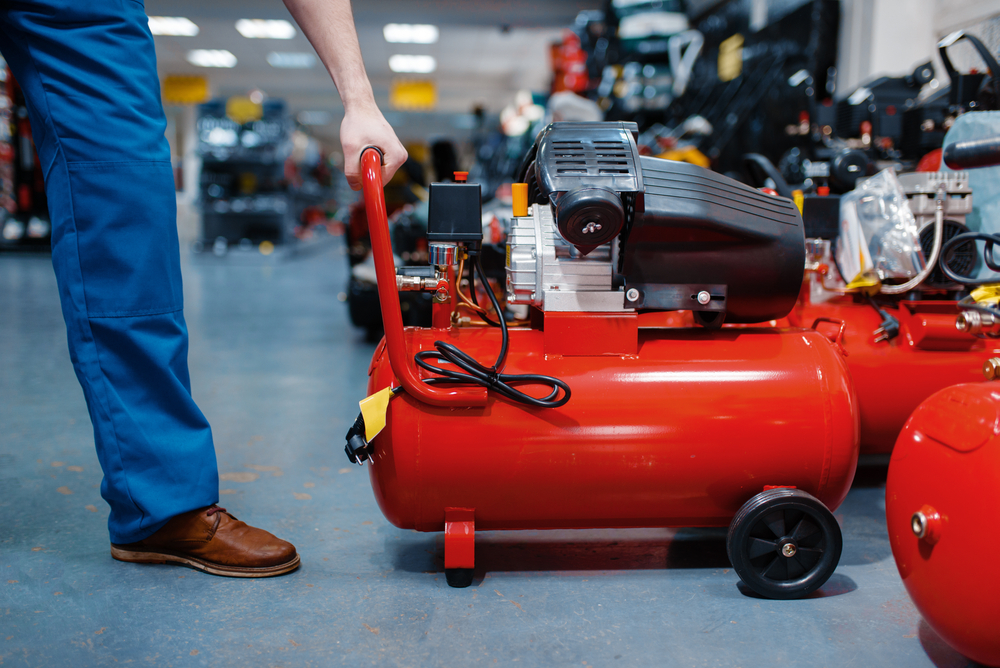
man purchasing an air compressor at the store

Every successful automotive shop relies on one often-overlooked workhorse: the air compressor. It powers everything from impact wrenches and ratchets to paint sprayers and tire changers. And when the compressor goes down, productivity grinds to a halt. That’s why it’s important to pick a compressor built for the pace and pressure of real shop life.

Every shop runs a little differently, but the right compressor always fits the rhythm of the shop it serves. Finding that fit means looking past surface specs and focusing on how a unit holds up under real workloads. The choices below matter because they shape how smoothly the workday goes, how long your tools last, and how often you’re calling for repairs. And when issues eventually arise (as they do with all machines), having a partner like SVI to provide parts and repair solutions keeps your shop moving without missing a beat.

What to Look for in an Automotive Shop Air Compressor

Power Requirements

Before anything else, match your compressor’s power to the demands of your tools. Most automotive shops lean toward 5 to 7.5 HP units with at least 60-gallon tanks, but high-use environments might need even more. Look at your most air-hungry tools, like impact wrenches, grinders, spray guns, and make sure the compressor delivers the needed CFM (cubic feet per minute) at the right PSI. A mismatch leads to poor tool performance and slow jobs.

Tank Size and Duty Cycle

A larger tank means longer runtimes without pressure drops. If your team works in steady shifts or uses multiple air tools at once, aim for at least an 80-gallon vertical tank. Also, check the duty cycle. This tells you how long a compressor can run before it needs to cool down. Shops running compressors most of the day need units rated for 100% duty cycles.

Portability vs. Stationary Compressors

Small, portable compressors can be handy for mobile work or tire bays with space limitations. However, most full-service shops do better with stationary models. These units stay fixed, supply steady air, and typically last longer under heavy use. Go portable only if flexibility is more valuable than raw output.

Noise Levels and Your Workspace Environment

Compressors can be loud. In smaller shops or indoor bays, quiet operation matters. Look for models with enclosed motors or sound-reducing features to keep the noise down and the focus up. Your team’s comfort and communication benefit.

Oil-Free vs. Oil-Lubricated Compressors

Oil-lubricated units tend to last longer and handle bigger loads. Oil-free models require less upkeep and are good for clean-air applications, like paint booths. Choose based on use, not convenience.

Top Types of Air Compressors for Auto Shops Based on Shop Size and Use Case

Not every shop needs a high-horsepower, industrial-sized unit. The best air compressor is the one that matches your space, workload, and tool demands without wasting money, energy, or floor space. Here’s a look at which types tend to work best in real-world shop setups.

Small Shops or Mobile Mechanics

Compact, portable compressors with 20- to 30-gallon tanks and moderate CFM ratings work well in tight spaces or service trucks. These units are easy to move and handle low-to-mid-demand tools like air ratchets, small impact wrenches, or blow guns. They’re not built for long runtimes but shine in quick, light-duty tasks.
Mid-Sized General Repair Shops

For two- to four-bay setups running multiple tools throughout the day, a two-stage, 5- to 7.5-HP stationary unit with a 60- to 80-gallon tank is often the sweet spot. These compressors can run impact guns, tire changers, and basic air tools without pressure drops or overheating. Look for solid duty cycle ratings and reliable motor builds.
Full-Service and High-Volume Shops

Large operations need high-capacity rotary screw or heavy-duty two-stage piston compressors with 80- to 120-gallon tanks, 100% duty cycles, and 10+ HP. These units support nonstop tool use across several bays, paint booths, and tire machines. A well-placed unit with adequate plumbing helps maintain even pressure across the shop.
Specialty or Clean Work Areas

Oil-free compressors may be a smart fit for paint bays or detailing rooms where clean air is critical. While not ideal for continuous heavy-duty use, they help prevent contamination and reduce cleanup in precision work zones.

Top Air Compressor Brands Mechanics Trust

Ingersoll Rand – Best for High-Volume, Full-Service Shops

Known for their industrial-grade performance, Ingersoll Rand compressors are built to handle heavy daily workloads. Their two-stage and rotary screw units deliver steady, high-volume air output, ideal for multi-bay shops running multiple tools at once. Mechanics appreciate their reliability, consistent pressure, and broad parts availability, which makes service easier when the time comes.

Quincy – Best for Quiet Operation and Indoor Bays

Quincy compressors strike a solid balance between performance and low noise. Their “Quiet Series” models use enclosed motor designs to cut down on sound without sacrificing power. That makes them a favorite for indoor workspaces or shops where noise control matters. These units also come with long warranties and are known for efficient operation over time.

Champion – Best for Long-Term Durability and Easy Rebuilds

Champion compressors earn high marks for longevity. Their cast-iron construction and service-friendly layouts make them easy to rebuild instead of replace. For shops that like to maintain equipment in-house, Champion offers dependable performance and access to rebuild kits, gaskets, and components through suppliers like SVI Inc.

Maintenance Tips to Keep Your Air Compressor Running Strong

Even the best compressor won’t last without regular attention. Routine upkeep keeps pressure consistent, extends the life of your tools, and prevents costly breakdowns. Stay ahead of breakdowns with these quick checks:

  • Drain the tank daily to clear moisture and prevent rust
  • Inspect hoses for cracks, leaks, or weak fittings
  • Check oil levels weekly in lubricated models and top off as needed
  • Clean or replace intake filters regularly to protect internal components
  • Watch belt tension on belt-driven units to avoid slippage
  • Listen for odd noises that could signal loose parts or bearing issues
  • Keep the unit ventilated, as excess heat and dust shorten service life
    Follow the manufacturer’s service schedule for tune-ups and rebuilds

When it’s time to replace a switch, gasket, or valve, SVI stocks the parts that keep your compressor in top shape, no matter the brand or age. With rapid shipping, expert support, and decades of serving auto shops, SVI is the partner you can count on to keep the air flowing and the work on schedule.

How Air Compressors Work: The Basics

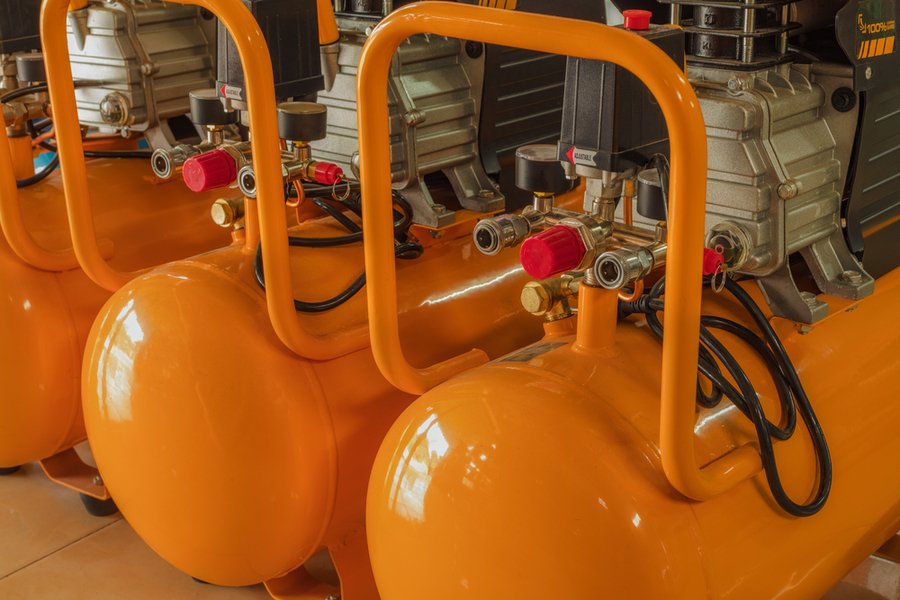
air compressors

Air compressors play a vital role in any auto shop. They’re multifaceted tools with a host of functions and learning how to use an air compressor properly can save you a lot of time and hassle.

What is an Air Compressor Used For?

Air compressors can be used for welding, plasma cutting, pneumatic robot operation, and tire inflation. They help drive machines that lift, move, position, and fasten vehicle parts. Air compressors are also useful for body painting, high-pressure cleaning, and washing.

How Do Air Compressors Work?

How does an air compressor work? An air compressor pushes air into a container, pressurizes it, and then pushes it through an opening where it builds up until it’s ready to be used. When air is released, the energy from the pressurized air changes into kinetic energy that can power a range of tools.

What Is Air Displacement?

Now that the question of “how does an air compressor work?” has been answered, it’s time to cover air displacement. This is the measure used to determine the volume of air a compressor can move in a single stroke. It’s measured in cubic feet per minute (CFM) or liters per second (l/s).

To find the air displacement level of your compressor, multiply your air compressor’s tank size by the maximum PSI on your tank’s gauge to find the tank’s size in cubic inches. Next, divide the product by 1,728. Your answer is your compressor’s CFM rating.

Types of Air Displacement and How They Work

Air compressors fall under two main categories. These are positive displacement air compressors and dynamic (also known as non-positive) displacement air compressors.

Positive Displacement

Positive displacement air compressors work by forcing air into a chamber. The chamber then gets smaller, which decreases air volume and compresses the air. Piston, scroll, and rotary vane air compressors are all positive displacement air compressors. Positive displacement air compressors are the ones typically used in auto shops.

Dynamic (non-positive) Displacement

Dynamic displacement air compressors have a rotating blade that generates airflow, which is then restricted to create pressurized air. Axial and centrifugal air compressors are both dynamic air compressors. Dynamic air compressors are typically found at manufacturing and chemical plants.

Single Stage vs Two Stage

There are two types of piston air compressors. These are single-stage and two-stage.

Single-stage air compressors compress air on one side of the piston. The air is only compressed once, after which it is delivered to the tank, where it’s held until it needs to be used. These air compressors are one of the more affordable options and are commonly used by most auto mechanic shops.

Two-stage air compressors compress air twice. The air is compressed once before it moves into the tank. In the tank, the air is cooled and compressed again. Two-stage air compressors tend to have higher air pressure levels than single-stage air compressors.

Components of an Air Compressor

All makes and models of air compressors have the same basic parts. One of the most important parts is the electric motor. The motor powers the device to enable it to compress air and then release the compressed air as needed. The pump pressurizes the air before sending it to the storage tank. The storage tank stores the compressed air until it’s ready to be used.

The pressure switch controls the motor and will shut the motor off automatically if the air pressure in the tank reaches its limit. The intake filter prevents dirt and debris from entering the compressor while the exit filter cleans the compressed air as it leaves the tank. Pressure gauges on the air compressor will help you see the pressure levels of the air inside the tank and the air coming out of the air hose.

Air compressor parts need regular maintenance so the device will work properly. If parts become worn, you should replace them right away to prevent damage to the entire machine. A broken tank is best replaced rather than repaired, and it’s important to choose a tank with care to ensure it’s the right size, air pressure rating, and horsepower rating for your device. You’ll also want to choose filters with care to ensure they’ll meet your exact needs. Take your shop environment, air compressor operating temperatures, pressure drop, and other factors into account to ensure the filters will be able to keep the air compressor and compressed air clean and particle-free at all times.

How Lubrication Works in Air Compressors

Lubricated air compressors need oil to keep all moving parts working properly. How the oil is distributed varies depending on the compressor type, but most lubricated air compressors store oil in a reservoir. This oil is then drawn via pumps to feed the various compressor components. Once the oil has lubricated the compressor, it drains back into the reservoir.

Oil-free air compressors, on the other hand, may use water in place of oil to keep the compressor running as it should. However, some models need no lubrication as they are designed to prevent metal parts from coming in contact with other metal parts.

Air Compressor Power Ratings

Experts use three main ratings to determine an air compressor’s power levels. CFM shows how much air a compressor can produce. PSI, which stands for pounds per square inch, indicates the amount of force the device can deliver. Horsepower (HP) measures the amount of work your compressor’s motor can perform.

SVI: The Leading Air Compressor Parts Provider

Keeping your air compressor running smoothly prevents delays and enables you to do your job faster and more easily than would otherwise be possible. That’s why it’s important to work with a reliable parts supplier that can provide the exact components you need to keep your air compressor in tip-top shape at all times. SVI International has over 40,000 products for sale and two ready-ship warehouses offering same-day shipping to ensure all orders are processed without undue delay. Contact us to find out more about our products and services, or to place an order for the air compressor parts of your choice.

How Far from the Wall Should I Position My Two Post Lift? 

Car mechanic working in a repair garage with a two post lift -  2 post lift placement | 2 post lift layout

Auto lifts come in a variety of sizes, configurations, and the prices can vary significantly. Two-post lifts tend to be the most efficient for commercial garages, as well as hobbyists. Nearly every professional garage has at least one lift largely because they make working on cars, trucks, and SUVs, inherently safer.

Before choosing what appears to be the perfect product for your shop, it is crucial to map out your 2 post lift layout. The right 2 post lift placement can maximize productivity, reduce the possibility of workplace injuries, and improve profitability. If you are in the market to purchase and install a 2 post lift, it is important to conduct some due diligence.

What to Consider When Choosing an Auto Lift

Properly integrating an auto lift is an exercise in pragmatism. The garage floor layout and positioning of the unit must adhere to building codes and workplace safety standards. The 2 post lift placement must also provide seamless access to the vehicle and tools needed to make repairs. After narrowing your search to products that offer adequate load capacity, consider how each option would fit your needs based on the following.

Clearance Height

Minimum clearance is usually pegged at 12 feet from floor to ceiling. But in practical terms, this measurement is not necessarily set in stone. A 2 post lift layout must account for the type of vehicles the garage handles and their heights. It may also be prudent to consider whether RVs and vehicles with cargo carriers on the roof racks will fit.

Although 12 feet is a good jumping-off point, think about factors specific to your operation. If you can easily walk under vehicles on the lift, that may be the right clearance height for your purposes.

Do You have a 2 Door Garage or a Single Door?

The number of garage doors has a direct impact on the 2 post lift layout and space utilization. Garages with single doors usually have less square footage than doubles. The advantage of multiple vehicle doors is that a 2 post lift placement can be on one side, with the other open for machinery, equipment, and tools. If the goal is to install a pair of lifts, the space between can be efficiently used for tools and equipment to service vehicles.

Placement and Access

The type of unit a garage owner selects will have a substantial impact on the 2 post lift placement. It may be prudent to create a blueprint or sketch of the floor space that shows length, width, doors, and calculates overall square footage. These are ways different lifts are usually positioned.

  • Asymmetrically Lifts: If a 2 post auto lift employs asymmetrical arms, 30 percent of the vehicle rests in front of the columns. That means upwards of 70 percent will be to the rear.
  • Symmetrically Lifts: This type of lift typically divides the vehicle equally, with 50 percent to the front and rear.
  • These are important space considerations to account for when crafting a 2 post lift layout. Garage owners will be able to map out the lift’s center column and estimate the amount of space surrounding an elevated vehicle. That also tells you how much space is available for a technician to move around after tools and equipment are included.

How Far Should the Columns Be Set from the Wall?

The recommended distance of a lift that involves asymmetric arms runs 9–10 feet from the wall. That distance is based on the center of the columns, not necessarily its outer housing. If you plan to install a product with symmetrical arms, the center of the columns should be approximately 12 feet from the wall.

Will Cracks in the Concrete Affect the Stability of the Lift?

The majority of 2 post lifts call for a cement slab that runs 4 inches deep and is rated at or above 3,000 PSI. That being said, it is important to exercise common sense if you notice cracks in the concrete floor.

Ask yourself whether the line results from an expansion joint or a sign of degradation. The bolts that secure auto lifts in place require strong concrete that is in no way compromised. If you are concerned the cracks indicate the slab is losing its PSI rating, safety dictates that a new floor be poured before installing a lift.

Floor Space

Designing a cost-effective and efficient 2 post lift layout tasks garage owners with getting the most out of every square foot. This involves not only accounting for the 2 post lift placement, but also the necessary equipment, machinery, tools, and room for mechanics to move around. The best layouts account for all the moving parts and make working on cars a pleasure.

How Close Can I Drill to the Edge of Concrete for the Lift?

There is no single answer to this question. Some floors are simple slabs that possess a steady thickness from wall to wall. Others have a much thicker footing that may run under the outer edges of the floor space.

Before deciding how close to the edge to drill, determine the slab’s thickness at all points. Although the general rule for drilling is 6–8 inches away, it may be wise to enlist the help of a mason or engineer to determine the correct distance.

Ensure You Have Enough Space to Work on the Car

There is no objective measurement to follow in terms of the space between the outside of a vehicle and garage walls. This area will primarily be determined by the placement of equipment, tools and how much room mechanics require to move about comfortably.

Many floor plans include a minimum of 2 feet between the vehicle and the wall or equipment. It is typically a good idea to provide enough space to allow people to pass by each other, or a supervisor to interact with technicians.

SVI International Your Leading Replacement Parts Dealer

If you are interested in installing a 2 post lift or updating an existing one, SVI International is here to help. As an automotive lift parts leader, we provide prompt delivery from our U.S. warehouses. Reach out to us at (800) 321-8173 or complete our online contact form.s

How Long Can You Store Motor Oil?

Whether you’re storing oil drums or quarts of oil for use in your shop, you may wonder how long the shelf life is. The standard rule of thumb is that properly stored oil in its original sealed containers should last five years, but many factors can affect this timeline.

You won’t always find an expiration date on oil drums or containers, so how do you know if the oil is still good? While oil doesn’t go “bad” as food does, it can degrade because of contaminants or additive dropouts. This degradation mainly depends on car oil storage.

So, whether you’re opening a new mechanic shop or you’ve had one for years, let’s talk about how to store your oil correctly so that you can get the most out of it!

Where Should You Store Your Motor Oil?

Whether you are storing synthetic or mineral engine oil, it needs to be in a sealed container in a cool and dry location. This location also needs to be away from direct sunlight and also well-ventilated.

If you are using drums, clean, dry, and temperature-controlled environments are best. A cooler temperature prevents moisture absorption, which can happen with warmer temperatures. In addition, storing them horizontally also prevents moisture from entering the drums.

Unfortunately, some shops have to store their drums outdoors because of space restrictions. Keeping them horizontal is critical if you store them outdoors, as upright oil drums can cause water to enter the drums. Once water enters the oil drum, the barrel becomes deformed because of the excess liquid, causing a potential oil leak.

If your shop is in an area with high summer temperatures and you need to store your drums outdoors, placing them on blocks a few inches off the ground is a good idea. This placement can prevent excess moisture from getting into the drums. At the very least, raise one edge of the drum to avoid liquid pooling on top. Finally, covering the drums with tarps is also a good idea for ultimate protection.

While storing your oil is essential to its longevity, it’s also necessary to organize it properly. Ensure that the labels and instructions are visible so your employees can find and use the correct product.

How Long Can You Store Motor Oil?

While the standard rule of thumb is that properly stored oil will last roughly five years, some factors can affect oil’s longevity. So, knowing what these factors are is essential so you can get the most out of your oil!

Most importantly, make sure you use the first-in, first-out philosophy. You should use your oldest oil first and put your newest at the back. This strategy will keep you from having to discard old oil.

However, even with that strategy, some oil “goes bad” due to excessive heat, water, light, or air exposure. For example, if stored in a sealed container in a temperature-controlled environment, it’s likely to last up to five years. But conversely, if you keep the oil in a place where it’s exposed to excessive heat or moisture, it may only last two years.

 Do some oils last longer in storage?

Are there some oils that last longer than others? Yes, in fact! Because of their ability to withstand high temperatures in car engines, synthetic oils last longer in their containers. Synthetics also have a better viscosity than mineral oil.

Conversely, if the oil has additives or rust inhibitors, its shelf life will be lower than synthetic oil. Therefore, it’s a good idea to prioritize using these oils or keep a limited amount in your inventory.

Does it matter if the containers are partially used?

Another factor that can reduce the longevity of your stored oil is partially used containers. For example, if you’ve used some of the oil in a container and reshelved it, the container will bring in air when it’s cold and then push it back out when it’s warm. This air transfer allows for water condensation in the container, which can cause problems once in the engine.

Once a container of oil has been opened, whether synthetic or mineral oil, Its effectiveness will wear down quickly. Therefore, it’s best to use half-opened bottles within a year of opening.

Is there a way to check if the oil is good?

If you need clarification on whether your motor oil is good, you can pour out a sample to examine. A pale brown color is what you’re looking for, whereas dark oil has likely oxidized. In addition, if it appears milky, it could have water in it. Lastly, it’s unsafe to use if you see anything like particulates or any settling or notice a hazy color.

Benefits of Storing Your Motor Oil Correctly

There are many benefits to correct motor oil storage. First, you will likely save money because you won’t have to dispose of contaminated or old oil because of improper storage practices.

In addition, you don’t have to worry about damaging your customers’ engines with contaminant-filled oil. Not only will this cost you money to fix, but you may lose business from your customers if this happens.

The benefits of proper oil storage are huge, but the possible results from poor storage practices can cause you to lose time, money, and customers.

It’s Time to Find a Trusted Partner

Whether you’ve been in business for six months or sixty years, partnering with a reputable automotive parts repair supplier is a must! SVI International has decades of experience and an extensive inventory of almost anything you’ll need to keep your shop running.

So, we’ve got you covered if your shop needs automotive lift repair parts, oil drainage parts, air compressor parts, hydraulic tubing, tire machine parts, or lubrication equipment. With our extensive inventory, our fast delivery, and excellent customer service, we’ll keep your shop running efficiently!

Contact us today for a free quote. We look forward to answering your questions and finding the correct parts for your shop. Let SVI be your automotive equipment repair parts supplier!