Choosing the Perfect Air Compressor Filter

Your air compressor is one of the most valuable tools at your shop, so it’s imperative to take care of it to keep it running successfully. One of the most important ways to care for your new air compressor is by regularly changing your air filters.

Like in any machine, an air compressor filter can protect your air compressor from dust, particles, water, and possible pollutants. In addition, it keeps your compressor running effectively and helps to provide a contaminant-free environment.

Our guide will help you determine the best air compressor filter to keep your shop running smoothly!

What Are The Different Types of Air Compressor Filters?

If you are still determining what filter to purchase for your air compressor, the manufacturer will have recommendations for which filter to use and a timeline for replacing the filter. First, however, it’s essential to understand the different types of filters to make the best choice. For example, some shops may benefit from using two filters simultaneously.

Coalescing Filters

Water can easily damage your air compressor and is often the most challenging to filter. However, coalescing filters can remove aerosols, water, and oil, collecting in a moisture trap. Then you can quickly and easily empty the collected liquids. A coalescing filter can be used by itself or in conjunction with other filters, like a vapor or charcoal filter.

This type of filter can reduce liquids to 0.01 ppm and particulates to 0.1 microns, preventing contaminants from re-entering into the air compressor. It’s essential, however, to change the filter regularly, or the pressure may drop from trapped particles.

Compressor Intake Filters

A compressor intake filter is the first step in filtration, removing dust and particles entering the compressor from the outside air. This filter cleans the outside air before entering the air compressor, improving airflow and reducing wear and tear on your components. In addition, some compressor intake filters have a silencer, reducing the filtration process’s noise.

Vapor/Charcoal Filters

Vapor filters use an activated carbon bed to clear contaminants from the outside air. This activated carbon can remove chemicals, gases, and vapors that enter the air compressor, but the filter is not designed for liquids. These adsorption filters work best with a coalescing filter that first removes dry particulates and oil mists.

 Vapor filters are designed to remove gaseous lubricants that the coalescing filter misses.

 
High Particulate Filters

A high particulate filter is recommended for body shops or mechanics who do a lot of body and paintwork. These filters remove tiny particles like metal pieces, dust, dirt, and pollen, allowing your air compressor to work effectively.

 High particulate filters are very common and are easy to remove and replace when necessary.

What Filter Do I Need for My Air Compressor?

 A high-quality air filter for your air compressor is imperative to avoid damage to your compressor’s components and extend the life of your equipment. The following factors will help you determine the best air filter for your shop’s needs.

Environment

Depending on your shop’s environment, you may deal with dirt, dust, water vapor, and other particulates and contaminants. For example, using an oil-lubricated rotary screw compressor or reciprocating compressor will likely produce more pollutants than a centrifugal air compressor.

Many shops will do fine with a high particulate filter, while others will add a coalescing filter.

Operating Temperatures

While most air compressors function optimally at 50-85 degrees, some can operate at a higher temperature. However, maintaining a temperature of 85 degrees or less will help your compressor run at peak efficiency.

 If your shop is in an area of the country where temperatures regularly get up to 100 degrees or more, consider an air compressor with an oversized cooler option, allowing it to run in temps up to 115 degrees! Or, you can always use compressed air dryers to help your compressor avoid overheating.

 However, cooler air is better overall for your compressor, as it’s usually drier and has less moisture than warm air. With dry air, you’ll have less condensation inside your air compressor and pipes and less moisture that needs to be removed by your filtration system.

Particle Size

When shopping for your compressed air filter, you might see various measurements like microns, PSE, and MERV ratings. For example, a micron (one-millionth of a meter) must be 5 microns to see it with the naked eye.

 The PSE tells you the ability of the filter to remove particles at specific micron sizes. So, it’s essential to know how efficiently your filter captures microns. For example, standard filters may remove particles from 5 to 40 microns, while specialized filters can extract particles smaller than 1 micron.

 The MERV rating tells you how effective the filter is at catching small particles, but it comes at the expense of the machine’s efficiency. If the MERV rating is low, it’s not as helpful in removing smaller particulates, but the filter is more efficient overall.

Pressure Drop

Another consideration when planning on which filter to purchase is the associated pressure drop. There’s a direct correlation between the filter’s air flow rate and the pressure drop, meaning that the more restrictive the filter is to airflow, the higher the pressure drop will be. 

You don’t want a filter with a pressure drop higher than 5 PSI, so you’ll want to reference the pressure drop curves from the manufacturer to determine which filter is best for your needs.

When Should You Replace Air Compressor Filters?

 The simple answer is that it usually depends on your air compressor’s runtime and your shop’s working environment. However, the guidelines state that inline filters should be changed after 8,000 hours or at least once a year. You’ll know if you need to replace your filter sooner if you see an excessive pressure drop.

 Intake filters are usually replaced every 2,000 hours but must be changed more often if you have a dusty and dirty environment.

SVI Can Help You With All of your Air Compressor Needs

 While replacing your air compressor’s filter is one of the most important ways to keep it running smoothly, unexpected repairs are sometimes required. So, whether you need a new pressure gauge, a gasket kit, or a single o-ring for your air compressor, we can help you!

 Be sure to order the necessary parts before your air compressor is on the fritz- find your replacement air compressor parts now! With air compressor parts for Champion, Campbell Hausfeld, Coleman Powermate, Ingersoll Rand, Jenny/EMGLO, and more, SVI will have just what you need!

 Contact us today with any questions about our air compressor repair parts- we’d love to help!

Why You Need a Garage Door Exhaust Port

One of the essential parts of a well-run mechanic shop is the safety of your employees. Employee safety should include proper ventilation or air control, which keeps your mechanics from breathing in contaminants like metal particles or chemical fumes. Because mechanics and body shops use highly flammable materials daily, removing these fumes and gasses from the air is necessary to have clean, breathable air (and reduce your fire risk).

However, if your shop does not have the necessary ventilation, it can affect the health and safety of your employees. With contaminants flying through the air daily, your mechanics will inevitably breathe in the fumes rather than clean, fresh air.

There are different options for ventilating your shop or garage. If you don’t have a fan-assisted system, your next best option is a garage door exhaust port. Exhaust ports allow car fumes to exit the garage, protecting the employees from breathing in harmful contaminants.

Why are Garage Door Exhaust Ports Important?

Any shop with running vehicles, paint sprayers, or other chemicals needs air ventilation. One easy way to provide a safe environment for your mechanics and employees is to install a garage door exhaust port. An exhaust port allows a hose to remove contaminated air and exhaust using a garage pass-through. The exhaust hose rids the vehicle’s fumes from the garage, protecting your employees from harmful exhaust. Vehicle exhaust can be deadly if it is not removed from your garage.

Not only does it remove unwanted and unsafe fumes from your garage space, but the exhaust port also prevents the hose from kinking, which can be a nuisance.

Lastly, a garage door exhaust port helps maintain the temperature in your garage. These exhaust ports are made to fit tightly to keep bad weather, wind drafts, or excessive heat from entering your garage. This tight fit keeps your working environment at a consistent temperature year-round.

Does Your Auto Shop Need a Garage Door Exhaust Port?

 According to OSHA guidelines, it’s critical to ventilate exhaust fumes properly. So, if your garage or shop works on running vehicles or bodywork, you need some way to circulate the air for the safety of your employees. So, if you don’t have a fan-assisted system, you must have a garage door exhaust port.

Without a garage door exhaust port, the fumes from the vehicle or spray paint, or other chemicals can negatively affect your employees’ respiratory systems. However, a properly installed garage door exhaust port allows harmful gasses and fumes to exit the garage without causing any harmful side effects to your mechanics.

Tips On Installing an Exhaust Port

Thankfully, installing a garage door exhaust port is relatively easy, but there are some tips to keep in mind. Usually, an exhaust port kit includes everything you’ll need to install it except for some essential tools like a caulk gun, silicone caulk, screwdriver, drill, and aviation snips.

Find the correct exhaust port for your shop’s needs

Before purchasing a kit, you’ll want to measure your garage door to determine its thickness. Exhaust ports are available in various sizes and diameters, so you must choose the proper measurement.

Purchase the exhaust hose first. You’ll then need to select an exhaust port that snugly fits around the hose. Choosing an exhaust port with the same thickness as your garage door is also essential.

Determine the exhaust port’s placement

There are a couple of things to remember when selecting where the port will go. First, you’ll want the hose to be in a place that won’t be in the way of your workspace or employees. You’ll also want the port mounting location to be a few inches off the ground to avoid rodents like mice or rats.

Mark the location of the mounting holes

To make the drilling easier, mark the mounting holes with a marker. It’s easiest to take the sleeved part of the exhaust port and trace around the outer diameter. You can also mark the other side at this time.

Cut the mounting hole

Cut one side of the mounting hole using sheet or aviation snips. These shears will cut through your garage door’s metal and give a sharp cut. After making the first cut, you can mark the second side and cut. Doing it this way will prevent any mistakes.

Drill the holes

Once you remove the metal sheet, it’s time to drill the screw holes for mounting.

Mount the port

Now it’s time for the final step- mounting the garage door exhaust port! First, insert the sleeved part from the inside garage door with the sleeveless part on the other side. If the screw locations match, it’s time to tighten the screws. You may need your caulk gun at this point, as there may be slight gaps between the port and the garage door. If so, seal the holes with silicone caulk.

And there you go! Once you’ve successfully installed your garage door exhaust port, you can test it to ensure it works. Then you’ll have a much safer and healthier work environment for your employees!

SVI International is the Premier Supplier of Automotive Equipment Parts

If you haven’t already partnered with SVI International for your previous automotive equipment repair parts, such as auto lift, brake lathe, or compressor parts, let us help you with your garage door exhaust port.

 Not only can we help your shop with our Quick Port Garage Door Exhaust System, but we also have a vast inventory of exhaust port repair parts, from hoses and crush proof door ports to blowers.

One of the essential parts of running a successful mechanic or auto body repair shop is having a trusted parts supplier. SVI International has been the premier supplier of automotive equipment repair parts for over four decades. Not only do we have over forty years of experience, but we also have an extensive inventory, fantastic customer service, and a fast shipping promise. If you’re ready to have a trusted supplier on your side, contact us today!

2 Post Car Lift Concrete Requirements

2 post lift concrete requirements

Nearly every repair shop you encounter across the country uses 2 or 4 post car lifts to suspend a vehicle above the mechanic to do repairs. For the auto repair enthusiast at home, you can even place a 2 post car lift in your garage if you have the right space for it. Perhaps you are one of those DIYers who wishes to install your own 2 post lift, or you’re a professional opening your own shop for the first time. To maximize efficiency for your shop repairs or favorite home restoration project, installing a 2 post car lift will give you the boost you need. However, you may be curious if your space meets the right requirements before you get started setting up any equipment. We will explain more about 2 post lift concrete requirements, safety factors to consider, and what you can do if you do not meet the right concrete specifications.  

2 Post Car Lift Safety

Safety should always be the absolute top priority when installing heavy equipment, so before you attempt to install a 2 post lift on your own, keep a few things in mind:

  • 2 post car lifts are dangerously heavy and thus should be treated with care. You should always have another person to help you lift the parts to prevent injury, even upon initial delivery of your lift. In general, it’s best to make this a team effort if possible.
  • Consult manuals to make sure you are using the proper tools and following all directions. Your manual will be your ultimate guide to ensuring you are following the correct requirements specific to your lift.
  • If the project becomes too much of a struggle, you would be wise to recruit the help of a professional automotive equipment installer to help you get on track. This way you will know you will be in good hands if any problems come up during the process.

Keeping these things in mind will keep you safe if you are willing to try the installation yourself. But they are not the only considerations to note. You will need to follow the strict 2 post lift concrete requirements to ensure your installation is truly safe.

2 Post Lift Concrete Requirements

First, it’s important to note that any kind of car lift must be installed on solid concrete surfaces only. Do not attempt to set up a lift on any defective concrete, including any expansion cracks, without fixing the slab first, we will explain more on this later. Lastly, the concrete should never be hand mixed if you’re planning on installing a lift over it. These considerations should be taken very seriously, since ignoring them could result in auto lift failure that can risk major personal injury.

The concrete slab also needs to be at a certain depth to safely install a car lift. A minimum of four inches of reinforced concrete is the standard, however, ideally, you should have at least six inches, and as much as twelve. If you’re using the opportunity to install a new slab in preparation of your lift installation, plan on creating a deeper slab that is anywhere between six to twelve inches deep and has a minimum PSI of 3,000 for the most optimal condition.

How to Install Lift on an Imperfect Slab

Even if your concrete slab isn’t up to par, there are still ways to make it work. If the concrete isn’t thick enough, or is too damaged or worn, you have a few options to modify the slab to safely accommodate the lift. In this case you will need to be prepared for some extra work and have additional tools ready.

Measure where you will place the two columns of the lift and dig holes large enough for the columns to fit. The hole should be at least two feet by two feet and around ten to twelve inches in depth. Simply pour concrete into the holes and you now have yourself a working slab to secure your 2 post lift. As always, you should adhere to the concrete requirements with any new slab so you know your workshop for your car lift is a safe environment.

SVI International: Connecting You with High Quality Automotive Equipment

If ever in doubt about what kind of lift or auto lift parts you need to complete a maintenance repair on your vehicles, SVI International is always here to help. As a leader in repair parts for automotive lifts, you can always expect a prompt delivery from one of our three warehouses across the United States. Reach out to us at (800) 321-8173 or complete our online contact form. Browse our selection of lift accessories and supplies or reach out if you are in need of something custom for your space!

Air Compressor Oil Type: Which Should You Use? 

Air compressor leaking oil

An air compressor is a valuable tool that can be used to fill gas cylinders, power pneumatic tools, fill high-pressure air tanks and tires, and more. These devices, which are made by various manufacturers and in varying types and sizes, can last for up to 28 years if properly maintained, oiled, and cleaned. Following is a comprehensive overview of everything you need to know about choosing the right air compressor oil type.

Why Does My Air Compressor Need Oil?

If your air compressor isn’t an oil-free model, it will need air compressor oil periodically in order to work properly. Air compressors need oil to cool and lubricate the compressor. Air compressor oil prevents overheating and acts as a sealant to prevent leaks. It also lubricates moving parts to keep the device running smoothly. You should change the oil for an air compressor every 500 to 1,000 hours of run time.

Standard vs Synthetic Air Compressor Oil

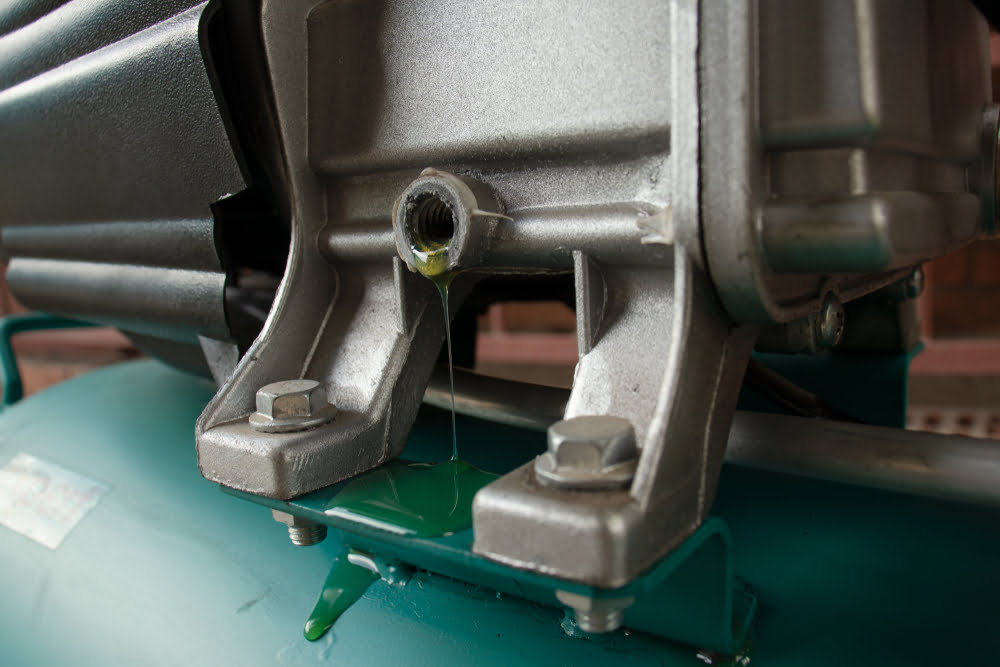
There are two main types of oil for an air compressor. These are standard oil and synthetic oil. You can use either type of oil unless the manufacturer has indicated otherwise. Both types of oil need to be stored in a sealed container in a cool, dry location to prevent spoilage. If standard or synthetic oil spills when you change your compressor oil, you’ll want to clean up the spill right away to prevent damage to your garage flooring.

Even so, there are some important differences between standard and synthetic oil. Understanding the pros and cons of each type, and when and how to use them, will help you keep your air compressor in good working order long-term.

Standard / Mineral Oil

Standard oil, also known as mineral oil, costs less than synthetic oil. Thus, many businesses that use air compressors use this type of oil to keep operating costs low. However, it’s important to bear in mind that it’s not suitable for all environments. If your shop is located in an area that gets very hot in the summer or cold in the winter, this oil won’t perform well. What’s more, air compressors that use standard oil need more frequent oil changes than compressors that use synthetic oil. Even so, standard oil offers enough lubrication and protection to keep your air compressor running smoothly for as long as necessary.

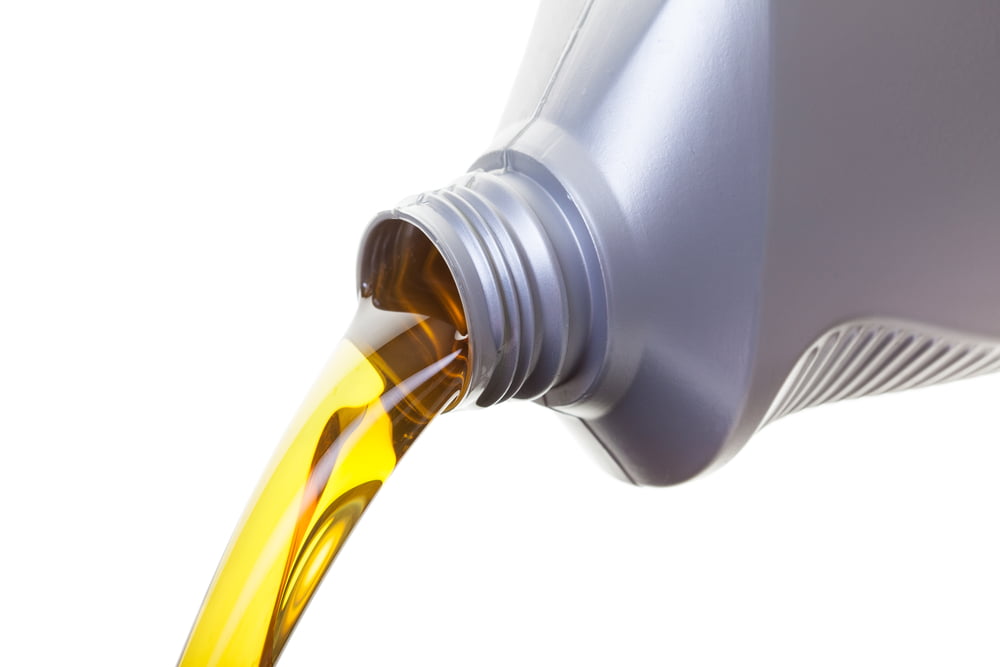
Synthetic Oil

Synthetic lubricants aren’t as flammable as standard ones. What’s more, they perform well even in extreme temperatures. They’re energy efficient and their high resistance to oxidation decreases the number of oil changes the air compressor will need. If you want to keep your air compressor in optimal shape and be able to run it continually without stopping to maintain it, synthetic oil is your best bet. It costs more than standard oil, but it’s an investment well worth making if you’re able to do so.

synthetic oil for an air compressor

Substitutes for Air Compressor Oil

Air compressor oil is always the best option for your air compressor. However, if you’re in a pinch, you can use either hydraulic oil or automatic transmission fluid (ATF). However, these won’t work well for all compressors and may only work under certain circumstances. Hydraulic oil, for instance, has a high viscosity. You can use it for your air compressor when temperatures are low, but you may want to avoid doing so on a hot summer day. Not all automatic transmission fluids are compatible with all air compressor types. This means you’ll need to study the specs on the bottle before using an ATF for your compressor.

What Happens if I Use the Wrong Oil?

Using the wrong type of oil will decrease the lifespan of your air compressor. Automotive engine oil, for instance, has detergents and additives that can put a strain on your air compressor air pump. Some alternative oils have detergents that create foam in the pump and wear out your air compressor. If the oil isn’t viscous enough, your air compressor won’t run as it should.

Do All Air Compressors Require Oil?

Some air compressors can be lubricated without oil. These are called oil-free air compressors. However, they’re not typically used in professional settings. If your air compressor isn’t labeled as being oil-free, the odds are it needs oil.

Timeline for Air Compressor Maintenance Needs

wrench closing oil valve on an air compressor after changing air compressor oil

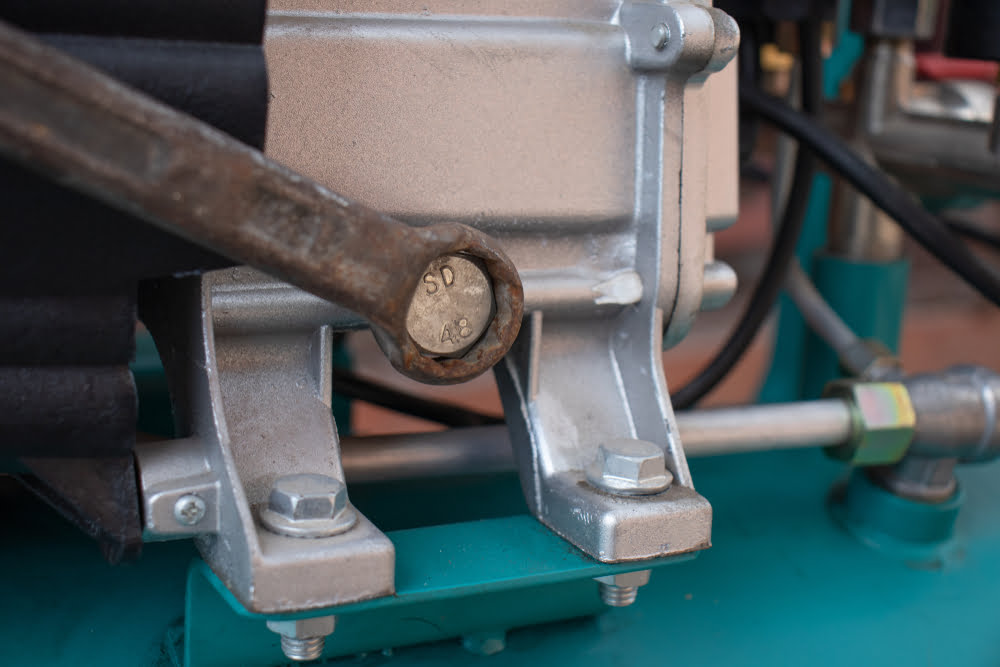
Check your air compressor for leaks every single day. You’ll also want to tighten electrical connectors and inspect hoses daily. Drain liquid accumulated in the tank using a waste oil strainer to prevent spills. Clean external components and check your air filters and oil levels every single week.

You’ll need to change the oil and air filters every month. You may also want to test the air compressor’s safety mechanisms and change the oil separator monthly.

The fuel tank and grease motor bearings should be checked once every three to six months, depending on the type of air compressor you use and how often you use it. Belts should be replaced at least a year, and you may need to replace hoses and connectors yearly as well.

SVI for all Your Air Compressor Part Replacement Needs

Spending time maintaining your air compressor and ensuring it has enough oil to run smoothly will lengthen the air compressor’s lifespan, saving you time and hassle long-term. However, even a high-quality air compressor that’s been properly cared for will occasionally break down and need replacement parts. Sometimes, this happens with little or no warning, especially if you’ve been using the air compressor a lot and/or have been working in extreme weather.

SVI is the ideal one-stop-shop for air compressor parts. The company offers a huge selection of parts for different air compressor models, making it easy for you to find what you’re looking for right when you need it. We have two ready-to-ship warehouses in different areas of the United States to ensure you get the parts you need as quickly as possible. Get in touch with us to find out more about what we offer or to request a free quote for one or more air compressor components.