
The Global EV Outlook, an annual publication identifying developments in electric mobility, identified a startling 40% year-on-year increase in electric car sales from 2018 to 2019 – and the trend shows a continual upward trajectory. The future is electric, and EV charging station and cable manufacturers are innovating to match the ever-increasing demand.
Charging cables are one of the most important facets of EV charging stations. Without them, charging stations would be ineffective. EV charging station and cable manufacturers must consider how to protect cables from the elements and the wear-and-tear of frequent use. Where should manufacturers begin with cable management?
Start here! The following content provides a helpful guide to proper EV cable management, including why it is so important and which tool is the best to start.
Why is EV Cable Management Important?
1. Cable Management is Cost-Effective
Electric vehicle charging cables are expensive. In fact, replacing a damaged cable can cost thousands of dollars. Proper cable management lengthens the lifespan of the charging cable, protecting your investment.
2. Cable Management Protects Functionality
Electric vehicle charging cables serve multiple purposes beyond charging the vehicle. EV cables are designed with communication wires, transmitting important information from the car to the station, including charging status, temperature, and battery level.
3. Cable Management Heightens User Experience
User experience (UX) is more than just a marketable buzzword. UX plays a significant role in product success across a multitude of industries. UX Planet, a holistic user experience resource, writes:
User experience is important because it tries to fulfill the user’s needs. It aims to provide positive experiences that keep a user loyal to the product or brand. Additionally, a meaningful user experience allows you to define customer journeys on your product that are most conducive to business success.
In the EV charging station market, cable management is key to an excellent user experience. Put yourself in the shoes of a charging station user. A neat, organized, and intuitive system will make for a positive experience, and a neatly wound charging cable plays a significant role.
If you are the EV charging station manufacturer with great UX, you will likely stand out. Electric vehicles are a relatively new commodity. According to the Global EV report cited above, the generous increase in EV popularity is only a few years old.
Because electric vehicles are a brand new market, EV charging station and cable manufacturers are inherently the first of their kind. With excellent UX, including cable management, your organization can stand out among the rising competition.
4. Cable Management Promotes Safety
Cable management promotes safety for the user. Keeping charging cables off the ground between users helps prevent potential injury to the vehicle owner or other individuals walking around the charging system. In comparison, consider the danger associated with a gas pump left on the ground between fueling.
EV charging cable safety is just as important as gas pump safety, and the safety precautions associated with fueling station pumps can be applied to charging cables.
EV Cable Management 101: Cable Clamps
EV cable clamps are the most essential cable management tool. Cable clamps are designed to retract long charging cables away from the ground and to the top of the charging station after use. These clamps protect the cords from rain, snow, intense heat, or other adverse elements.
Are EV Cable Clamps for AC or DC Chargers?
Both AC and DC charging stations are popping up in a multitude of locations.
AC Charging Stations are primarily found at homes, grocery stores, hospitals, and hotels. AC stations are long-duration systems meant to charge a vehicle over a matter of hours.
DC Charging Stations quick charging systems, capable of fully charging most cars in 30 minutes or less.
What Does EV Cable Mismanagement Look Like?
When emphasizing the importance of EV cable management, we often reference a glaring example of mismanagement. Unfortunately, the EV cables could be easily damaged in the situation pictured below and provide a potentially dangerous scenario for who needs to charge their car.
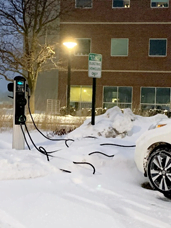
This image is not the only example of cable mismanagement – unfortunately, cases like the one pictured above appear frequently. However, as the popularity of electric vehicles continues to increase, the demand for proper cable management will only intensify.
Finding a trusted cable clamp provider is important.
SVI International: EV Cable Clamps For AC & DC Systems
At SVI International, we are often the first call for EV cable management clamps. Because EV charger cables range in diameter size, our inventory includes a variety of available sizing options.
If you are a charging station manufacturer, our team of industry experts at SVI can meet your EV cable clamp requirements. To learn more about our capabilities, review EV cable management resources on our website or get in contact with our specialists. We can be contacted at (800) 321-8173 or via our online contact form.