
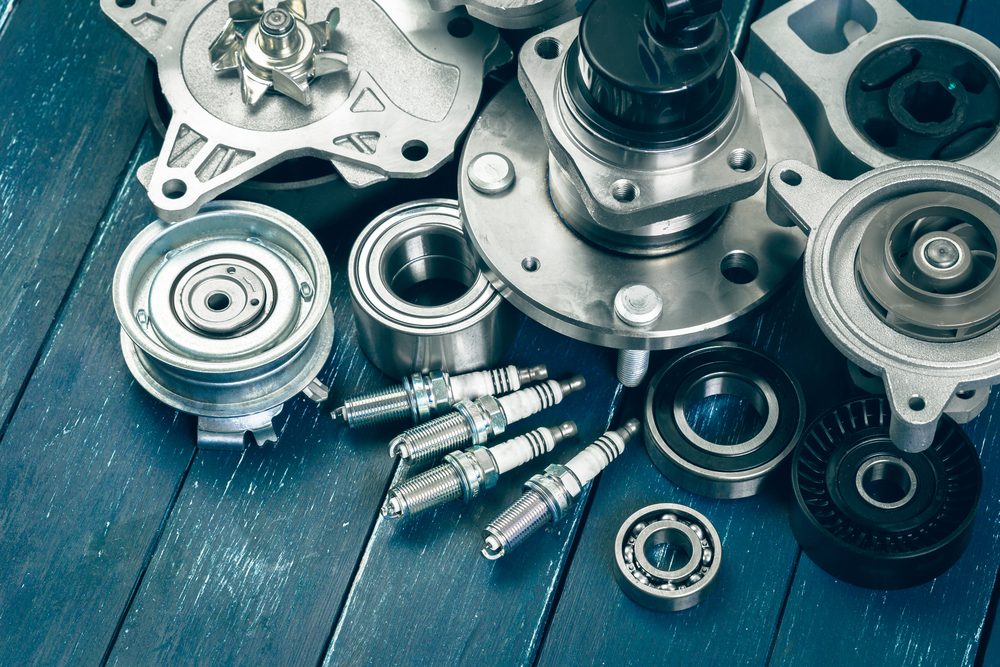
Guide to Effective Automotive Parts Inventory Management

Automotive parts inventory management plays a key role in the success of any auto repair shop. It enables mechanics to provide fast service to their customers. It helps a business save money, as parts are ordered when they’re at a good price and the business doesn’t order supplies it already has in stock.

Even so, managing the inventory for a bus auto repair shop isn’t easy. Multiple challenges can make it hard for shop owners to keep track of the shop’s inventory in real time. Thankfully, these problems have solutions that, when adopted, can significantly boost shop efficiency and profits.

Challenges in Automotive Parts Management

Overstocking and Understocking

Fixing overstocking and/or understocking issues can reduce inventory costs by up to 10%. However, it’s often easier said than done. If certain parts or machinery go on sale, it can be tempting to place a large order, without leaving money for other parts and/or machinery that will be needed in the near future. Alternatively, companies that wait too long to stock needed parts may be setting themselves up for problems that affect in-shop efficiency and customer satisfaction levels.

Inaccurate Balance Sheets

Keeping a balance sheet updated in real time is no easy task. Unfortunately, inaccurate balance sheets can cause headaches and additional expenses for shop owners. If you think you have more money than you actually do, you may wind up spending more on inventory than you should. Conversely, you may be tempted to hold onto cash until the last minute, leading to a lack of inventory for repair and maintenance tasks.

Miscommunication

A whopping 86% of employees and executives say that the inability to communicate and work well with others in the workplace is the main cause of workplace failures. Miscommunication in an auto repair shop can happen at multiple levels. A mechanic may tell the manager that the shop is running out of certain parts, but the manager forgets to act on this information. A manager may think mechanics need certain parts when those doing repair and maintenance work actually need different products. In any case, miscommunication can lead to overstocking or understocking your inventory, balance sheet issues, and other hassles.

How to Improve Your Automotive Parts Management

Categorize Inventory

Don’t bunch all your inventory items together. Categorization makes it easy to see what you have and what you need. If you can’t keep parts separate in a storage facility, you can at least separate them on paper.

Prioritize Parts

Take stock of your business practices, target audience, and business performance over the last year. Which parts do you use the most? You’ll want to make sure in-demand items are in stock at all times.

It’s also a good idea to do regular maintenance on your machinery. As you do, check the shop equipment for signs that you may need new parts for your equipment or even new equipment.

Quantify Your Inventory Metrics

Quantifying your inventory metrics simply means deciding when you’ll order new automotive parts. Will you wait until you have ten items left in inventory before you make a new order, or do you want to place a new order when you have twenty items left in stock? Each product you have in stock should have a quantified inventory metric.

Your inventory metrics will depend on multiple factors. These include the type of repair work you offer and your target audience. It’s also important to take shipping times into account. For instance, if it takes two weeks to get new truck parts from another country, you’ll want to place your order more than two weeks in advance to ensure you have the parts you need even before you need them.

Utilize Inventory Management Software

Inventory management software can save you a lot of time and money. There are multiple platforms to pick from, which can make it easy for you to find the program that’s the best fit for your shop.

Inventory management software can help you keep track of inventory in real time, even if you have more than one auto repair shop. You can program the software to automatically alert you if inventory for a particular product dips under the metrics you set for your shop. You can also use the program to see which machinery and repair parts you use the most, how much you’re paying for certain parts, etc.

Tailoring Car Parts Management For Your Business

Automotive parts inventory management isn’t something you can plan on a one-time basis. You’ll need to keep track of problems that arise and look for ways to remedy issues. Supply chain shortages, price increases, and sales should all be taken into account to ensure you’re getting the best parts at the best price.

Advances in technology and changes in your target audience can also affect your inventory metrics. As EVs become increasingly common, you’ll want to stock replacement parts for common EV models. If your neighborhood changes and some of your services become more or less popular, you’ll need to adjust inventory management to meet your customers’ new needs.

Keep Your Inventory Updated with OEM Auto Parts

SVI Inc. has many years of experience helping auto repair shops keep inventory updated but not overstocked. We sell more than 40,000 products, including shop equipment, replacement parts for shop equipment, tools, and replacement parts for multiple vehicles. What’s more, our team of degreed, experienced mechanical engineers can recreate discontinued parts or even design custom parts to meet your needs.All parts in stock are shipped within 24 hours to ensure you get your orders without undue delay. Our two ready-ship warehouses on opposite sides of the country make it easy for us to serve customers from all parts of the United States. Additionally, our customer service team is familiar with the needs of auto shop owners and can help you find what you need in a jiffy. Contact us to learn more about what we offer or to get price quotes.

How to Navigate Automotive Industry Supply Chain Problems

Automotive supply chain problems began in 2020 and show no sign of letting up in the foreseeable future. However, auto shop owners who understand the root causes of these problems and how to address them will likely fare better than those who aren’t familiar with supply chain management in automobile industry.

Common Challenges in the Automotive Supply Chain

The automotive industry supply chain problems that affect your shop the most will likely depend on your shop’s location and the type of vehicles you work with. Even so, the following list outlines the four most common problems plaguing auto shop owners in the United States.

Inflation

The cost of tires rose a whopping 70% from 2022 to 2024. The cost of other car parts rose more than 8% from January 2022 to January 2023. What’s more, the impact inflation has had on other industries has forced auto shop owners to either pay mechanics more or risk losing skilled workers. Year-on-year labor rates have increased by nearly 5%.

Semiconductor Chip Shortages

The semiconductor chip shortage isn’t quite as bad as it was several years ago, but it’s still causing problems for auto manufacturers and repair shops. The good news is that governments around the world have taken measures to boost the semiconductor chip industry. If current trends persist, the semiconductor chip shortage should be a thing of the past in a few years. Unfortunately, geopolitical tensions could still make it difficult for auto shops to find and purchase the chips they need for certain repair jobs.

Labor Turnover

Many experienced mechanics are either retiring or transferring to different occupations. At the same time, there was a 20% shortfall in auto tech graduates from post-secondary educational institutions from 2020 to 2022. The US auto repair industry is facing a significant shortage of technicians at a time when demand is high due to an increase in vehicle ownership and owners keeping vehicles for longer than before.

Sadly, this is a problem that will likely persist or even get worse in the coming years. Working as an auto technician isn’t easy and many potential mechanics are picking other career paths. What’s more, it’s not as easy to learn the trade as it used to be. Vehicles are more complex than they were in times past, which means that aspiring auto technicians need additional schooling in order to handle a range of maintenance and repair jobs.

Geopolitical Tensions

Geopolitical tensions are so bad that some are referring to it as a “polycrisis”. Conflicts in the Middle East, between Russia and Ukraine, in the Sahel, and in the Balkans are sure to impact the supply chain in 2025. Trade wars could easily erupt this year due to tariffs. This will likely continue to put pressure on the automotive industry supply chain.

Overcoming These Supply Chain Shortages

While the problems may seem overwhelming, they do have solutions. The following measures won’t guarantee that you’ll never run out of needed parts or equipment, but they can greatly reduce the likelihood of supply chain shortages significantly impacting your business.

Identify Immediate Shortfalls

To run a successful business, you need more than just a good business model and a commitment to excellence. You also need wise financial management. Keep tabs on the cost of shop equipment and replacement parts to avoid significant shortfalls. Update financial records regularly to identify any immediate shortfalls that arise.

Avoid Inventory Scarcity

As inflation puts the squeeze on auto repair shop profits, it can be tempting to wait until the cost of certain parts and/or machinery comes down before making a purchase. However, in today’s environment, such a decision could cause serious problems for your shop. Use a program that keeps track of auto shop inventory in real time and replace your stock before you run out of commonly-used parts.

Collaborate with Industry Leaders

The best-known leaders in the auto repair industry are the companies that manufacture the equipment and parts you need to do your job. Don’t hesitate to reach out to these companies if you need a specific piece of equipment, advice on repairing or replacing certain machinery, or help with locating replacement parts. Car manufacturers are also ideal sources of information and assistance. Many collaborate with auto parts manufacturers to promote innovation and streamline production processes, so they’ll understand the shortfalls you’re facing and may be able to offer advice on how to deal with common supply chain problems.

Utilize Tech in Mitigating Order Backlogs

The auto tech industry is very much a hands-on industry. However, technology can play a vital role in not only helping your mechanics do their jobs but also handling tasks such as mitigating order backlogs. Find a program that works well for your shop, train your staff in how to use it, and put technology to work ensuring that each customer receives prompt attention and service.

Avoid Shipping Issues with Our OEM Domestic Car Lift Parts

Supply chain management in automobile industry repair shops is far more complicated than it was in years past. Auto shop owners face multiple challenges in finding specialized parts and qualified, experienced mechanics. At the same time, demand for auto repair services is higher than ever. Shops that are able to navigate automotive industry supply chain issues could perform well long term.A highly effective way to avoid supply chain problems is to partner with local suppliers. SVI Inc. has two ready-ship warehouses in the United States and stocks more than 40,000 items, including shop equipment and lift parts. We offer resource engineering to recreate discontinued parts or even design custom parts to meet your exact specifications. Our customer service department offers knowledgeable assistance and help with parts information, orders, and more. Contact us by phone or email to find out more about what we offer or to get a price quote for the products of your choice.

Tips for Choosing the Ideal Car Lift for EV Servicing

Recent estimates indicate that over 3 million EVs are currently on the road in the United States. However, that number is expected to grow exponentially as EV technology improves and state mandates requiring new vehicles to be powered by electricity rather than gas kick in. Auto repair shops can prepare for the shift by ensuring workers are trained to maintain and repair electric vehicles and purchasing the equipment needed to work on EVs.

Understanding EV-Specific Car Lift Requirements

Electric vehicles have a heavy battery pack and special features. Thus, you’ll want to make sure any lift you use has a high weight capacity, powerful lifting capacity, and reinforced structures. You’ll also need additional safety features to accommodate an EV’s unique design and battery pack. Charging infrastructure for your lift is a plus, as you can offer your customers free charging services while conducting routine maintenance and repairs. This additional service won’t affect your repair and maintenance work or the safety of your mechanics, and it’s a service that customers are sure to appreciate.

You’ll also need to pay attention to your garage structure and layout before buying an electric car lift. The average sedan or city car is between 4.5 and 5.2 feet high, while average pick-up trucks and SUVs are between 5.6 and 6.5 feet high. However, many electric passenger cars are well over 5 feet high, while electric pick-ups and SUVs can be up to 81 inches (nearly 7 feet) high. You may need to either raise the shop roof to accommodate the added height or stick to working on EV passenger cars.

Tips for Choosing the Right Electric Auto Lift

There are multiple factors to keep in mind when picking an ideal lift for any vehicle type. However, because the design, shape, and weight of electric vehicles are different from traditional vehicles, it’s wise to do additional research to make sure you’re getting the best possible deal for your auto shop.

Load Capacity and Weight Distribution

The lightest EVs on the market weigh nearly 2,650 lbs. Heavy-duty models such as the Mercedes EQV and Audi e-tron can weigh about 6,500 lbs. Consider load capacity carefully when picking an electric car auto lift for EVs to ensure your lift can handle a range of EV models.

You’ll also want to pay close attention to weight distribution. In traditional vehicles, engine and fuel type will determine the weight distribution of the vehicle. For EVs, weight distribution depends on battery type and placement. What’s more, removing certain components from an electric vehicle can change the center of gravity. This means you’ll need a lift that can safely balance the car under changing circumstances.

Vehicle Compatibility

It’s wise to consult a lift manufacturer to determine if the electric auto lift you’re considering is compatible with the type of EVs you’ll be working on. Even companies that produce various EV models (such as Tesla, Hyundai, and Nissan) may have specific lift specifications for different product lines. Consult both the lift manufacturer and EV owner’s manuals to make sure your lift is compatible with the EVs you’ll be servicing.

Safety Features

It’s imperative to ensure the lift can safely hold the vehicle, so your mechanics can work underneath and on the sides. You’ll also want a lift with EV-specific safety features such as a battery handling mechanism, electric safety features, non-conductive adapters, and enhanced stability control systems. It’s also wise to look for a lift with third-party certification. ANSI, for instance, is a reputable third party that evaluates lifts to ensure they’re compliant with industry standards.

Manufacturer Support

Any electric car lift is a substantial investment. Thus, you’ll want to make sure that the lift manufacturer offers long-term support for your new device. How long does the warranty last, and what does it cover? Does the manufacturer have a reputation for providing fast, efficient customer service and troubleshooting? Has the company that made the lift committed to keeping lubricant and replacement parts for the lift in stock for the foreseeable future? If not, are lubricants and/or parts made by other lift manufacturers compatible with the lift model?

Can Traditional Car Lifts Adapt to EV Needs?

A traditional car lift cannot meet the needs of an electric vehicle. Traditional lifts won’t allow easy access to an EV’s battery pack. They don’t have the features needed to safely lift EVs and keep them steady while mechanics conduct routine maintenance or do repairs. Attempting to use a traditional lift to work on any EV could cause serious safety issues that may result in damage to the EV and injury to workers in the auto repair shop.

Find OEM Car Lift Parts Today

SVI Inc. stocks thousands of original equipment manufacturer (OEM) lifts and lift parts for all well-known lift brand names. This includes not only parts currently sold by manufacturers but also parts that are no longer available from lift companies. What’s more, we have a team of degreed, experienced mechanical engineers who can create replacement lift parts on demand, should the need arise. There is no reasonable task or project that is too hard or too small for our team of experts to take on and complete.As electric vehicles become increasingly commonplace, auto repair shops that have lifts compatible with EVs will have an edge over shops that only use traditional lifts. Purchasing EV car lifts isn’t cheap, but it’s well worth the investment. SVI Inc. partners with auto shops throughout the United States, offering lifts, lift parts, and stellar customer service to help you get the best deals. What’s more, our two ready-ship warehouses offer speedy shipping to ensure you get needed machinery and parts without delay. Get in touch with us at your convenience to find out more about our products and services, or to get a price quote.

Tire Changer Troubleshooting to Diagnose & Fix Common Issues

tire changer breaking the bead on a tire

Tire changers are valuable machines that make it possible for your mechanics to mount and dismount wheels, remove tires from a wheel, and replace tires with ease. Unfortunately, even the best models can incur wear and tear and begin having problems that make it difficult for your team to do its job. When that happens, tire changer troubleshooting is in order to accurately diagnose and fix the issue as soon as possible.

Common Tire Changer Issues & How to Fix Them

Machine Won’t Spin

One of the most common reasons a tire machine stops spinning is that it needs a new motor. However, this problem can also be caused by problems with the wiring connections. If your machine stops spinning, check the wiring connections for signs of damage and examine the motor to see if it turns by hand. If there are no visible signs of damage and the motor turns fine by hand, you will either need to buy a new motor or invest in a new tire changer machine.

Bear in mind that the average lifespan of a tire machine ranges from eight to twelve years. Auto repair shops that have older machine models may find it’s cheaper in the long run to replace an old machine than it is to continually buy new parts.

Broken Bead Breaker

Lack of proper maintenance can cause a bead breaker to stop working. In other instances, you may need to double-check that the tire is fully deflated and make sure there is sufficient incoming air supply.

If you own a Coats tire machine, the problem could be a misaligned bead breaker arm. If you suspect this is the case, check the Coats tire machine repair manual for instructions on how to realign the arm. Alternatively, you can call a Coats tire machine repair specialist to do the job.

Machine Scratches Rims

Scratched rims aren’t just unsightly. They also decrease the lifespan of the vehicle’s tires and can cause serious vehicular accidents. If your machinery is damaging your customers’ vehicles, you’ll want to address the issue immediately to avoid lost revenue. Thankfully, stopping your machine from scratching the rims is as simple as replacing the tire machine’s steel mounting head with a plastic one.

Slow and Noisy Turntables

If the tire changer turntable is running slowly and/or making noise, the most likely cause is either a motor or gearbox failure. In such instances, you’ll need to call for technical support to diagnose and remedy the problem. Thankfully, you can prevent turntable issues by having your tire changers regularly maintained.

Air Leakage

If you notice a Visually inspecting your tire changer regularly can help you catch and address leaks while they’re still small. Some components you’ll want to inspect include the mainline water separator, hoses, fittings, air lines, cylinders, and foot plate. Any leaks should be immediately addressed to prevent more serious forms of damage.

leak while working with your tire changer machine, disconnect the device from the electric and air supply, open the machinery, and inspect it carefully. If you can’t find the root cause of the leak, call a technician.

Broken Digital Gauge

In most cases, if the digital gauge isn’t working, you just need to replace the battery. However, it’s always a good idea to check that your tire changer is connected to the electric and air supply before you get out a new battery.

Inoperable Pedals

There are several reasons why a tire changer’s pedals may not work properly. If you notice the pedals feel weak or don’t move easily, try oiling them. If there are signs of an air leak, turn off the machine, unplug it and disconnect the air supply. Then, open the machine and tighten any loose connections. Other troubleshooting steps you can take include making sure the pedal is clear and there is enough air pressure going into the machine. If problems persist, call a technician.

Limited Turntable Rotation

If your tire changer turntable isn’t working properly, you’ll need to turn off the machine, disconnect it from the air and electric supply, and open it up to check for problems. Rotation switch problems can cause the device to only turn in a single direction. If the turntable is moving slowly, won’t work smoothly, and/or makes a grinding noise, you may have a problem with your motor or gearbox. A turntable that won’t work at all likely has a faulty motor that needs replacement.

Routine maintenance can prolong the turntable’s lifespan and help it work more smoothly and efficiently than it would otherwise. Additionally, if the turntable only turns in a single direction, you may be able to fix it on your own by reconnecting any loose wires. However, in most cases, if your tire changer has problems, you’ll need to call a technician to address the issue and replace broken components.

Upgrade Your Tire Changer with Our OEM Parts

Keeping your tire changer in good working order at all times will maximize customer satisfaction with your shop and prevent decreases in revenue. At SVI Inc., we understand the many challenges auto shop owners face in properly maintaining equipment and replacing parts and machinery as needed. Our store offers access to over 40,000 alignment products, tire changer parts, and more to ensure you always have what you need, when you need it. What’s more, our team of seasoned mechanical engineers works hard to recreate discontinued parts and even design new parts from scratch. This lessens the odds that you’ll have to replace expensive machinery just because a single component won’t work properly.Are you looking for a reliable one-stop shop for all your mechanical needs? Does fast shipping and stellar customer service sound good to you? If so, contact us at your convenience to find out more about our products and/or services or to get a price quote on specific items.