
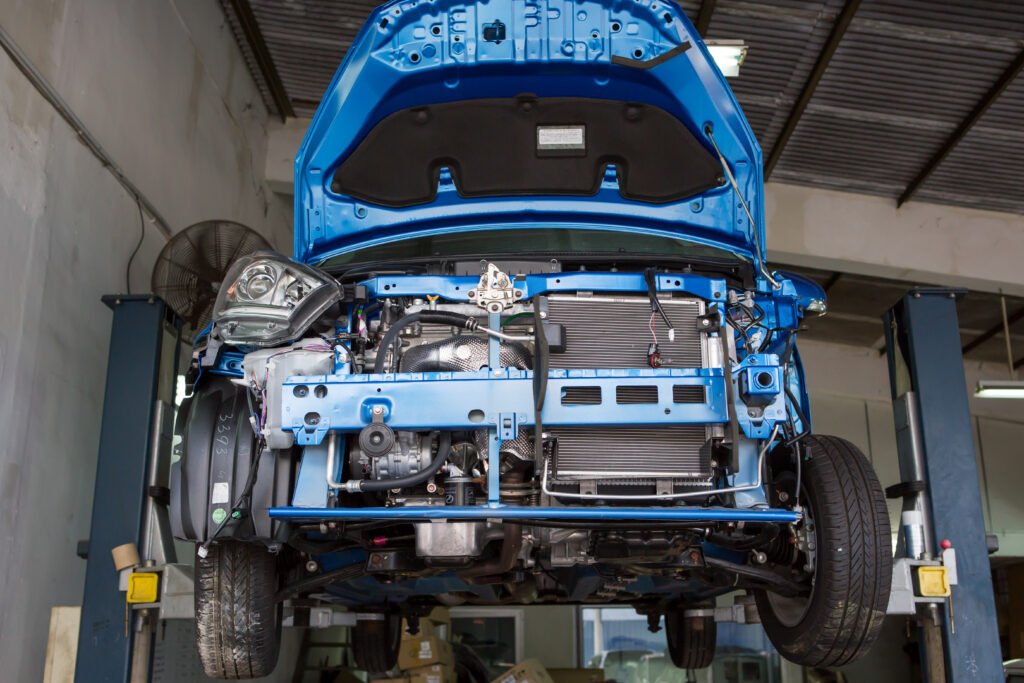
2 Post Car Lift Safety Information

2 post lift safety

Those who work in the automotive and related industries often wonder about any 2 post lift safety information necessary to know. Indeed, 2 post car lifts are generally a very safe piece of automotive equipment. However, these lifts must be used in the proper manner and also be designed in a manner to accommodate high lift capacities. Thanks to improvements in engineering, it is now possible for such lifts to hold upwards of 18,000 pounds with surprising ease. You should have no qualms with using such a lift as long as an experienced individual who understands the risks posed by these machines is in charge. Let’s dive further into the safety features of these lifts, as well as any potential risks you should keep in mind.

Recognize the Risk Involved With Car Lifts

Car lifts, including those of the 2-post variety, are inherently dangerous pieces of equipment, especially when used by inexperienced individuals. In fact, even a technician who rushes through his or her work or is misguided has the potential to struggle with using a car lift in a safe manner. In short, the lifting of an automobile that weighs several thousand pounds is never going to be the safest activity. If this task is not approached with a serious attitude and the proper lifting precautions, there is the potential for it to prove fatal.

Let’s take a look at some safety tips that reduce the risk of using 2-post car lifts.

2-Post Car Lift Safety Information

The worst thing you can do is position yourself or another vehicle below a 2-post car lift. Though some daring individuals working in the automotive industry might take this approach, doing so is unsafe and voids the warranty. So, don’t assume you can stand below such a lift or put anything else below it just because other supposed experts do so.

When in doubt, err on the side of safety and do everything in your power to minimize risk. The bottom line is even a slightly unsafe decision when using a 2-post car lift has the potential to end in a significant injury, considerable property damage or even death. This is precisely why most people and businesses rely on the automotive lift experts for assistance with these challenging projects.

Mind the Pad Adapters

Those operating 2-post car lifts should not stack adapters atop one another. It simply does not make sense in the context of personal safety and automobile protection to stack pads. Nor does such stacking adhere to factory recommended procedures. Some of those who use 2-post car lifts make the mistake of relying on flat pads as opposed to the comparably safer frame cradle pads. Though there are some exceptions for vehicles of certain sizes, the general rule is not to use flat pads.

Frame cradle pads are optimal in that they stop adapters from sliding off the vehicle frames, especially those of particularly heavy vehicles. Though such information is included in the operations guide provided with each 2-post car lift from every single manufacturer in the industry, a surprising number of people make the mistake of using flat pads for vehicles of every size. Furthermore, a single large pad cannot be replaced by two comparably small adapters.

Pay Attention to the Weight Capacity

The higher the 2-post car lift’s weight capacity, the safer it will be. This is not to say you should solely focus on the weight capacity as the pounds it can lift are only one aspect of the overall quality of the lift. There are plenty of non-certified lifts rated for more pounds than certified models, yet they are not actually safer or more reliable. The lack of certification is a clear red flag.

Cable Slack Detection and Additional Features are Important

Cable slack detection is an important safety feature included in some but not all 2-post car lifts. Additional safeguards to look for include sheaves that reduce friction connected to top-notch equalization cables, direct-drive systems, ALI certification, and locks of the single-point release variety. If you have not yet selected a car lift, try focusing on the manufacturer’s name. Do some research, pinpoint the industry’s most respected names, and move forward with one you trust.

When in Doubt, Reference the Instruction Manual for Optimal Safety

When in doubt, consult the instruction manual. Though these manuals are thorough and require attention to detail, they are worth reading. In fact, everyone who uses 2-post car lifts should read the accompanying instruction manual from front to back. The purpose of providing this helpful guide is to make it easier for auto technicians and others to use 2-post lifts as safely as possible and to limit the manufacturer’s and seller’s legal liability.

Though it is certainly possible to file a lawsuit in the aftermath of an injury or property damage resulting from the use of a 2-post car lift, doing so is unlikely to lead to financial compensation in the form of an out of court settlement or a favorable court award. The moral of this story is to use common sense and lean toward being too careful as opposed to taking even the slightest risk when using 2-post car lifts.

Contact SVI International Inc. Today

When it comes to car lift solutions and innovation, SVI International has your needs covered. We are the industry’s leading provider of repair parts for vehicle lifts as well as industrial equipment. Reach out to us today to learn more about our products.

You can contact our team at 1 (800) 321-8173. You can also reach us by filling out our convenient online contact form.

How Often Do Scissor Lifts Need to Be Inspected?

For the automotive repair shop, lifts are valuable tools. A wealth of options are available, dependent on your offered services and the kinds of vehicles that frequent your shop.

Automotive scissor lifts are one of the most common lift varieties, utilized in multiple industries. These lifts get their name because of the zigzag pattern of the legs that hoist and lower the work platform. Scissor lifts are utilized to move personnel, equipment, or vehicles up and down, replacing the need for a ladder in many situations.

In the automotive world, scissor lifts are utilized to raise vehicles for undercarriage access. While the benefits of scissor lifts are many, a few of the chief advantages are:

  • controlled lift height for auto shops with low ceilings
  • smaller body for auto shops with limited floor space
  • ability to retreat flat with after use

Any auto shop with access to a scissor lift understands the value of such an investment! However, not every shop owner knows how best to protect their lift investment. In the content below, we discuss the best methods and schedules for inspecting scissor lifts.

Taking Care of Your Scissor Lift

Inspection is the most important aspect of maintenance! After all, if you aren’t regularly examining a properly working system, how will you identify (or proactively prevent) damage?

Like all shop equipment, scissor lifts need to be regularly inspected to ensure safe and efficient operation. How can you remember to check the scissor lift? Implement a schedule.

In the rest of this article, we will discuss when we recommend scissor lift maintenance. You may be surprised how often it should take place. However, the precise inspection routine you follow will be based on your specific working environment and timetables.

Regular Inspection Guidelines

Scissor lift inspections should take place in your shop every day. One equipment maintenance resource suggests that scissor lifts should be inspected at least “before use every day, at shift changes, and anytime in new operator takes over the machine.”

However, your working environment will ultimately determine how many times your lifts should be inspected daily. For example, if your shop environment is hostile, the lift should be inspected more often. At a minimum, you should perform inspections every morning, every week, and every month.

Daily Inspection Tasks

Perform the following tasks before operation every day:

  1. Check all moving parts
  2. Examine the condition of the power cord and all electrical connections
  3. Check safety lock
  4. Check for leakage (especially in hoses and hydraulic connections)
  5. Test controls
  6. Test emergency stop
  7. Examine lift arm movement
  8. Check cable connections for damage

Weekly Inspection Tasks

Once a week, perform the following tasks:

  1. Check cables for damage
  2. Lubricate rollers
  3. Clean lift of access dirt and grease
  4. Check hydraulic fluid level
  5. Examine movement range of the cylinder
  6. Tighten loosened bolts, nuts, and screws
  7. Examine the floor near anchor bolts for stress cracks
  8. Examine anchor bolts torque

Monthly Inspection Tasks:

Every month, perform the following tasks:

  1. Visually examine safeties
  2. Check anchor bolts for torque and retighten if necessary
  3. Examine arm adjusting locks
  4. Examine cables; adjust tension if needed
  5. Check posts for proper fit
  6. Check and clean dirt build-up in covers and protections
  7. Lubricate drive screws, posts, and cables as needed
  8. Every three months, take the time to lubricate your cables; lubricated cables last longer

Annual Inspection

Daily, weekly, and monthly inspections are necessary and important to maintain the integrity of your scissor lifts. However, hiring a trained maintenance expert to check your lift every year is essential as well.

A few parts that should be replaced at the yearly maintenance check include hydraulic hoses, pumps, motors, hydraulic cylinders, cables, sheaves, rollers, and chains. Additional parts are checked and restored or replaced, if needed.

Though your scissor lift could show wear or damage in a variety of ways, a few common issues to look for include:

  • Low fluid. Of course, low oil, coolant, fuel, or hydraulic fluid should be refilled to proper levels. However, if you detect low fluid, you should also examine it closely for leaks. If a leak is detected, a repair person must be contacted.
  • Missing parts. If any parts are missing, contact an expert repair person.
  • Wire rope damage. As a rule of thumb, lifting cables should be replaced every 3-5 years. However, if damage or wear is seen before the three year mark, take care to replace them immediately. The risk of operating with a worn or frayed wire rope is not worth it.

SVI: Scissor Lift Specialists

When your scissor lift requires maintenance and repair, knowing a manufacturer you can trust is an essential component to taking care of your lift investment.

At SVI, we pride ourselves on being the leader in repair parts for automotive lifts. We have a wealth of experience working with scissor lifts, and our inventory boasts thousands of scissor lift repair parts.

Know the exact part you need? Browse our expansive automotive repair parts inventory. Have a question about the precise component that needs to be fixed? Call one of our specialists at (800) 321-8173 or get in touch via our online contact form.

We look forward to getting back to you promptly!