
HOW LONG DO CAR LIFTS LAST?

A car lift is a big investment for car enthusiasts and automotive shops alike; so, it’s important to make sure a lift is a lasting investment. A wrong decision could put you out of a lot of money. That’s why it’s necessary to understand the typical lifespan of various car lifts as well as the knowledge of how to maintain your car lift so that it can last. After reading this article, you’ll have no trouble picking out a lift that can last and understanding how to maintain your lift—allowing you to rest easy that your investment will last!

EXPECTED LIFESPAN OF DIFFERENT TYPES OF CAR LIFTS

A car lift will be expensive for most, so it’s important to know how long different types of car lifts will last. Most car lifts can last a long time if they are maintained regularly, but some lifts can last longer than others. Let’s look at how long each type of car lift is expected to last.

There are four types of lifts that will be the most common for people looking to purchase a car lift. They are:

  • 2-post lifts
  • 4-post lifts
  • Scissor lifts
  • Portable lifts

Let’s take a closer look at these lifts and how long you can expect them to function properly.

2-POST AND 4-POST CAR LIFTS

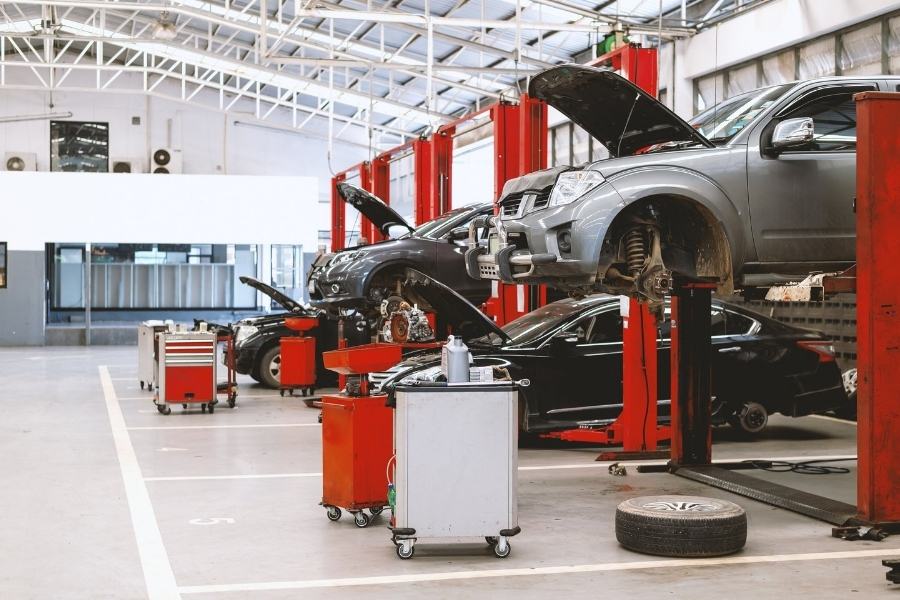
The 2-Post and 4- Post car lifts are a staple in many automotive shops and can be found in particular car enthusiasts’ garages. They are similar enough in life span to be compared here. A 2-post or 4-post car lift that has been properly maintained last decades. Some buyers will even decide that it’s cheaper to find a used 2-post or 4-post lift for sale that’s 10 to 30 years old, and still a smart investment. The distinction that is truly important to make is whether a 2-post or 4-post car lift is graded as “commercial” or “enthusiasts.”

Commercial 2-post or 4-post lifts are designed to be used all day, every day, while car lifts that are graded as enthusiasts are not. If a commercial 2-post or 4-post lift is properly maintained, it should be able to last and function properly for a long time. However, the results are more varied with “enthusiast-grade” 2-post and 4-post lifts. While some enthusiasts’ lifts will be commercial grade, most are not. The problem with enthusiast lifts, is that most will use inferior hydraulics, cheaper cables, cheaper guide rollers, etc. An enthusiast-grade can last if it’s maintained, but the maintenance costs begin to outweigh the value. Lastly, let’s look at popular options for car enthusiasts and small garages.

SCISSOR LIFTS AND PORTABLE LIFTS

A garage or work area can often be too small to allow a 2-post or 4-post lift. This is where scissor lifts or portable lifts come in. While specific types of these lifts can be used commercially, typically, these are popular options for enthusiasts and beginners. As such, most entry-level hydraulic lifts, like scissor and portable lifts, are “enthusiast-grade” and not meant for commercial use. These lifts are usually recommended for use with very low weight ratings and come with light-duty components to try and have a lower price point for a beginner looking to take on small car repairs.

An entry-level or enthusiast-grade lift can be expected to perform just fine for the first 3-5 years of ownership, though they tend to have long-term problems. Some issues that you could run into are:

  • Entry-level and enthusiast graded lifts tend to have cheaper motors that have a higher risk of overheating. If this happens, you can expect the motor to start to degrade.
  • These types of car lifts often have low quality hydraulic fittings, hoses, and cylinders. After a few years, they can deteriorate, and replacing them can be costly if your manufacturer even makes replacements.
  • Beginner scissor lifts have multiple components that make them work—but since it has multiple components that lift both ends of the vehicle, one side can deteriorate faster than the other. This will end up costing you down the line or, at the very least— shorten the lifespan.

Now that you know the differences between various types of car lifts and the problems that can plague your lift, it’s time to look at what you can do to maintain your lift.

CAR LIFT MAINTENENCE

If you want your car lift to last, you’ll have to make sure to perform regular maintenance to keep your car lift running efficiently. Here are a few things you can do to keep up with your lift:

  • Be sure to lubricate posts with grease.
  • Review all arm adjusting locks to make sure they are functioning
  • Review all cables connections.
  • Inspect safeties for proper operation.
  • Look at your cable tension and adjust if necessary.

These are just a few of the things you can do to make sure your car lift continues to operate and to ensure it lasts if it possibly can. Now that you know the types of lifts available and how to maintain them, it’s time to purchase a car lift!

FIND THE RIGHT LIFT FOR YOUR OPERATION WITH SVI INTERNATIONAL

Whether you decide on an automotive scissor lift, a four-post lift, or any other lift model, it’s imperative that you purchase your lift and lift replacement parts from a highly reputable company. At SVI International, we are the industry’s leading supplier of auto lifts and lift repair parts for all types of automotive lifts.

With over 40,000 products, our diverse product line serves as a one-stop shop for equipment parts, lifting equipment, fluid delivery products, RELS brake lathes, and so much more.

We know that downtime can be costly, so our 3 ready-ship warehouses provide on-time delivery and same-day shipping for in-stock parts.

An SVI specialist would love to get in touch about serving your needs, including any questions or concerns you may have. To get in touch, give us a call at (800) 321-8173 or complete our online contact form. We always respond quickly!

Hydraulic Car Lifts – How Single and Double Hydraulic Pumps Differ

Whether you are buying a car lift as a car enthusiast looking to work on vehicles as a hobby, or an automotive shop looking for a new lift—buying a car lift is a big decision. There are multiple factors you should weigh when planning on which type of lift to purchase. What kind of vehicles am I hoping to work on? What size lift will I need? What type of lift should I buy? This last question is important in understanding what kind of car lifts are available and what makes them different. For example, some car lifts you see will use chains to pull automobiles upward. However, another way to lift a car is with hydraulic power. This article will help you understand how hydraulic lifts work and the difference between a single-acting and double-acting hydraulic cylinder. This will allow you to have the information to make the best available purchase. 

How Do Hydraulic Lifts Work?

First, it’s important to understand what hydraulic power is and how it works in place of the chain system of other lifts. Car lifts that use hydraulic power will move cars upward when a pump in their structure pushes a liquid from a fluid container to a hollow cylinder. The cylinder then fills with the liquid, forcing the piston component inside to move upward, which creates the movement of the lift. To lower a vehicle, the process is reversed. This is a basic understanding of how car lifts that utilize hydraulic power works. With this understanding, you can now start to look at how this source of power can be more advantageous than a typical chain system for lifting vehicles.

Advantages of Hydraulic Car Lifts

Car lifts that take advantage of hydraulic power and the use of hydraulic cylinders have unique advantages over their chain-powered counterparts. Here are a few reasons why you should consider a hydraulic-powered car lift.

  1. SPACE EFFICIENT- A car lift that uses a hydraulic system takes up less space than its chain counterpart. A chain lift will need room for its beams so the chains can move, so you can operate the lift and move the lift or down. Hydraulic lifts can be more compact because they push from the bottom instead of incorporating the “pulling” motion of the chains.
  2. LESS PARTS- Car lifts that use a chain to lift a vehicle have many moving parts that it utilizes to move a vehicle upward or downward. This exposes more parts and equipment to be strained or to not work correctly, which have you needing to replace parts or your lift. However, a hydraulic lift is simpler in its design and function—making it easier to maintain and less parts to worry about.
  3. SINGLE CYLINDER OR DOUBLE- Lastly, you have the choice with the hydraulic power of a single acting hydraulic cylinder or double acting hydraulic cylinder. Both have different advantages that could work for different types of consumers.

Single vs Double

Power and hydraulic cylinders go hand in hand. Hydraulic power has become a staple of the industrial world—with power and reliability that can be counted on. From the biggest movers to car lifts, they are widely used to get multiple jobs done. However, there’s more to hydraulic power than just the science behind it that was discussed above. There are single-acting hydraulic cylinders and double-acting hydraulic cylinders, and both have their advantages.  By learning the differences between the two, you will have the information necessary to determine which is best for you to purchase.

Advantages of a Single Acting Cylinder

A single-acting hydraulic cylinder is less involved than a double-acting hydraulic cylinder, making it easier to maintain. The cylinder’s action is determined entirely by the pressure on one line. Oftentimes they will have a spring to push or retract the piston rod, or they might rely on the force on end to push it back. The simplicity of the operation makes it more reliable, and fewer parts are being tasked with lifting the vehicle. The simplicity of the single-acting hydraulic cylinder makes it easier to manufacture and repair, leading to cheaper costs associated with the product. Lastly, Due to their single port and small housing, single-acting hydraulic cylinders work well with smaller equipment and spaces. While a single-acting hydraulic cylinder may work for some, others will need the benefits of a double-acting hydraulic system. 

Advantages of a Double Cylinder

A double-acting cylinder alternates cycles of pressurized fluid to both sides of the piston, creating the ability to extend and retract forces to move the piston rod, allowing more control over the movement. Due to this, double-acting hydraulic cylinders allow for additional versatility. While a single cylinder may be best if you’re moving in only one direction, a double cylinder can operate in multiple directions and offer additional control. The two ports make hydraulic power available in both directions and are easily controlled with an effective push-and-pull motion. Therefore, the double-acting hydraulic cylinder is the most used for hydraulic power.

Now that you understand the differences between single-acting and double-acting hydraulic cylinders, you can make an educated purchase on which is best for your needs. 

Find the Right Lift for Your Operation With SVI International

Whether you decide on an automotive scissor lift, a four-post lift, or any other lift model, it’s imperative that you purchase your lift and lift replacement parts from a highly reputable company. At SVI International, we are the industry’s leading supplier of auto lifts and lift repair parts for all types of automotive lifts.

With over 40,000 products, our diverse product line serves as a one-stop shop for equipment parts, lifting equipment, fluid delivery products, RELS brake lathes, and so much more.

We know that downtime can be costly, so our 3 ready-ship warehouses provide on-time delivery and same-day shipping for in-stock parts.

An SVI specialist would love to get in touch about serving your needs, including any questions or concerns you may have. To get in touch, give us a call at (800) 321-8173 or complete our online contact form. We always respond quickly!
What are the 3 Main Alignment Lift Types?

automotive lifts

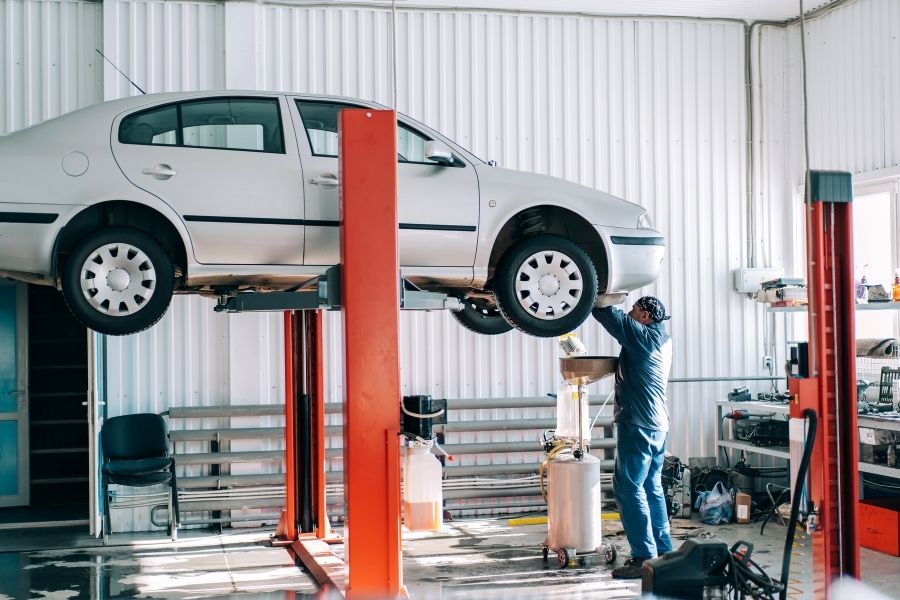
An alignment lift can be a big decision.  The right lift can take your home garage to a different level, or allow an automotive shop to work on different types of vehicles, allowing them to expand their business. That’s why it is crucial that you get the right alignment lift for the types of vehicles that you are going to be operating on. Different alignment lifts have different advantages that make them more suitable for certain situations. There are three main automotive lifts to choose from, and each has circumstances that make them beneficial. But first, it’s important to understand how an alignment lift functions.

Understanding Automotive Lifts

It’s common for auto shops or home garages to have difficulty when trying to perform complex wheel alignments on a standard vehicle lift. This is where the alignment lift comes in. Alignment lifts allow a mechanic or car enthusiast better access to suspension components to align your vehicle’s axles, tires and to make sure the steering wheel is straight. What makes alignment lifts an attractive choice for anyone operating on vehicles, are the features. They typically have non-resistant, free-floating front turn plates, rear slip plates, and are built to maintain and assist inaccuracy, for the best alignment possible. But what are the main types of alignment lifts and which do you choose?

The Three Main Automotive Lifts

Once you have decided that you are going to purchase an alignment lift, it’s time to decide which type of lift you’ll need. Each type of lift has certain strengths that can make it more suitable for certain types of vehicles. The three main lifts that you have to choose from are:

  • Two-Post Lifts- A two-post lift is a very common and versatile lift. This type of lift can be used on most vehicles and allows for easy access for most mechanical work.
  • Four-Post Car and Truck Lifts- A four-post car lift is great for a high-traffic environment.  They are generally considered safer than a two-post lift.
  • Alignment Scissor Lift- When space is a concern, the scissor lift is your best bet. Some scissor lifts are even portable. Different scissor models come with varying heights to help you select based on the average height of the vehicles you work on and the ceiling heights in your shop.

This is a basic layout of the three main alignment lifts.  Let’s take a closer look at the differences and help you decide which lift is best for you.

Two-Post Lifts

The two-post alignment lift has two upright columns, with four adjustable arms. Typically, this type of alignment lift is fueled by an electric/hydraulic power. It was created for automotive shops that did not have the ability to install an in-ground lift. This type of lift is the most used style of two posts above-ground lift found in the United States. European models can differ in how they are configured. The two-post lift can be the best purchase for someone wanting to replace an in-ground lift that is currently not working, allowing you to avoid a dragged-out process removal and installation of another in-ground lift. These lifts can help you operate on cars, light trucks, and other types of passenger vehicles.  The weight capacity can vary from 7,000 lbs. to 10,000 lbs.

Four-Post Lifts

The four-post lift is configured as a four-post surface-mounted lift, this is the typical type of lift used by many automotive shops. Outside of wheel alignment, it allows them to work on things such as a muffler, or to do an oil change. The four-post alignment lift allows vehicles to be driven onto two runways and lifted by its tires, exposing the underside of the vehicle. Being able to see the underside of the vehicle makes the four-post lift a popular option for many automotive shops. Due to the fact you can drive onto the lift, they are often called drive-on lifts due to this feature.  The four-post lift is the biggest of the bunch and takes up the most amount of room. However, it is a lot easier to load vehicles on a four-post lift, and the safest lift to operate out of the bunch.

Alignment Scissor Lifts

It can be extremely beneficial to purchase a scissor lift, especially for auto shops or garages with low ceilings. With a scissor lift, you can control the exact lift height desired. This type of lift only takes up the necessary space to effectively service a car, without the use of installed external posts. Once returned to its original position, you will no longer have to worry about ceiling height or additional space as the scissor lift will shrink close to the level to the ground. With the understanding of what that alignment scissor lift can provide, it’s time to look at the different types of scissor lifts, and things that should factor into your decision.

These three lifts are the most common types of alignment lifts and with good reason. They each have certain advantages that can make them a good choice depending on your objective and the space you have to work with.  Whatever type of lift you choose; you want to make sure you get your alignment lift from a supplier you can trust.

Find the Right Lift for Your Operation with SVI International

Whether you decide on an automotive scissor lift, a four-post lift, or any other lift model, it’s imperative that you purchase your lift and lift replacement parts from a highly reputable company. At SVI International, we are the industry’s leading supplier of auto lifts and lift repair parts for all types of automotive lifts.

With over 40,000 products, our diverse product line serves as a one-stop-shop for equipment parts, lifting equipment, fluid delivery products, RELS brake lathes, and so much more.

We know that downtime can be costly, so our 3 ready-ship warehouses provide on-time delivery and same-day shipping for in-stock parts.

An SVI specialist would love to get in touch about serving your needs, including any questions or concerns you may have. To get in touch, give us a call at (800) 321-8173 or complete our online contact form. We always respond quickly!

What Size Car Lift Do You Need?

A car lift can be a big investment for hobbyists and businesses alike. Because of this, you want to make sure you get the right lift for your needs. There are a few things to consider when buying a lift, but few are as important as buying the correct size. The right “size” can mean multiple things. When considering what size car lift you need, you’ll need to consider if the lift will fit in your space and if it can support the weight of the type of vehicles you want to work on. Regardless of whether you’re in a home garage or a professional shop, these are a few things you will need to think about when determining what size lift you will need.

No one should purchase a car lift on impulse. By setting your goals and thoroughly measuring your space, you can establish what kind of car lift will best suit your needs. Once you ask yourself why you’re buying a car lift in the first place, you’ll be able to start answering the question: what size car lift do you need?

Determine Why You Are Purchasing a Car Lift

The first step is to determine why you’re purchasing a car lift in the first place. Are you looking to work on cars out of your garage or at an automotive shop? Whatever your reason, it is important to realize what types of vehicles you’ll be working on since a pick-up truck and a common compact car may require different car lifts.

Once you’ve decided what lift to purchase based on the vehicles you’ll be working on, it’s time to see which lift can accomplish your goals. To figure out which lift size you’ll need, you will have to calculate your ceiling height, floor space, and workspace for different-sized vehicles.

Figure Out Your Ceiling Height

Unlike car jacks, lifts will need plenty of vertical space to work with them. To figure out what type of car lift you can use, you will first need to determine your ceiling height. Typically, you will need at least a minimum of 11 or 12 feet, plus additional clearance for hazards and lights. Unfortunately, if you have low ceilings, your options are going to be limited. However, if your ceiling is higher than the minimum, then your options are essentially endless!

Since certain lifts are necessary to work on specific types of vehicles, your ceiling may make the choice of what vehicles you will be able to work on for you. If the height isn’t an issue, the next thing to consider is the amount of space you have in your garage or shop.

Calculate How Much Floor Space You Have

Assuming you’re not limited on height, start calculating how much floor space you have available to you before you make a purchase. To determine your amount of floor space, you will need to be realistic about the amount of open space, not just the overall square footage. Factor in any additional equipment that cannot be moved and deduct that from the total room size. Also, make sure to account for anything that might need to be moved to accommodate space for the car lift.

No matter what lift you purchase, you’ll want to make sure it can be installed properly. That’s why it’s important to make sure you measure the space you have available accurately, and as many times as necessary to avoid purchasing a lift that simply won’t fit. Once you’ve nailed down the amount of space you must work with, the last thing to do is to pick a lift based on the vehicles you want to work on, and what lifts can handle them.

Determining the Vehicles You Want to Lift

When you first decided to purchase a car lift, you likely had a certain vehicle in mind. Whether it was a truck or a compact car, you should now have a better impression of your options based on your available ceiling height and floor space. Different vehicles will work best on certain types of lifts based on the vehicle build and weight. On most vehicles, you can find a sticker located on the door jam to figure out how much a vehicle weighs and how the weight is distributed throughout. It’s also important to factor in some extra weight for vehicles that have extra attachments to the vehicle that could add on extra weight.

It is recommended you purchase a lift that can handle even heavier weight than your intended vehicle size to give yourself some wiggle room. If space is no longer a concern, this is the best option to consider when determining what size of car lift to purchase.

Ultimately, when purchasing a car lift, you want to get a slightly bigger lift than you will need. You want to rest easy knowing your car lift will be able to perform in the workspace you have available and be able to lift the weight of the vehicles you want to work on. The only thing left to do is to buy the lift!

Find the Right Lift for You Operation with SVI International

Whether you decide on an automotive scissor lift, a four-post lift, or any other lift model, it’s imperative that you purchase your lift and lift replacement parts from a highly reputable company. At SVI International, we are the industry’s leading supplier of auto lifts and lift repair parts for all types of automotive lifts.

With over 40,000 products, our diverse product line serves as a one-stop-shop for equipment parts, lifting equipment, fluid delivery products, RELS brake lathes, and so much more.

We know that downtime can be costly, so our 3 ready-ship warehouses provide on-time delivery and same-day shipping for in-stock parts.

An SVI specialist would love to get in touch about serving your needs, including any questions or concerns you may have. To get in touch, give us a call at (800) 321-8173 or complete our online contact form. We always respond quickly!